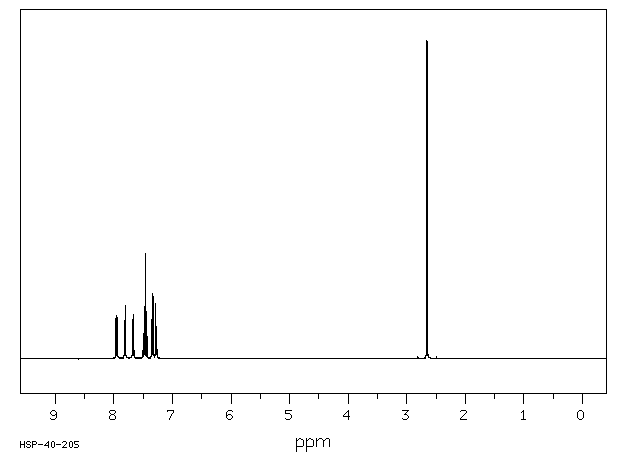
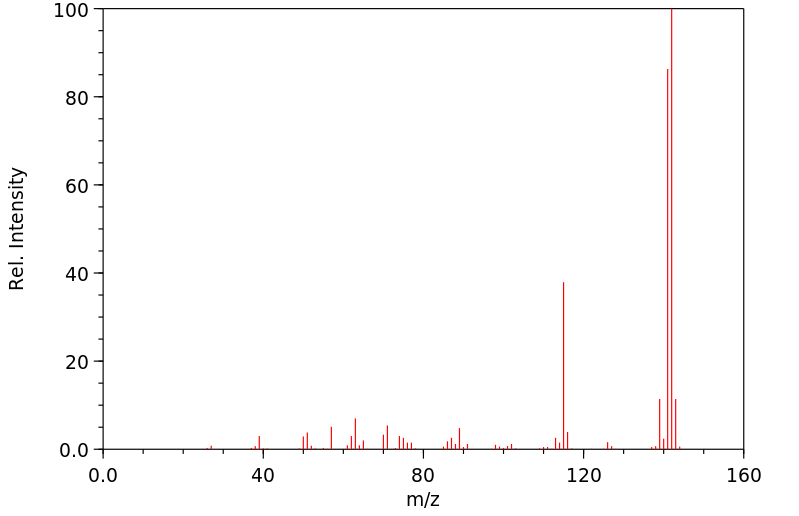
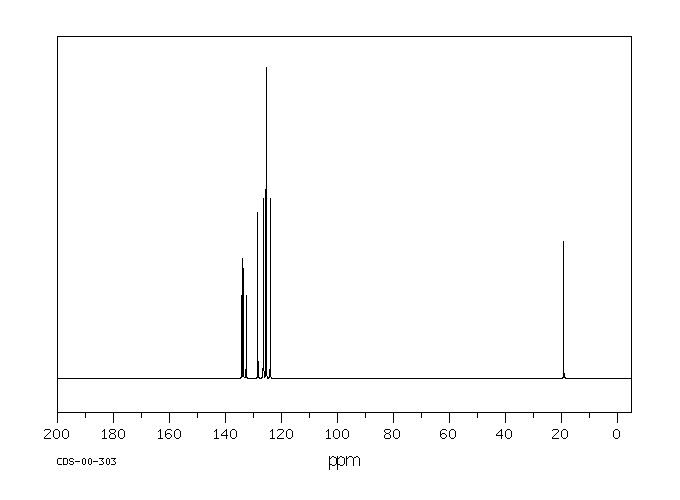
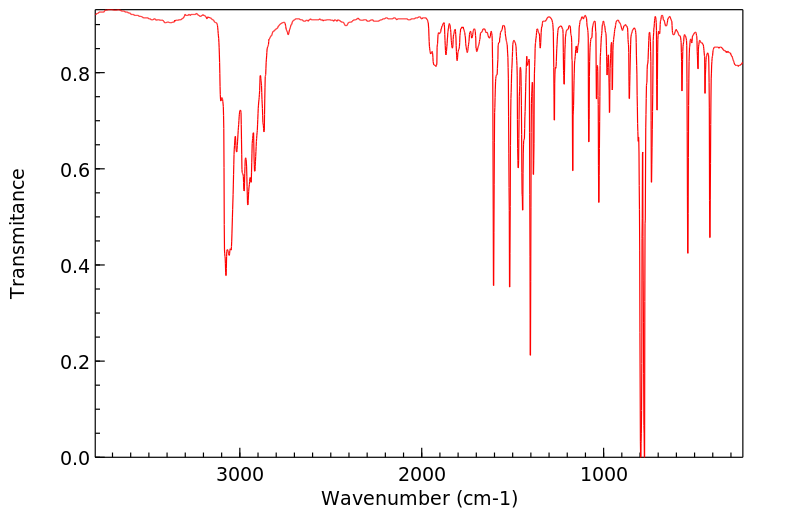
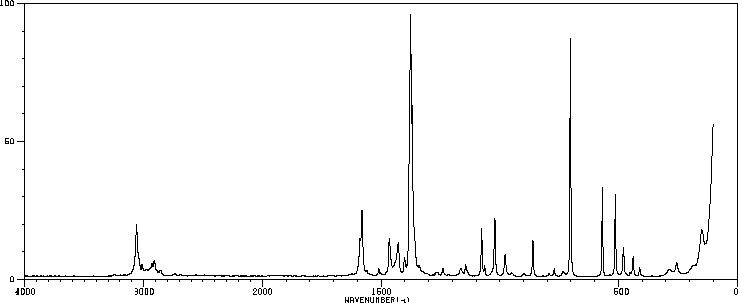
1-methylnaphthalene is a colorless liquid. Freezing point -22°C (7.6°F). Boiling point 240-243°C (464-469°F). Flash point 82°C (180°F). Denser than water. Derived from coal tar and used in organic synthesis.
颜色/状态:
Colorless liquid or oil
闪点:
This chemical has a flash point of >93 °C (>200 °F). It is probably combustible.
溶解度:
In water, 25.0 mg/L at 25 °C
蒸汽密度:
4.91 (NTP, 1992) (Relative to Air)
蒸汽压力:
0.067 mm Hg at 25 °C
亨利常数:
5.14e-04 atm-m3/mole
大气OH速率常数:
5.30e-11 cm3/molecule*sec
稳定性/保质期:
This chemical is stable under normal laboratory conditions. Solutions of this chemical in water, DMSO, 95% ethanol or acetone should be stable for 24 hours under normal lab conditions.
自燃温度:
984 °F (529 °C)
分解:
When heated to decomposition it emits acrid smoke and irritating fumes
汽化热:
36.00 kJ/mol at 100.5 °C
气味阈值:
THE ODOR THRESHOLD VALUE OF 1-METHYL NAPHTHALENE DETECTED @ ROOM TEMP & 60 DEG WAS 0.02 PPM.
The fungal metabolism of aromatic hydrocarbons has been studied using naphthalene and biphenyl as model compounds. Using (14)C naphthalene and the fungus Cunninghamella elegans, the major free metabolites were trans-1,2-dihydroxy-1,2-dihydro-naphthalene, 4-hydroxy-l-tetralone and 1-naphthol. The sulfate and glucuronic acid conjugates of 1-naphthol were the major water soluble metabolites which were isolated by thin layer chromatography and ion pair high pressure liquid chromatography. Field Desorption Mass Spectrometry was used to identify the sulfate conjugate whereas the trimethylsilyl derivative of the glucuronic acid conjugate was characterized by Electron Impact Mass Spectrometry. Analogous metabolites were formed from biphenyl which was hydroxylated at the 4 position and then conjugated. /Naphthalene/
PAH metabolism occurs in all tissues, usually by cytochrome P-450 and its associated enzymes. PAHs are metabolized into reactive intermediates, which include epoxide intermediates, dihydrodiols, phenols, quinones, and their various combinations. The phenols, quinones, and dihydrodiols can all be conjugated to glucuronides and sulfate esters; the quinones also form glutathione conjugates. (L10)
IDENTIFICATION AND USE: Methylnaphthalene is not registered for current pesticide use in the U.S., but approved pesticide uses may change periodically and so federal, state and local authorities must be consulted for currently approved uses. Methylnaphthalenes are used as chemical intermediates, general solvents and in vitamin K production. HUMAN EXPOSURE AND TOXICITY: Methylnaphthalene is presumably less toxic than naphthalene. The only untoward effects reported in man are skin irritation and skin photosensitization. Individuals with erythrocytic glucose-6-phosphate dehydrogenase deficiency may be particularly susceptible to possible hemolytic effects. ANIMAL STUDIES: Induces the formation of cataracts and causes spleen and kidney damage. Pulmonary alveolar proteinosis was induced in mice given twice weekly dermal applications on their backs of 119 mg/kg methylnaphthalene in acetone for 30 weeks. Control mice treated with acetone showed no signs of pulmonary alveolar proteinosis. The test material was specified as a mixture of 1-methylnaphthalene and 2-methylnaphthalene, but the relative proportions of the two isomers in the mixture were not reported. Gross examination of the lungs of exposed animals revealed multiple, grayish white soft spots or nodules sharply demarcated from the pinkish-white surrounding normal tissue, without specific localization; such gross lesions were not found in control lungs. Light microscopy showed the alveoli to be filled with amorphous eosinophilic material, many mononucleated cells with abundant foamy cytoplasm, and many clefts corresponding to cholesterol crystals separating the intra-alveolar materials and the lining cells. Alveolar walls were thickened without prominent fibrosis. Electron microscopy revealed that alveolar spaces contained extracellular membranous material (myelinoid structures) and mononucleated giant cells (balloon cells) containing myelinoid structures, lipid droplets, and amorphous crystals. Terminal bronchioles were not markedly affected. ECOTOXICITY STUDIES: Radiolabeled methylnaphthalene was taken up from food and water by the blue crab Callinectes sapidus. Of the radioactivity assimilated, more than 50% was in the hepatopancreas, suggesting the site of hydrocarbon metabolism. No evidence found of hydrocarbon storage by any tissues.
来源:Hazardous Substances Data Bank (HSDB)
毒理性
毒性总结
识别和使用:1-甲基萘是一种无色液体或油。它用于杀虫剂制造;制造邻苯二甲酸酐;有机合成中的溶剂;沥青和石脑油成分。它还用作测定柴油燃料十六烷值的测试物质。人类暴露和毒性:与萘不同,甲基萘在人类中仅报告有皮肤刺激和皮肤光敏化作用。对人类淋巴细胞进行了染色体分析,这些细胞在体外用1-和2-甲基萘处理,在有和没有哺乳动物代谢激活系统的情况下。没有代谢激活的情况下,没有任何显著的细胞遗传学效应的诱导。在有代谢激活的情况下,仅在4 mM 2-甲基萘中出现了微弱的裂变效应,而在1-和2-甲基萘的每个剂量下,姐妹染色单体交换频率显著增加,但始终低于对照组的两倍。目前的观察结果并不表明1-和2-甲基萘必须被归类为潜在的遗传毒性物质。动物研究:纯1-甲基萘增加了脾切除狗的网织红细胞计数,但未增加完整狗的计数。雾化停止后10天内,网织红细胞值保持升高。实用级1-甲基萘增加了完整狗和脾切除狗的白细胞计数,以及完整狗的中性粒细胞计数,但纯1-甲基萘对这些参数没有影响。甲基萘衍生物导致浓度依赖性的大鼠疼痛敏感性降低和小鼠呼吸率下降。1-甲基萘可能是雄性小鼠的弱肺致癌物,但不是雌性小鼠。在致癌剂量下,它不会对任何器官产生明显的毒性,并且在肺中没有体内的遗传毒性。使用S. thyphimurium TA98和TA100对1-和2-甲基萘进行了定量测试,并进行了代谢激活;使用的浓度是3 umol/板。1-和2-甲基萘不具有致突变性。生态毒性研究:在石油油对棕虾、草虾和羊头鱼苗的毒性研究中,精炼油比原油更具毒性,因为存在萘和烷基萘,包括1-甲基萘。不同的萘在0.08到5.1 ppm的水平上具有毒性。
IDENTIFICATION AND USE: 1-Methylnaphthale is a colorless liquid or oil. It is used in insecticide manufacturing; manufacture of phthalic anhydride; solvent in organic synthesis; asphalt and naptha constituent. It is also used as a test substance for the determination of the cetane number of diesel fuels. HUMAN EXPOSURE AND TOXICITY: In contrast to naphthalene, the only reported effects of methylated naphthalene in man are skin irritation and skin photosensitization. Chromosome analyses were carried out in human lymphocytes treated in vitro with 1- and 2-methylnaphthalene in the presence and absence of the mammalian metabolic activation system. Without metabolic activation there was no indication of induction of any significant cytogenetic effect by either compound. With metabolic activation a weak clastogenic effect was apparent at 4 mM 2-methylnaphthalene only and sister chromatid exchange frequencies were significantly increased at each dose of 1- and 2-methylnaphthalene, yet always less than twice the control level. The present observations do not indicate that 1- and 2-methylnaphthalene must be classified as potential genotoxic substances.ANIMAL STUDIES: Pure 1-methylnaphthalene increased the reticulocyte counts in the splenectomized dogs but not the intact dogs. Reticulocyte values remained elevated for 10 days after the fogging ceased. Practical grade 1-methylnaphthalene increased leukocyte counts in intact and splenectomized dogs and neutrophil counts in intact dogs, but pure 1-methylnaphthalene had no effect on these parameters. Methylated naphthalene derivatives resulted in concentration-dependent decrease in pain sensitivity in rats and depression of respiratory rate in mice. 1-Methylnaphthalene may be a weak lung carcinogen in male, but not female, mice. At a carcinogenic dose it dooes not induce overt toxicity for any organs and has no in vivo genotoxicity in the lungs. 1- and 2-Methylnaphthalene were tested quantitatively using S. thyphimurium TA98 and TA100 with and without metabolic activation; the concentration used were 3 umol/plate. 1- and 2-methylnaphthalene were not mutagenic. ECOTOXICITY STUDIES: In toxicity study of petroleum oils on post-larvae of brown shrimp, grass shrimp, and sheepshead minnow, refined oils were more toxic than crude oils due to presence of naphthalene and alkylnaphthalene, including 1-methylnaphthalene. The different naphthalenes were toxic at levels between 0.08 and 5.1 ppm.
The ability of PAH's to bind to blood proteins such as albumin allows them to be transported throughout the body. Many PAH's induce the expression of cytochrome P450 enzymes, especially CYP1A1, CYP1A2, and CYP1B1, by binding to the aryl hydrocarbon receptor or glycine N-methyltransferase protein. These enzymes metabolize PAH's into their toxic intermediates. The reactive metabolites of PAHs (epoxide intermediates, dihydrodiols, phenols, quinones, and their various combinations) covalently bind to DNA and other cellular macromolecules, initiating mutagenesis and carcinogenesis. (L10, L23, A27, A32)
来源:Toxin and Toxin Target Database (T3DB)
毒理性
致癌性证据
A4;不可归类为人类致癌物。
A4; Not classifiable as a human carcinogen.
来源:Hazardous Substances Data Bank (HSDB)
毒理性
致癌物分类
无致癌性迹象(未被国际癌症研究机构IARC列名)。
No indication of carcinogenicity (not listed by IARC). (L135)
Injection of Aerotex 3470 into rats (250 mg/kg, ip) resulted in rapid uptake and subsequent release of component aromatic hydrocarbons including 1-methylnaphthalene from liver, brain, muscle, and kidney. Adipose tissue took up more, but rapidly released it 24-48 hr after admin.
Synthesis and Biological Activity of New 3-Hydroxy-3-methylglutaryl Coenzyme A (HMG-CoA) Synthase Inhibitors: 2-Oxetanones with a Side Chain Mimicking the Folded Structure of 1233A.
The electrolytic reduction of triphenyl phosphate proceeds with the participation of tetrabutylammonium cations with the formation of butyl diphenyl phosphate in DMF. It was concluded that the step involving electron transfer to the triphenyl phosphate molecule has retarded character.
[EN] CYCLIC PEROXIDE OXIDATION OF AROMATIC COMPOUND PRODUCTION AND USE THEREOF<br/>[FR] OXYDATION DE PEROXYDE CYCLIQUE DE PRODUCTION DE COMPOSÉ AROMATIQUE ET SON UTILISATION
申请人:UNIV TEXAS
公开号:WO2014158209A1
公开(公告)日:2014-10-02
The present invention provides a method for converting an aromatic hydrocarbon to a phenol by providing an aromatic hydrocarbon comprising one or more aromatic C-H bonds and one or more activated C-H bonds in a solvent; adding a phthaloyl peroxide to the solvent; converting the phthaloyl peroxide to a di-radical; contacting the di-radical with the one or more aromatic C-H bonds; oxidizing selectively one of the one or more aromatic C-H bonds in preference to the one or more activated C-H bonds; adding a hydroxyl group to the one of the one or more aromatic C-H bonds to form one or more phenols; and purifying the one or more phenols.
Synthesis and spectroscopic properties of 1,4-diarylbutenynes
作者:Alois H. A. Tinnemans、Wim H. Laarhoven
DOI:10.1039/p29760001104
日期:——
Several new diarylbutenynes have been synthesized and analyses of the n.m.r. and u.v. spectra are described. For planar trans-isomers a conformational preference was found for 1-(α-naphthyl)- but not for 1-(β-naphthyl)-4-arylbutenynes. This difference is also found between compounds with C-1 attached to the α- or β-position of a larger aryl group.
Nondirected Copper-Catalyzed Sulfoxidations of Benzylic C–H Bonds
作者:Hao Yu、Zhen Li、Carsten Bolm
DOI:10.1021/acs.orglett.8b00615
日期:2018.4.6
A copper-catalyzed sulfoxidation of benzylic C–H bonds by nondirected oxidative C(sp3)-H activation was developed. The process proceeds via sulfenate anions, which are generated by base-triggered elimination of β-sulfinyl esters and benzyl radicals. The functional group tolerance is high, and the product yields are good.
作者:Haiwen Xiao、Zhonglin Liu、Haigen Shen、Benxiang Zhang、Lin Zhu、Chaozhong Li
DOI:10.1016/j.chempr.2019.02.006
日期:2019.4
Direct trifluoromethylation of C(sp3)–H bonds, especially in late stages, remains a formidable challenge. Herein, we describe the copper-catalyzed benzylicC(sp3)–H trifluoromethylation. With Cu(I) or Cu(II) as the catalyst, (bpy)Zn(CF3)2 (bpy = 2,2′-bipyridine) as the CF3 source, and NFSI (or Selectfluor) as the oxidant, site-selective benzylicC(sp3)–H trifluoromethylation is successfully implemented
[EN] GLYCOLATE OXIDASE INHIBITORS FOR THE TREATMENT OF DISEASE<br/>[FR] INHIBITEURS DE GLYCOLATE OXYDASE POUR LE TRAITEMENT D'UNE MALADIE
申请人:BIOMARIN PHARM INC
公开号:WO2020257487A1
公开(公告)日:2020-12-24
Described herein are compounds, methods of making such compounds, pharmaceutical compositions and medicaments containing such compounds, and methods of using such compounds to treat or prevent diseases or disorders associated with a defect in glyoxylate metabolism, for example a disease or disorder associated with the enzyme glycolate oxidase (GO) or alterations in oxalate metabolism. Such diseases or disorders include, for example, disorders of glyoxylate metabolism, including primary hyperoxaluria, that are associated with production of excessive amounts of oxalate.