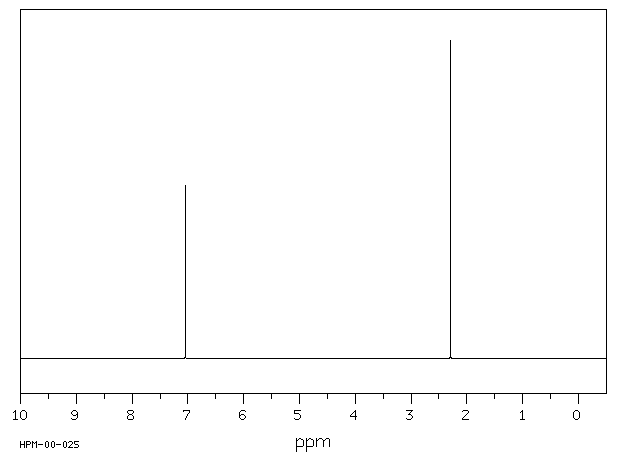
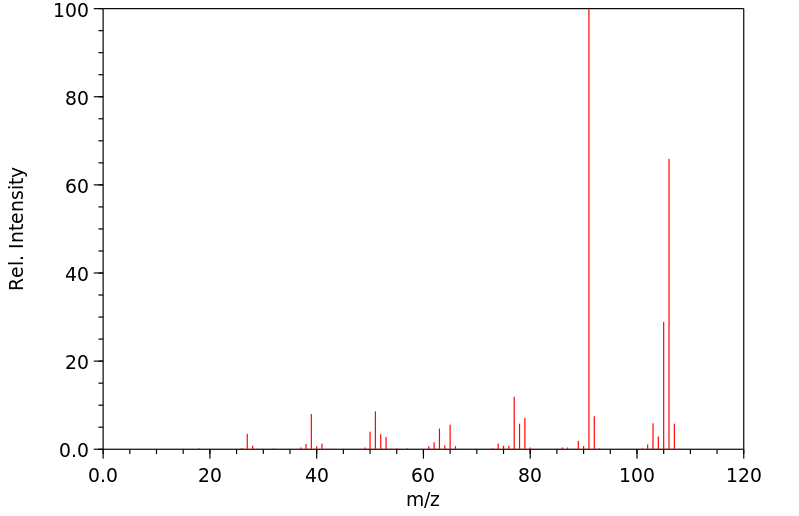
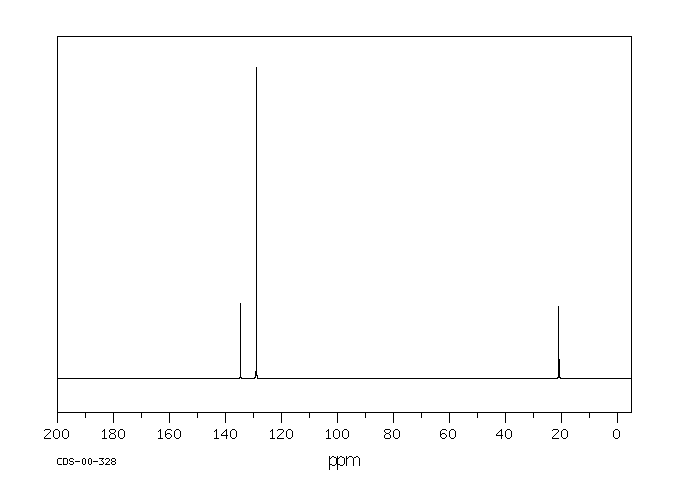
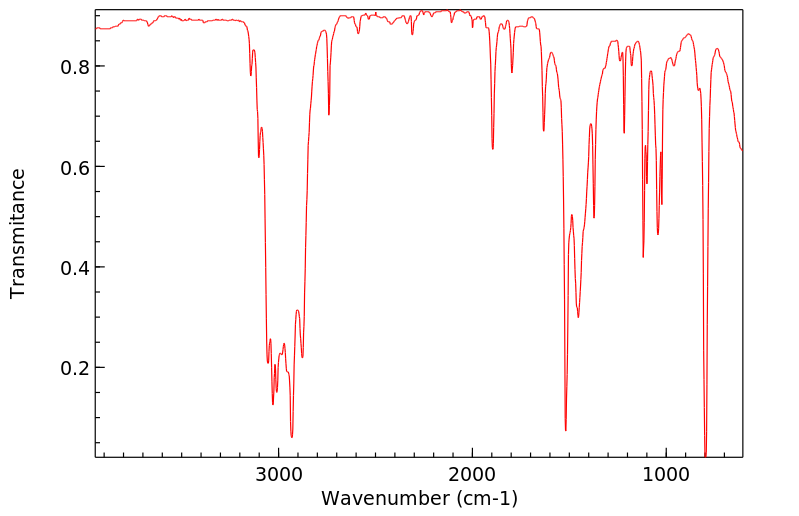
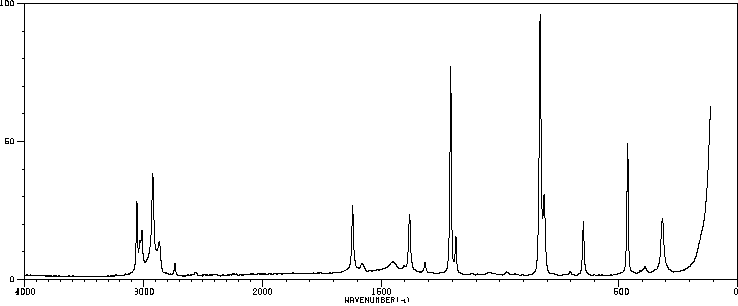
P-xylene appears as a colorless watery liquid with a sweet odor. Less dense than water. Insoluble in water. Irritating vapor. Freezing point is 56°F. (USCG, 1999)
/When administered to rabbit, rat, and guinea pig/ p-xylene was excreted as p-toluic acid derivative, but a 2,5-dimethylphenol glucuronide was also isolated ... .
Metab of p-xylene (100 umol) studied in isolated, perfused rabbit livers and lungs. Release of p-tolualdehyde into circulation did not occur in perfused rabbit livers. P-toluric acid (n-p-toluylglycine) was major hepatic metabolite, with smaller amt of toluic acid & p-methylbenzyl alcohol. Rabbit livers did not produce detectable amt of p-tolualdehyde, 2,5-dimethylphenol or any glucuronide conjugates. One major pulmonary metab was p-methylbenzyl alc. Predominance of this metab reflects deficiency of lung tissue in alc dehydrogenase. Perfused lung also produced 2,5-dimethylphenol a derivative not produced in the liver. During p-xylene metab in perfused lungs, derivatives which became covalently bound to lung proteins were formed which suggests that p-xylene metab might proceed at least partially through reactive intermediate(s) causing destruction of pulmonary cytochrome P450. Metab was also characterized using reconstituted monooxygenase systems containing purified rabbit pulmonary lung cytochrome P450 (i) & (ii).
The involvement of sequential side-chain oxidn, sulfation, & glutathione conjugation in formation of mercapturic acids from xylenes was investigated. The position of methyl groups attached to the aromatic nucleus affected metabolism. Factors that are involved in high yield of mercapturic acids after admin of o-xylene as compared to m-xylene & p-xylene incl relatively low apparent affinity of o-methylbenzyl alcohol for cytosolic alcohol dehydrogenase, the relatively high apparent affinity of o-methylbenzyl alc for cytosolic sulfotransferase, & the high electrophilic reactivity of the o-methylbenzyl sulfate.
Meta & para isomers are ... extensively oxidized to toluic acids (about 90% of the dose), & these are conjugated mostly with glycine. Hydroxylation to corresponding xylenols also occurs to a small extent.
IDENTIFICATION AND USE: 4-Xylene (p-xylene) is a colorless liquid (Note: A solid below 56 degrees F). It is used for synthesis of terephthalic acid for polyester resins and fibers; pharmaceutical synthesis; insecticides. p-Xylene is also frequently used for paints or in the printing trade. HUMAN EXPOSURE AND TOXICITY: Three women exposed to p-xylene at 100 ppm for 1 to 7.5 hours/day, for 5 days, showed no effects on electroencephalograms, evoked potentials, or cognitive performance, but frequently reported headache and dizziness as a result of exposure. In contrast, four men exposed at concentrations of up to 150 ppm p-xylene under the same exposure conditions reported no increase in headaches or dizziness. Slight impairment of vestibular and visual function and reaction time was noted at exposure levels from 200 to 300 ppm. There was adaption to the impairment over five successive daily exposures. Human data indicate that acute inhalation exposures to 460 ppm mixed xylene and 100 ppm p-xylene vapors produce mild and transient eye irritation. p-Xylene is possibly ototoxic at concentrations that are relevant to the occupational setting. Levels of blood xylenes reflect recent exposure. The m-and p-xylene isomers usually are measured together and reported as m/p-xylene. ANIMAL STUDIES: Increased hepatic cytochrome p450 concentrations and reduced nicotinamide adenine dinucleotide cytochrome C reductase activity occurred in rats exposed 3 days to 2000 ppm of p-xylene. In lung microsomes, cytochrome p450 content was decreased. Marked activation and tremor were observed at concentrations between 400 and 1500 ppm p-xylene in rats. The CNS depressant threshold was 1940 ppm. In a study of levels of noradrenaline and dopamine in the forebrain and hypothalamus, rats (six males/group) were exposed to 0 or 2000 ppm p-xylene 6 hr/day for 3 days. The animals were killed 16-18 hr after the last exposure. In exposed animals there was a significant increase in catecholamine levels and turnover in various parts of the hypothalamus. There was no effect on dopamine levels or turnover in the forebrain. Histological damage to the outer hair cells of the organ of Corti provided evidence of ototoxicity in rats exposed by oral gavage to p-xylene, but not m- or o-xylene, at a dose of 900 mg/kg/day, 5 days/week for 2 weeks. The losses of hair cells occurred in the area of the cochlea responsive to medium frequencies (10-25 kHz). Mice were exposed to p-xylene at 150, 1500, or 3000 mg/cu m, 24 hr/day from days 7-14 of gestation. Toxic effects were decr weight of fetuses, increased incidence of skeletal retardation, and decrease in activity of enzymes, succinic dehydrogenase, alkaline, acid phosphatase, glucose 6-phosphatase and changed characteristic features of functional maturity of the nephron, retardation of fetus was dose related. In other experiment, increased incidence of malformations mostly cleft palates, were observed only with m- or p-xylene. Malformations (ie cleft palate) associated with mixed or individual isomers were primarily reported at maternally toxic doses. Each xylene isomer was administered to male rats intraperitoneally in 2 similar doses, 24 hours apart over a range of concentrations from 0, 0.12-0.75 mL/kg (105-650 mg/kg) and evaluated femoral bone marrow 30 hours after the first injection. No increase in micronucleated polychromatic erythrocytes was observed for any xylene isomer. p-Xylene was nonmutagenic using the Ames assay. It did not revert Salmonella typhimurium strains TA1535, TA1537, TA1538, TA98, & TA100 either with or without metabolic activation. ECOTOXICITY STUDIES: The xylene isomers have a similar degree of toxicity as mixed xylenes to estuarine/marine invertebrates. For m-xylene and p-xylene, the respective 48-hour LC50 values are 19.3 and 24.5 mg/L in brine shrimp, suggesting that the m-xylene and p-xylene isomers are slightly toxic to estuarine/marine invertebrates on an acute basis.
p-Xylene is a cholinesterase or acetylcholinesterase (AChE) inhibitor. A cholinesterase inhibitor (or 'anticholinesterase') suppresses the action of acetylcholinesterase. Because of its essential function, chemicals that interfere with the action of acetylcholinesterase are potent neurotoxins, causing excessive salivation and eye-watering in low doses, followed by muscle spasms and ultimately death. Nerve gases and many substances used in insecticides have been shown to act by binding a serine in the active site of acetylcholine esterase, inhibiting the enzyme completely. Acetylcholine esterase breaks down the neurotransmitter acetylcholine, which is released at nerve and muscle junctions, in order to allow the muscle or organ to relax. The result of acetylcholine esterase inhibition is that acetylcholine builds up and continues to act so that any nerve impulses are continually transmitted and muscle contractions do not stop. Among the most common acetylcholinesterase inhibitors are phosphorus-based compounds, which are designed to bind to the active site of the enzyme. The structural requirements are a phosphorus atom bearing two lipophilic groups, a leaving group (such as a halide or thiocyanate), and a terminal oxygen.
Evaluation: There is inadequate evidence in humans for the carcinogenicity of xylenes. There is inadequate evidence in experimental animals for the carcinogenicity of xylenes. Overall classification: Xylenes are not classifiable as to their carcinogenicity to humans (Group 3)./Xylenes, o,m,p isomers/
CLASSIFICATION: D; not classifiable as to human carcinogenicity. BASIS FOR CLASSIFICATION: Orally administered technical xylene mixtures did not result in significant increases in incidences in tumor responses in rats or mice of both sexes. HUMAN CARCINOGENICITY DATA: None. ANIMAL CARCINOGENICITY DATA: Inadequate. /based on former classification system/
Under the Draft Revised Guidelines for Carcinogen Risk Assessment (U.S. EPA, 1999), data are inadequate for an assessment of the carcinogenic potential of xylenes. Adequate human data on the carcinogenicity of xylenes are not available, and the available animal data are inconclusive as to the ability of xylenes to cause a carcinogenic response. Evaluations of the genotoxic effects of xylenes have consistently given negative results. /Xylenes/
In rats and mice, m- and p-xylene are distributed primarily to lipid-rich tissues, such as fat, blood, and brain and also in organs highly perfused with blood such as kidney and liver. Small amounts of p-xylene and o-xylene cross the placenta and distribute to amnionic fluid and fetal tissue. Oral administration of m-xylene to rats led to distribution of 14C-m-xylene in adipose tissue, approximately 0.3% of dose in female and 0.1% in males.
Humans exposed to 46 or 92 ppm of o-, m-, p-xylene or a mixture (1:1:1) of the three for 8 hr absorbed approx 64% of the inhaled xylene. No difference in the absorption rate was reported due to level of exposure, length of exposure, or the type and/or mixture of the xylene isomers. The absorption of xylene appeared to vary among individuals due to differences in ventilation rate. ... Individuals with an incr ventilation rate retained less xylene.
In rats exposed to 208 mg/cu m methyl-(14)C para-xylene for 1 hour, distribution of radioactivity immediately after termination of the exposure was highest in the kidneys, followed by subcutaneous fat, ischiatic nerve, blood, liver and lungs. Activity was 1/5 to 1/30 of these levels 6 hours after the end of exposure.
Pregnant mice were exposed by inhalation to (14)C para-xylene (theoretical concentration, 2000 ppm (8680 mg/cu m)) for 10 min on days 11, 14 or 17 of gestation, and distribution of the label was determined 0, 0.5, 1 and 4 hours after exposure. The label quickly entered the embryo, but uptake was low relative to maternal tissues. All fetal activity was extractable, indicating that no firmly bound metabolite was present.