接口广告
摩熵化学
数据开放平台 数据库官网
小程序
打开微信扫一扫
首页 分子通 化学资讯 化学百科 反应查询 关于我们
请输入关键词

L-蛋氨酸 | 63-68-3

中文名称
L-蛋氨酸
中文别名
蛋氨酸;L-2-氨基-4-甲硫基丁酸;L-γ-甲硫基-α-氨基丁酸;L-甲硫基丁氨酸;L-甲硫氨酸;L-甲酸氨酸;L-蛋氨酸/L-甲硫氨酸
英文名称
L-methionine
英文别名
methionine;Met;L-met;(S)-methionine;H-Met-OH;(2S)-2-ammonio-4-(methylsulfanyl)butanoate;(2S)-2-azaniumyl-4-methylsulfanylbutanoate
L-蛋氨酸化学式
CAS
63-68-3
化学式
C5H11NO2S
mdl
MFCD00063097
分子量
149.214
InChiKey
FFEARJCKVFRZRR-BYPYZUCNSA-N
BEILSTEIN
——
EINECS
——
  • 物化性质
  • 计算性质
  • ADMET
  • 安全信息
  • SDS
  • 制备方法与用途
  • 上下游信息
  • 反应信息
  • 文献信息
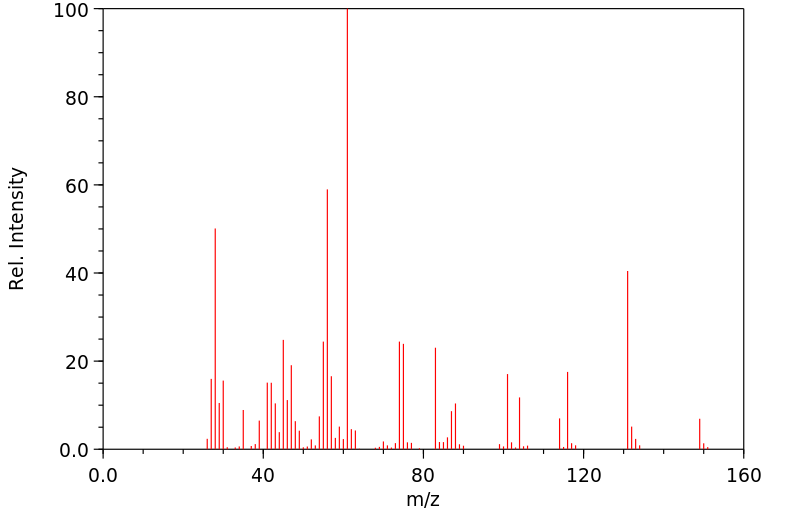
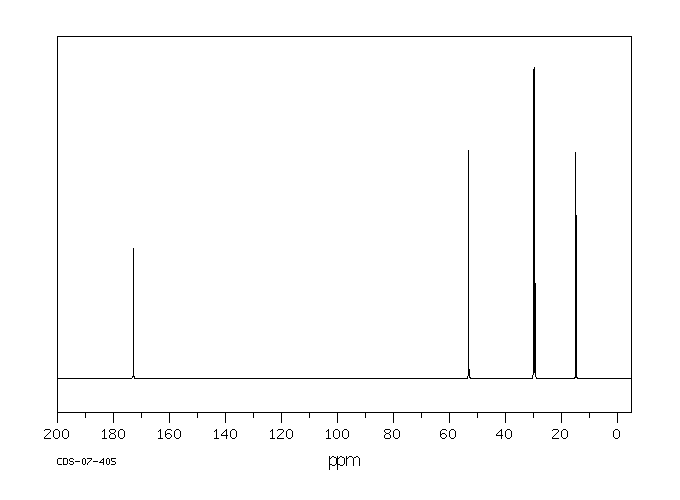
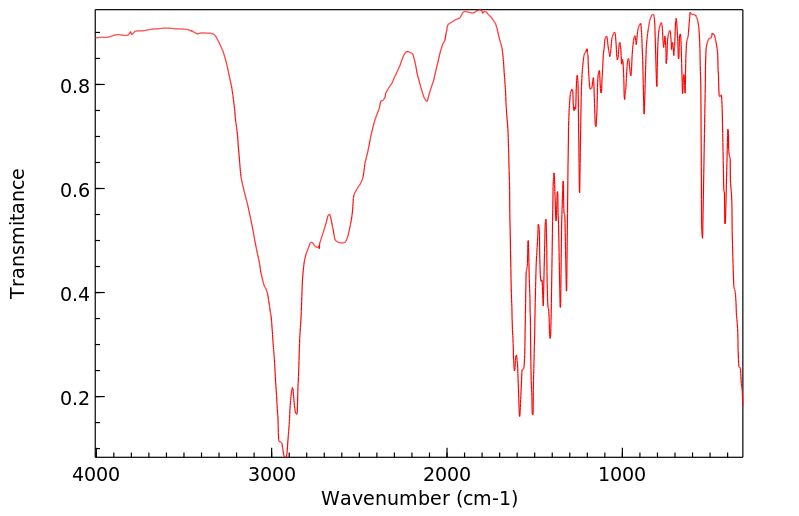
  • 表征谱图
  • 同类化合物
  • 相关功能分类
  • 相关结构分类

物化性质

  • 熔点:
    284 °C (dec.)(lit.)
  • 比旋光度:
    23.25 º (c=2, 6N HCl)
  • 沸点:
    393.91°C (estimate)
  • 密度:
    1,34g/cm
  • 溶解度:
    可溶于MHCl:0.5 Mat 20 °C,透明,无色
  • 最大波长(λmax):
    λ: 260 nm Amax: 0.40λ: 280 nm Amax: 0.05
  • LogP:
    0.217 (est)
  • 物理描述:
    Minute hexagonal plates from dilute alcohol. (NTP, 1992)
  • 颜色/状态:
    Minute hexagonal plates from dilute alcohol
  • 气味:
    Faint
  • 味道:
    Sulfurous
  • 蒸汽压力:
    8.14X10⁻⁸ mm Hg at 25 °C (est)
  • 水溶性:
    -0.42
  • 旋光度:
    Specific optical rotation: -8.2 deg at 25 °C/D (c = 0.8); +23.40 at 20 °C/D (c = 5.0 in 3.0N HCl)
  • 分解:
    When heated to decomposition it emits very toxic fumes of /nitric oxide/ and /sulfur oxide/.
  • 解离常数:
    pKa = 2.28; pK2 = 9.21
  • 碰撞截面:
    133.65 Ų [M+H]+ [CCS Type: DT, Method: stepped-field]
  • 稳定性/保质期:
    1. 本品无毒,可作饲料添加剂。但据报道,大量摄取本品会引起呕吐、食欲不振等症状。对大鼠进行腹腔注射实验显示:L型的LD50为29mmol/kg;D型的LD50为35mmol/kg。特别需要注意的是,在蛋酸生产过程中使用了剧毒原料氰化钠,因此生产车间应按氰化钠毒性防护要求采取相应措施,如设备密闭、保持良好通风以及操作人员穿戴防护用品等。

    2. 本品存在于白肋烟烟叶中。

计算性质

  • 辛醇/水分配系数(LogP):
    -1.9
  • 重原子数:
    9
  • 可旋转键数:
    4
  • 环数:
    0.0
  • sp3杂化的碳原子比例:
    0.8
  • 拓扑面积:
    88.6
  • 氢给体数:
    2
  • 氢受体数:
    4

ADMET

代谢
肝脏的
Hepatic
来源:DrugBank
代谢
氧化脱或转的产物--α-酮-γ-甲丁酸。/来自表格/
Product of oxidative deamination or transamination--alpha-keto-gamma-methiolbutyric acid. /From table/
来源:Hazardous Substances Data Bank (HSDB)
代谢
酸(S-甲基-L-半胱氨酸肌氨酸)甲基组的氧化在体内主要通过自由甲酸形式进行,而这种转化为甲酸的过程可能不是由四氢叶酸催化的。
... Oxidation of methionine (S-methyl-l-cysteine and sarcosine) methyl group in vivo proceeds primarily by way of free formate, and that conversion to formate is probably not catalysed by tetrahydrofolic acid.
来源:Hazardous Substances Data Bank (HSDB)
代谢
... 甲酸 ... 在很大程度上独立于最初的激活(即转变为S-腺苷-l-甲酸)而被分解代谢。分解代谢的系统 ... 与催化S-甲基-l-半胱酸甲基氧化的一系统类似 ... 甲酸的甲基 ... 已经在体外和体内实验中显示出可以产生甲酸盐。
... Methionine ... is catabolized to a large extent independently of initial activation to S-adenosyl-l-methionine. The system for catabolism ... appears analogous to one that catalyses oxidation of S-methyl-l-cysteine methyl group ... The methyl group of methionine ... /has been/ shown ... to yield formate in vitro and in vivo.
来源:Hazardous Substances Data Bank (HSDB)
代谢
婴儿比成人更快速地代谢蛋酸。
Infants more rapidly metabolized methionine than adults.
来源:Hazardous Substances Data Bank (HSDB)
毒理性
  • 毒性总结
L-蛋氨酸可能具有抗肝毒活性的机制尚不完全清楚。人们认为,肝脏中对高剂量对乙酰氨基酚的代谢会导致肝谷胱甘肽平降低和氧化应激增加。L-蛋氨酸L-半胱氨酸的前体。L-半胱氨酸本身可能具有抗氧化活性。L-半胱氨酸也是抗氧化剂谷胱甘肽的前体。L-蛋氨酸及其代谢物的抗氧化活性似乎是其可能具有抗肝毒活性的原因。最近的研究表明,蛋酸本身由于其原子以及其螯合能力而具有自由基清除活性。
The mechanism of the possible anti-hepatotoxic activity of L-methionine is not entirely clear. It is thought that metabolism of high doses of acetaminophen in the liver lead to decreased levels of hepatic glutathione and increased oxidative stress. L-methionine is a precursor to L-cysteine. L-cysteine itself may have antioxidant activity. L-cysteine is also a precursor to the antioxidant glutathione. Antioxidant activity of L-methionine and metabolites of L-methionine appear to account for its possible anti-hepatotoxic activity. Recent research suggests that methionine itself has free-radical scavenging activity by virtue of its sulfur, as well as its chelating ability.
来源:Toxin and Toxin Target Database (T3DB)
毒理性
  • 药物性肝损伤
左旋蛋
Compound:l-methionine
来源:Drug Induced Liver Injury Rank (DILIrank) Dataset
毒理性
  • 药物性肝损伤
DILI 注释:无 DILI(药物性肝损伤)担忧
DILI Annotation:No-DILI-Concern
来源:Drug Induced Liver Injury Rank (DILIrank) Dataset
毒理性
  • 药物性肝损伤
标签部分:无匹配
Label Section:No match
来源:Drug Induced Liver Injury Rank (DILIrank) Dataset
毒理性
  • 药物性肝损伤
参考文献:M Chen, V Vijay, Q Shi, Z Liu, H Fang, W Tong. FDA-批准的药物标签用于研究药物诱导的肝损伤,《药物发现今天》,16(15-16):697-703, 2011. PMID:21624500 DOI:10.1016/j.drudis.2011.05.007 M Chen, A Suzuki, S Thakkar, K Yu, C Hu, W Tong. DILIrank: 按照在人类中发展药物诱导肝损伤风险排名的最大参考药物清单。《药物发现今天》2016, 21(4): 648-653. PMID:26948801 DOI:10.1016/j.drudis.2016.02.015
References:M Chen, V Vijay, Q Shi, Z Liu, H Fang, W Tong. FDA-Approved Drug Labeling for the Study of Drug-Induced Liver Injury, Drug Discovery Today, 16(15-16):697-703, 2011. PMID:21624500 DOI:10.1016/j.drudis.2011.05.007 M Chen, A Suzuki, S Thakkar, K Yu, C Hu, W Tong. DILIrank: the largest reference drug list ranked by the risk for developing drug-induced liver injury in humans. Drug Discov Today 2016, 21(4): 648-653. PMID:26948801 DOI:10.1016/j.drudis.2016.02.015
来源:Drug Induced Liver Injury Rank (DILIrank) Dataset
吸收、分配和排泄
  • 吸收
从小肠腔通过主动运输过程被吸收进入肠细胞。
Absorbed from the lumen of the small intestine into the enterocytes by an active transport process.
来源:DrugBank
吸收、分配和排泄
大鼠被喂食含有[(14)C-甲基]L-蛋氨酸的饮食...其中含有6%的甲酸钠,并测量了(14)C转化为尿中和呼出气体(作为(14)CO2)中的[(14)C]甲酸盐的转化率...[(14)C-甲基]完全氧化成 的总和,蛋酸达到了60-87%。
... Rats were fed diets containing [(14)C-methyl]l-methionine ... with 6% of sodium formate, and conversion of (14)C into [(14)C]formate was measured in urine and exhaled air (as (14)CO2) ... Total oxidation of [(14)C-methyl] into CO2, amounted to 60-87% for methionine ...
来源:Hazardous Substances Data Bank (HSDB)
吸收、分配和排泄
尽管溶解在体液中的游离氨基酸仅占全身氨基酸总量的一小部分,但它们对于身体蛋白质的营养和代谢控制非常重要。尽管血浆室最容易被取样,但大多数氨基酸在组织细胞内池中的浓度更高。通常,大中性氨基酸,如亮酸和苯丙酸,基本上与血浆处于平衡状态。其他的氨基酸,特别是谷酰胺、谷酸和甘酸,在细胞内池中的浓度比血浆中高10到50倍。饮食变化或病理状态可能导致血浆和组织池中个别游离氨基酸浓度发生显著变化。/氨基酸/
Although the free amino acids dissolved in the body fluids are only a very small proportion of the body's total mass of amino acids, they are very important for the nutritional and metabolic control of the body's proteins. ... Although the plasma compartment is most easily sampled, the concentration of most amino acids is higher in tissue intracellular pools. Typically, large neutral amino acids, such as leucine and phenylalanine, are essentially in equilibrium with the plasma. Others, notably glutamine, glutamic acid, and glycine, are 10- to 50-fold more concentrated in the intracellular pool. Dietary variations or pathological conditions can result in substantial changes in the concentrations of the individual free amino acids in both the plasma and tissue pools. /Amino acids/
来源:Hazardous Substances Data Bank (HSDB)
吸收、分配和排泄
摄入后,蛋白质在胃中被胃酸变性,同时被胃蛋白酶分解成更小的肽。这种酶在进食时由于胃酸增加而被激活。然后,蛋白质和肽进入小肠,在那里肽键被多种酶解。这些特定于肽键的酶来自胰腺,包括胰蛋白酶、胰凝乳蛋白酶弹性蛋白酶和羧肽酶。产生的自由氨基酸和短肽混合物随后通过多种载体系统被转运到粘膜细胞中,这些载体系统专门用于特定的氨基酸和二肽和三肽,每种载体系统对肽底物的范围有限。吸收的肽在细胞内解后,自由氨基酸通过粘膜细胞中的其他特定载体系统分泌到门静脉血液中,或者在细胞内进一步代谢。吸收的氨基酸进入肝脏,其中一部分被摄取和使用;其余的通过进入全身循环,被外周组织利用。/氨基酸/
After ingestion, proteins are denatured by the acid in the stomach, where they are also cleaved into smaller peptides by the enzyme pepsin, which is activated by the increase in stomach acidity that occurs on feeding. The proteins and peptides then pass into the small intestine, where the peptide bonds are hydrolyzed by a variety of enzymes. These bond-specific enzymes originate in the pancreas and include trypsin, chymotrypsins, elastase, and carboxypeptidases. The resultant mixture of free amino acids and small peptides is then transported into the mucosal cells by a number of carrier systems for specific amino acids and for di- and tri-peptides, each specific for a limited range of peptide substrates. After intracellular hydrolysis of the absorbed peptides, the free amino acids are then secreted into the portal blood by other specific carrier systems in the mucosal cell or are further metabolized within the cell itself. Absorbed amino acids pass into the liver, where a portion of the amino acids are taken up and used; the remainder pass through into the systemic circulation and are utilized by the peripheral tissues. /Amino acids/
来源:Hazardous Substances Data Bank (HSDB)
吸收、分配和排泄
蛋白质分泌到肠道中,即使在无蛋白饲料条件下也会继续,并且粪便中氮的丢失(即以细菌形式在粪便中丢失的氮)可能占到氮的强制性损失25%。在这种饮食情况下,作为蛋白解酶组分和脱落的粘膜细胞分泌到肠道的氨基酸是维持肠道细菌生物量的唯一氨基酸来源。...完整氨基酸丢失的其他途径是通过尿液以及皮肤和毛发损失。与上述损失相比,这些损失虽然较小,但仍然可能对需求估计产生重大影响,尤其是在疾病状态下。/氨基酸/
Protein secretion into the intestine continues even under conditions of protein-free feeding, and fecal nitrogen losses (ie, nitrogen lost as bacteria in the feces) may account for 25% of the obligatory loss of nitrogen. Under this dietary circumstance, the amino acids secreted into the intestine as components of proteolytic enzymes and from sloughed mucosal cells are the only sources of amino acids for the maintenance of the intestinal bacterial biomass. ... Other routes of loss of intact amino acids are via the urine and through skin and hair loss. These losses are small by comparison with those described above, but nonetheless may have a significant impact on estimates of requirements, especially in disease states. /Amino acids/
来源:Hazardous Substances Data Bank (HSDB)

安全信息

  • TSCA:
    Yes
  • 安全说明:
    S24/25
  • 危险类别码:
    R33
  • WGK Germany:
    2
  • 海关编码:
    2930400000
  • 危险品运输编号:
    NONH for all modes of transport
  • RTECS号:
    PD0457000
  • 危险性防范说明:
    P261,P305+P351+P338
  • 危险性描述:
    H315,H319,H335
  • 储存条件:
    1. 本品应密封保存在阴凉、干燥的地方。 2. 包装采用内衬塑料袋或牛皮纸袋的木桶,需存放在阴凉通风干燥处,并注意密闭、避光、防潮。运输时按一般化学品规定进行。

SDS

SDS:6b162ba8106b156ea989a74e1afbb247
查看
L-蛋氨酸 修改号码:6

模块 1. 化学
产品名称: L-Methionine
修改号码: 6

模块 2. 危险性概述
GHS分类
物理性危害 未分类
健康危害
急性毒性(经口) 第4级
环境危害 未分类
GHS标签元素
图标或危害标志
信号词 警告
危险描述 吞咽有害。
防范说明
[预防] 使用本产品时切勿吃东西,喝或吸烟。
处理后要彻底清洗双手。
[急救措施] 食入:若感不适,呼叫解毒中心/医生。漱口。
[废弃处置] 根据当地政府规定把物品/容器交与工业废弃处理机构。

模块 3. 成分/组成信息
单一物质/混和物 单一物质
化学名(中文名): L-蛋氨酸
百分比: >99.0%(T)
CAS编码: 63-68-3
俗名: H-Met-OH
分子式: C5H11NO2S

模块 4. 急救措施
吸入: 将受害者移到新鲜空气处,保持呼吸通畅,休息。若感不适请求医/就诊。
L-蛋氨酸 修改号码:6

模块 4. 急救措施
皮肤接触: 立即去除/脱掉所有被污染的衣物。用清洗皮肤/淋浴。
若皮肤刺激或发生皮疹:求医/就诊。
眼睛接触: 用小心清洗几分钟。如果方便,易操作,摘除隐形眼镜。继续清洗。
如果眼睛刺激:求医/就诊。
食入: 若感不适,呼叫解毒中心/医生。漱口。
紧急救助者的防护: 救援者需要穿戴个人防护用品,比如橡胶手套和气密性护目镜。

模块 5. 消防措施
合适的灭火剂: 干粉,泡沫,雾状二氧化碳
特殊危险性: 小心,燃烧或高温下可能分解产生毒烟。
特定方法: 从上风处灭火,根据周围环境选择合适的灭火方法。
非相关人员应该撤离至安全地方。
周围一旦着火:如果安全,移去可移动容器。
消防员的特殊防护用具: 灭火时,一定要穿戴个人防护用品。

模块 6. 泄漏应急处理
个人防护措施,防护用具, 使用个人防护用品。远离溢出物/泄露处并处在上风处。
紧急措施: 泄露区应该用安全带等圈起来,控制非相关人员进入。
环保措施: 防止进入下道。
控制和清洗的方法和材料: 清扫收集粉尘,封入密闭容器。注意切勿分散。附着物或收集物应该立即根据合适的
法律法规处置。

模块 7. 操作处置与储存
处理
技术措施: 在通风良好处进行处理。穿戴合适的防护用具。防止粉尘扩散。处理后彻底清洗双手
和脸。
注意事项: 如果粉尘或浮质产生,使用局部排气。
操作处置注意事项: 避免接触皮肤、眼睛和衣物。
贮存
储存条件: 保持容器密闭。存放于凉爽、阴暗处。
远离不相容的材料比如氧化剂存放。
包装材料: 依据法律。

模块 8. 接触控制和个体防护
工程控制: 尽可能安装封闭体系或局部排风系统,操作人员切勿直接接触。同时安装淋浴器和洗
眼器。
个人防护用品
呼吸系统防护: 防尘面具。依据当地和政府法规。
手部防护: 防护手套。
眼睛防护: 安全防护镜。如果情况需要,佩戴面具。
皮肤和身体防护: 防护服。如果情况需要,穿戴防护靴。

模块 9. 理化特性
固体
外形(20°C):
外观: 晶体-粉末
颜色: 白色
气味: 无资料
pH: 无数据资料
熔点: 284°C (分解)
L-蛋氨酸 修改号码:6

模块 9. 理化特性
沸点/沸程 无资料
闪点: 无资料
爆炸特性
爆炸下限: 无资料
爆炸上限: 无资料
密度: 无资料
溶解度:
[] 无资料
[其他溶剂] 无资料

模块 10. 稳定性和反应性
化学稳定性: 一般情况下稳定。
危险反应的可能性: 未报道特殊反应性。
须避免接触的物质 氧化剂
危险的分解产物: 一氧化碳, 二氧化碳, 氮氧化物 (NOx), 氧化物

模块 11. 毒理学信息
急性毒性: ipr-rat LD50:4328 mg/kg
orl-rat LD50:36 g/kg
对皮肤腐蚀或刺激: 无资料
对眼睛严重损害或刺激: 无资料
生殖细胞变异原性: 无资料
致癌性:
IARC = 无资料
NTP = 无资料
生殖毒性: 无资料
RTECS 号码: PD0457000

模块 12. 生态学信息
生态毒性:
鱼类: 无资料
甲壳类: 无资料
藻类: 无资料
残留性 / 降解性: 无资料
潜在生物累积 (BCF): 无资料
土壤中移动性
log分配系数: 无资料
土壤吸收系数 (Koc): 无资料
亨利定律 无资料
constaNT(PaM3/mol):

模块 13. 废弃处置
如果可能,回收处理。请咨询当地管理部门。建议在可燃溶剂中溶解混合,在装有后燃和洗涤装置的化学焚烧炉中
焚烧。废弃处置时请遵守国家、地区和当地的所有法规。

模块 14. 运输信息
联合国分类: 与联合国分类标准不一致
UN编号: 未列明
L-蛋氨酸 修改号码:6

模块 15. 法规信息
《危险化学品安全管理条例》(2002年1月26日国务院发布,2011年2月16日修订): 针对危险化学品的安全使用、
生产、储存、运输、装卸等方面均作了相应的规定。


模块16 - 其他信息
N/A

制备方法与用途

根据提供的信息,以下是关于蛋酸的生产方法、性质和用途的一些总结:

生产方法

酸可以通过多种途径制备。其中一种方法包括以下几个步骤:

  1. :使用甘油