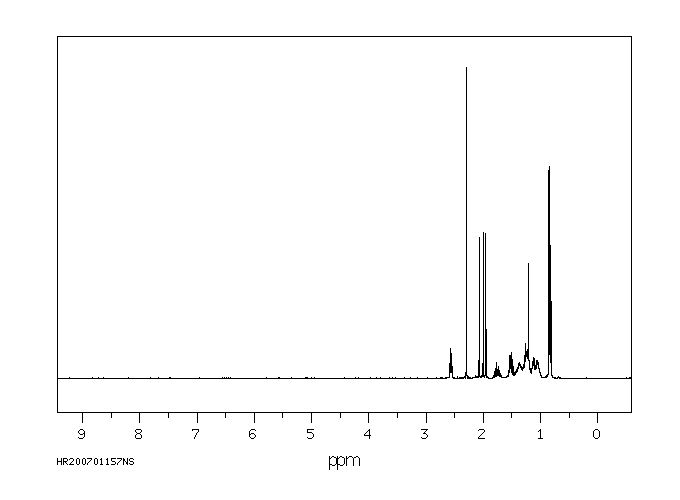
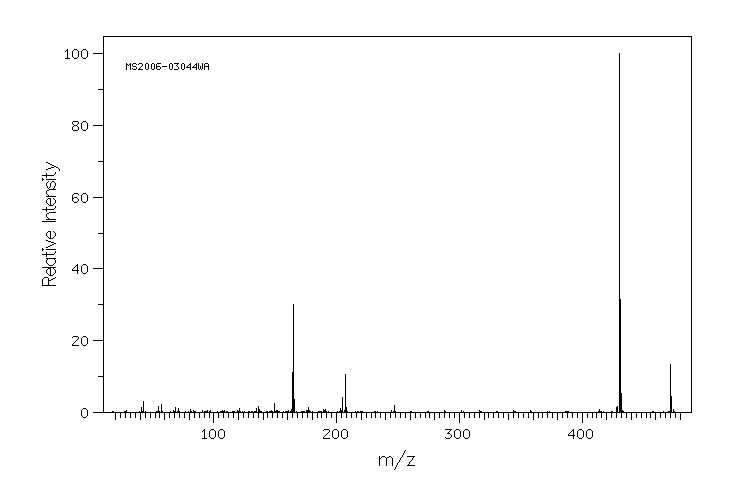
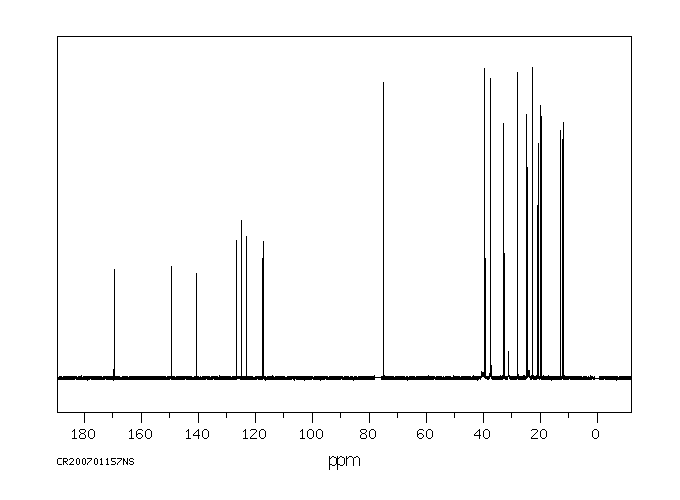
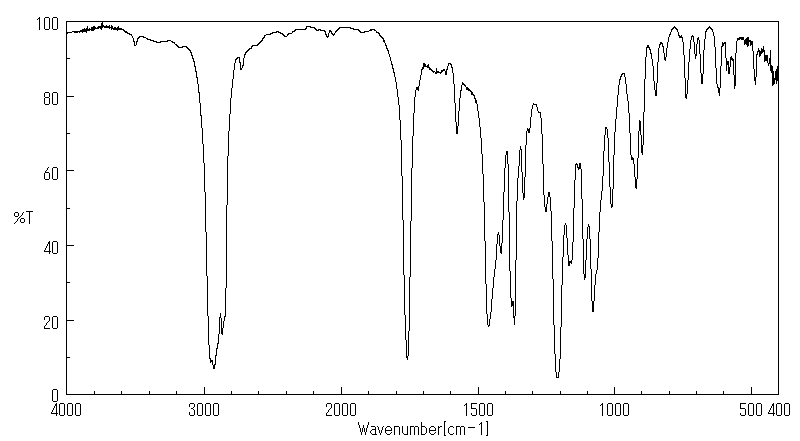
_In addition to any following information, owing to d-alpha-Tocopherol acetate's closely related chemical nature with alpha-Tocopherol acetate, please also refer to the drug information page for alpha-Tocopherol acetate for further data._ Hepatic.
Primary hepatic metabolism of alpha-tocopherol begins in the endoplasmic reticulum with CYP4F2/CYP3A4 dependent ω-hydroxylation of the aliphatic side-chain, which forms the 13’-hydroxychromanol (13’-OH) metabolite. Next, peroxisome ω-oxidation results in 13’-carboxychromanol (13’-COOH). Following these two steps are five consecutive β-oxidation reactions which serve to shorten the alpha-tocopherol metabolite side-chains. The first of these β-oxidations occurs still in the peroxisome environment, generating carboxydimethyldecylhydroxychromanol (CDMDHC, 11’-COOH). Then, in the mitochondrion, the second β-oxidation step forms the carboxymethyloctylhydroxychromanol (CDMOHC, 9’-COOH) metabolite. Since both CDMDHC and CDMOHC possess a side-chain length of between 13 to 9 carbon units, they are considered long-chain metabolites. The hydrophobicity of these long-chain metabolites means they are not excreted in the urine but have been found in human microsomes, serum, and feces. The next two β-oxidation reactions, still within the mitochondrion environment, produce two intermediate chain metabolites: carboxymethylhexylhydroxychromanol (CDMHHC, 7’-COOH), followed by carboxymethylbutylhydroxychromanol (CMBHC, 5’-COOH). Both of these intermediate chain metabolites are found in human plasma, feces, and urine. Finally, the last mitochrondrion β-oxidation generates the catabolic end product of alpha-tocopherol metabolism: carboxyethyl-hydroxychromans (CEHC, 3'-COOH), which is considered a short-chain metabolite. CEHC has been observed in human plasma, serum, urine, and feces.
_In addition to any following information, owing to d-alpha-Tocopherol acetate's closely related chemical nature with alpha-Tocopherol acetate, please also refer to the drug information page for alpha-Tocopherol acetate for further data._ Bound to beta-lipoproteins in blood.
Data regarding the protein binding of alpha-tocopherol is not readily accessible at the moment. In fact, the existence of alpha-tocopherol binding proteins in tissues other than the liver is involved in ongoing investigations.
_In addition to any following information, owing to d-alpha-Tocopherol acetate's closely related chemical nature with alpha-Tocopherol acetate, please also refer to the drug information page for alpha-Tocopherol acetate for further data._ 50 to 80% absorbed from gastrointestinal tract.
_In addition to any following information, owing to d-alpha-Tocopherol acetate's closely related chemical nature with alpha-Tocopherol acetate, please also refer to the drug information page for alpha-Tocopherol acetate for further data._
_In addition to any following information, owing to d-alpha-Tocopherol acetate's closely related chemical nature with alpha-Tocopherol acetate, please also refer to the drug information page for alpha-Tocopherol acetate for further data._
_In addition to any following information, owing to d-alpha-Tocopherol acetate's closely related chemical nature with alpha-Tocopherol acetate, please also refer to the drug information page for alpha-Tocopherol acetate for further data._
When vitamin E is ingested, intestinal absorption plays a principal role in limiting its bioavailability. It is known that vitamin E is a fat-soluble vitamin that follows the intestinal absorption, hepatic metabolism, and cellular uptake processes of other lipophilic molecules and lipids. The intestinal absorption of vitamin E consequently requires the presence of lipid-rich foods. In particular, stable alpha-tocopherol acetate undergoes hydrolysis by bile acid-dependant lipase in the pancreas or by an intestinal mucosal esterase. Subsequent absorption in the duodenum occurs by way of transfer from emulsion fat globules to water-soluble multi- and unilamellar vesicles and mixed micelles made up of phospholipids and bile acids. As the uptake of vitamin E into enterocytes is less efficient compared to other types of lipids, this could potentially explain the relatively low bioavailability of vitamin E. Alpha-tocopherol acetate itself is embedded in matrices where its hydrolysis and its uptake by intestinal cells are markedly less efficient than in mixed micelles. Subsequently, the intestinal cellular uptake of vitamin E from mixed micelles follows in principle two different pathways across enterocytes: (a) via passive diffusion, and (b) via receptor-mediated transport with various cellular transports like scavenger receptor class B type 1, Niemann-Pick C1-like protein, ATP-binding cassette (ABC) transporters ABCG5/ABCG8, or ABCA1, among others. Vitamin E absorption from the intestinal lumen is dependent upon biliary and pancreatic secretions, micelle formation, uptake into enterocytes, and chylomicron secretion. Defects at any step can lead to impaired absorption.. Chylomicron secretion is required for vitamin E absorption and is a particularly important factor for efficient absorption. All of the various vitamin E forms show similar apparent efficiencies of intestinal absorption and subsequent secretion in chylomicrons. During chylomicron catabolism, some vitamin E is distributed to all the circulating lipoproteins. Chylomicron remnants, containing newly absorbed vitamin E, are then taken up by the liver. Vitamin E is secreted from the liver in very low density lipoproteins (VLDLs). Plasma vitamin E concentrations depend upon the secretion of vitamin E from the liver, and only one form of vitamin E, alpha-tocopherol, is ever preferentially resecreted by the liver. The liver is consequently responsible for discriminating between tocopherols and the preferential plasma enrichment with alpha-tocopherol. In the liver, the alpha-tocopherol transfer protein (alpha-TTP) likely is in charge of the discriminatory function, where RRR- or d-alpha-tocopherol possesses the greatest affinity for alpha-TTP. It is nevertheless believed that only a small amount of administered vitamin E is actually absorbed. In two individuals with gastric carcinoma and lymphatic leukemia, the respective fractional absorption in the lymphatics was only 21 and 29 percent of label from meals containing alpha-tocopherol and alpha-tocopheryl acetate, respectively. Additionally, after feeding three separate single doses of 125 mg, 250 mg, and 500 mg to a group of healthy males, the observed plasma peak concentrations (ng/mL) were 1822 +/- 48.24, 1931.00 +/- 92.54, and 2188 +/- 147.61, respectively.
[EN] PHENOTHIAZINE DERIVATIVES AND USES THEREOF<br/>[FR] DÉRIVÉS DE PHÉNOTHIAZINE ET LEURS UTILISATIONS
申请人:CAMP4 THERAPEUTICS CORP
公开号:WO2019195789A1
公开(公告)日:2019-10-10
The present invention provides phenothiazine compounds, processes for their preparation, pharmaceutical compositions comprising the compounds, and the use of the compounds or the compositions in the treatment of various diseases or conditions, for example ribosomal disorders and ribosomopathies, e.g. Diamond Blackfan anemia (DBA).
The invention relates to a novel flavonoid derivative, to an extract comprising the flavonoid derivative, to the cosmetic and pharmaceutical use thereof, to preparations comprising the flavonoid derivative or extract, and to a process for the preparation of the flavonoid derivative or extract.
4-Imidazol-1-yl-butane-1-sulfonic acid ionic liquid: Synthesis, structural analysis, physical properties and catalytic application as dual solvent-catalyst
作者:Nader Ghaffari Khaligh、Taraneh Mihankhah、Mohd Rafie Johan、Joon Ching Juan
DOI:10.1080/10426507.2018.1487426
日期:2019.9.2
Abstract 4-Imidazol-1-yl-butane-1-sulfonic acid (ImBu-SO3H) has been successfully synthetized and fully characterized by FT-IR and high-resolution NMR spectroscopy (1H, 13C). The “plausible” alternative structures of ImBu-SO3H were discussed on the basis of its NMR data. The ionic liquid showed interesting dual solvent-catalyst property, which was studied experimentally for the acetylation of a variety
[EN] HSD17B13 INHIBITORS AND USES THEREOF<br/>[FR] COMPOSÉS ET UTILISATIONS DE CEUX-CI
申请人:INIPHARM INC
公开号:WO2021211974A1
公开(公告)日:2021-10-21
Described herein are HSD17B13 inhibitors and pharmaceutical compositions comprising said inhibitors. The subject compounds and compositions are useful for the treatment of liver disease, metabolic disease, or cardiovascular disease, such as NAFLD or NASH, or drug induced liver injury (DILI).
A rheology modifier/hair styling resin which is a crosslinked, linear poly(vinyl amide/polymerizable carboxylic acid) copolymer exhibits advantageous hair care properties of high viscosity and long-lasting curl retention.