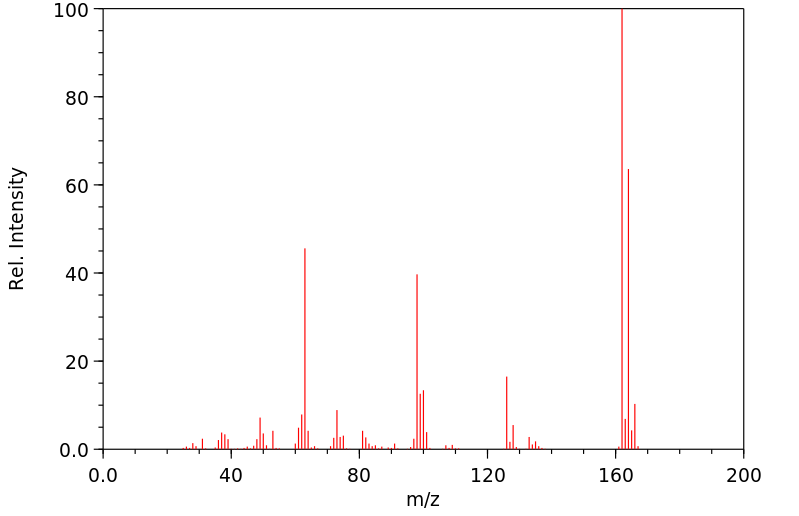
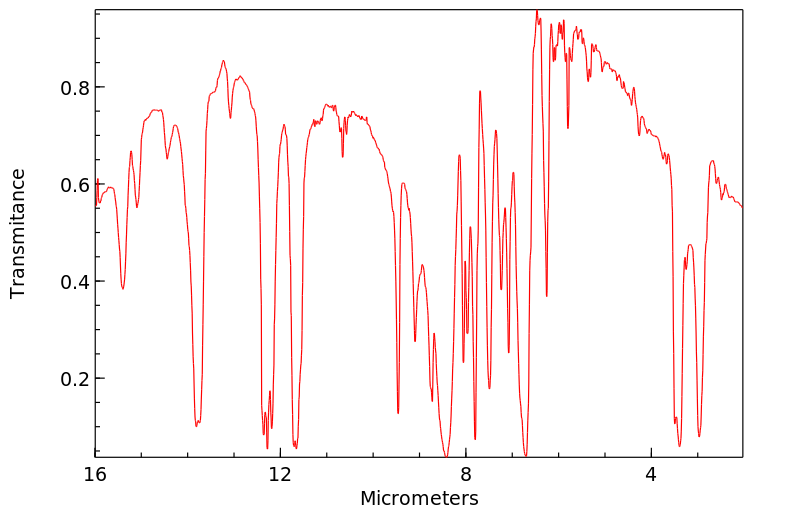
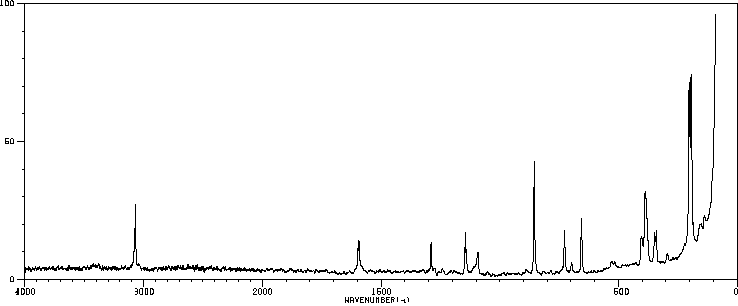
2,4-dichlorophenol is a colorless crystalline solid with a medicinal odor. Melting point 45°C. Sinks in water. Strong irritant to tissues; toxic by ingestion.
颜色/状态:
COLORLESS CRYSTALS OR NEEDLES
气味:
Strong medicinal
蒸汽密度:
5.62 (NTP, 1992) (Relative to Air)
蒸汽压力:
0.09 mm Hg at 25 °C
大气OH速率常数:
1.06e-12 cm3/molecule*sec
自燃温度:
500 °C
分解:
When heated to decomposition ... it emits highly toxic fumes of /hydrogen chloride/.
汽化热:
13,230.4 cal/mole
气味阈值:
Odor detection in water: 2.10X10⁻¹ ppm (chemically pure)
Mice were given (14)C labeled gamma- or beta-benzene hexachloride by intraperitoneal injection, and the appearance of metabolites in the urine was monitored. 2,4-DCP and 2,4-DCP conjugates were found and identified primarily as glucuronides and sulfates.
The uptake and metabolism of (14)C-labeled 2,4-dichlorophenol was studied in the isolated perfused rat liver. The uptake of radioactivity in liver increased 6.6% in the presence of ATP and 14.9% in the presence of ATP and galactosamine. This increase in the uptake of radioactivity was indicative of maintaining the integrity of liver cells. The glucuronide conjugate of 2,4-DCP in bile was derivatized by permethylation and characterized by gas chromatography-mass spectrometry. Two unusual metabolites were isolated from the liver and perfusate by extraction with hexane. The gas chromatogram of these metabolites gave peaks at the retention times 12.0 and 15.5 min, and were characterized by mass spectrometry. The fragmentation pattern of these metabolites confirmed their identity as dichloromethyoxyphenols.
... Various chlorophenols /including 2,4-dichlorophenol/ are formed as intermediate metabolites during the microbiological degradation of the herbicides 2,4-D & 2,4,5-T and pesticides Silvex, Ronnel, lindane and benzene hexachloride. /Chlorophenols/
After inhalation and dermal routes, 2,4-DCP is rapidly absorbed and excreted. Data on absorption following oral route are limited to animal studies. When administered intravenously to rats, 2,4-DCP rapidly distributes to the kidney, liver, fat, and brain, with the highest concentrations in the kidney and liver. 2,4-DCP strongly bind to serum proteins, including albumin and globulin. Both human and animal studies indicate that sulfation and glucuronidation are the main metabolic pathways of chlorophenols. 2,4-DCP has been shown to be metabolized into two major metabolites identified as 2-chloro-1,4-hydroxyquinone and 2-chloro-1,4-benzoquinone by microsomal fractions and whole cells of yeast Saccharomyces cerevisiae expressing human cytochrome P-450 3A4. Another metabolite, 1,2,4-hydroxybenzene, was also detected during biotransformation by whole cells but was not observed in microsomal fractions. (L159)
Chlorophenols have moderately high lipophilicity. Absorption through the gastrointestinal tract is by simple diffusion and is expected to be both rapid and virtually complete. The chlorophenols are also readily absorbed after dermal exposure. Chlorophenols uncouple mitochondrial oxidative phosphorylation and produce convulsions. At low concentrations, uncoupling produces stimulation of state 4 (resting state) respiration as a result of increased adenosine triphosphatase (ATPase) activity in the absence of a phosphate acceptor. Inhibition of state 3 (active) respiration is also observed. At moderate concentrations, resting respiration is neither stimulated nor inhibited. Significant inhibition of respiration, associated with a breakdown of the electron transport process and decreased ATPase activity, occurs at very high concentrations. (L159)
Evaluation: There is limited evidence in humans for the carcinogenicity of combined exposures to polychlorophenols or to their sodium salts. There is evidence suggesting lack of carcinogenicity of 2,4-dichlorophenol in experimental animals. ... Overall evaluation: Combined exposures to polychlorophenols or to their sodium salts are possibly carcinogenic to humans (Group 2B). /Polychlorophenols and their sodium salts/
Dermally absorbed doses of chlorophenols are potentially more toxic than orally absorbed doses. Within 20 minutes of being accidentally splashed with 2,4-DCP on his right arm and leg, a worker experienced seizures, collapsed, and died shortly thereafter. Lethargy, tremors, convulsions, and/or central nervous system depression have been reported in chlorophenol-exposed animals. (L159)
来源:Toxin and Toxin Target Database (T3DB)
毒理性
暴露途径
该物质可通过吸入、皮肤接触和摄入被人体吸收。所有接触途径都会产生严重的局部影响。
The substance can be absorbed into the body by inhalation, through the skin and by ingestion. Serious local effects by all routes of exposure.
来源:ILO-WHO International Chemical Safety Cards (ICSCs)
The metabolism and distribution of 2,4-dichlorophenol (2,4-DCP) were studied in rat after iv admin of 10 mg/kg. Highest concn was found in kidney, followed by liver, fat, & brain. 2,4-DCP is metabolized to glucuronide & other conjugates. The parent cmpd & its conjugates were rapidly eliminated from body. Half-life of 2,4-DCP & its conjugates in plasma, fat, brain, liver, & kidney ranged from 4 to 30 min. Vol of distribution of 2,4-DCP in plasma was 3.7 L/kg. Tissue/plasma ratios indicated that 2,4-DCP has a greater affinity for kidney.
Because of their high lipid solubility and low ionization at physiological pH, dichlorophenols would be expected to be readily absorbed following ingestion. /Dichlorophenols/
In vivo incorporated bovine urine and adipose reference materials were prepared by oral administration of lindane, 1,2-dichlorobenzene, 2,4-dichlorophenol, 1,2,3,4-tetrachlorobenzene, and pentachlorophenol to cows. The tissues and fluids obtained were homogenized and analyzed for administered compounds and major metabolites. Virtually all of the 20 g dose of 2,4-dichlorophenol was eliminated in the urine within 24 hr following administration. ... The urine samples were found to be reasonably stable with chlorophenol concentrations remaining constant over four freeze/thaw cycles. ...
Compounds are provided having the structure of Formula (I) or a pharmaceutically acceptable isomer, racemate, hydrate, solvate, isotope, or salt thereof, wherein R1, R2, X1, X2, Y1, and Y2 are as defined herein. Such compounds function as thyromimetics and have utility for treating diseases such as neurodegenerative disorders and fibrotic diseases. Pharmaceutical compositions containing such compounds are also provided, as are methods of their use and preparation.
A Novel and Versatile Silicon-Derived Linkage Agent, 4-[1-Hydroxy-2-(trimethylsilyl)ethyl]benzoic Acid, Compatible with the Fmoc/t-Bu Strategy for Solid Phase Synthesis of C-Terminal Peptide Acids
作者:Hann-Guang Chao、Michael S. Bernatowicz、Paul D. Reiss、Clifford E. Klimas、Gary R. Matsueda
DOI:10.1021/ja00084a016
日期:1994.3
solid-phase peptidesynthesis. With the development of a versatile silicon-based linkage agent, «SAC», 4-[1-hydroxy-2-(trimethylsilyl)ethyl] benzoic acid (1), for the production of peptideC-terminalacids, these problems have been successfully solved. Demonstration of the advantages of using SAC linker was provided by synthesizing a C-terminaltryptophan-containing dodecapeptide and a C-terminal proline-containing
1,1,2,2-Tetrahydroperoxy-1,2-Diphenylethane: An efficient and high oxygen content oxidant in various oxidative reactions
作者:Kaveh Khosravi、Shirin Naserifar
DOI:10.1016/j.tet.2018.09.041
日期:2018.11
Several oxidative approaches namely thiocyanation of aromatic compounds, epoxidation of alkenes, amidation of aromaticaldehydes, epoxidation of α, β-unsaturated ketones, oxidation of sulfides to sulfoxides and sulfones, bayer-villeger reaction, bromination and iodation of aniline and phenol derivatives oxidativeesterification, oxidation of pyridines and oxidation of secondary, allylic and benzyllic
Thirty-four newbenzo[d]thiazol derivatives 2a-2i, 3a-3r, and 4a-4g were synthesized and investigated for their potential antidepressant and anticonvulsant effects. In a forced swimming test, 2c and 2d showed the highest antidepressant and anticonvulsant effects. 2c and 2d displayed a higher percentage decrease in immobility duration (89.96% and 89.62%, respectively) than that of fluoxetine (83.62%)
The azidomethylene protecting group allows the synthesis of unstable phenolic compounds which are used as quinonemethideprecursors in the alkylations of alcohols, phenols, azide, thiophenol, amines, enols and enolates.