接口广告
摩熵化学
数据开放平台 数据库官网
小程序
打开微信扫一扫
首页 分子通 化学资讯 化学百科 反应查询 关于我们
请输入关键词

二氢黄樟素 | 94-58-6

中文名称
二氢黄樟素
中文别名
二氢黄樟脑;6-氯-2,3-二氢-1,4-苯并噁嗪-3-酮-4-乙酸
英文名称
dihydrosafrole
英文别名
5-propylbenzo[d][1,3]dioxole;5-propyl-1,3-benzodioxole
二氢黄樟素化学式
CAS
94-58-6
化学式
C10H12O2
mdl
MFCD00022999
分子量
164.204
InChiKey
MYEIDJPOUKASEC-UHFFFAOYSA-N
BEILSTEIN
——
EINECS
——
  • 物化性质
  • 计算性质
  • ADMET
  • 安全信息
  • SDS
  • 制备方法与用途
  • 上下游信息
  • 反应信息
  • 文献信息
  • 表征谱图
  • 同类化合物
  • 相关功能分类
  • 相关结构分类

物化性质

  • 稳定性/保质期:
    • 存在于烟气中。
    • 具有致癌活性。

计算性质

  • 辛醇/水分配系数(LogP):
    3.2
  • 重原子数:
    12
  • 可旋转键数:
    2
  • 环数:
    2.0
  • sp3杂化的碳原子比例:
    0.4
  • 拓扑面积:
    18.5
  • 氢给体数:
    0
  • 氢受体数:
    2

ADMET

代谢
在老鼠身上,二氢黄樟素的主要代谢途径包括断裂甲基乙烯基残基,并将甲基碳原子以二氧化碳形式呼出。
In mice, major metabolic pathway for ... dihydrosafrole ... incl cleavage of methylenedioxyphenol residue & exhalation of methylene carbon atom as CO2.
来源:Hazardous Substances Data Bank (HSDB)
代谢
二氢黄樟素在大鼠和小鼠中可能产生4-丙基儿茶酚。/根据表格/
Dihydrosafrole yields 4-propylcatechol probably in mouse & fly. /From table/
来源:Hazardous Substances Data Bank (HSDB)
代谢
用 safrole、isosafrole、dihydrosafrole 或 methylenedioxystyrylamyl ketone 处理大鼠(150 mg/kg,ip,每天一次,共3天)导致形成了 455 纳米细胞色素 P450-甲氧基苯基代谢物复合物。
Treatment of rats with safrole, isosafrole, dihydrosafrole, or methylenedioxystyrylamyl ketone (150 mg/kg, ip daily for 3 days) resulted in the formation of 455-nm cytochrome P450-methylenedioxyphenyl metabolite complex.
来源:Hazardous Substances Data Bank (HSDB)
代谢
...研究了比格犬和食蟹猴的筛骨(嗅觉)和上颌骨(呼吸)鼻甲区域二氢黄樟醚及其代谢物的清除情况。在定期滴注二氢黄樟醚(对于犬来说,在滴注后24小时)期间,频繁收集鼻咽粘液。收集血液、尿液和粪便,以检查在滴注过程中和滴注完成后48小时内从鼻腔清除二氢黄樟醚的情况。...在最初的24小时内,回收到的放射性物质主要集中在尿液和血液样本中。从鼻咽粘液中回收到的放射性物质存在于有机可提取和溶性形式。...在任一鼻甲区域滴注的(3)H-二氢黄樟醚被代谢为2-甲氧基-4-丙基苯酚、2-甲氧基-4-丙烯苯酚和1-(3,4-亚甲二氧基苯基)丙醇-1。在两种物种中都产生了一些次要的代谢物。来自筛骨滴注犬的一个粘液样本中含有了1-(3,4-亚甲二氧基苯基)丙烯(异黄樟醚)作为代谢物。...在猴子和小狗中,鼻内沉积的二氢黄樟醚的代谢存在种间、个体间和区域间的差异。
... Clearance of dihydrosafrole and its metabolites from both the ethmoid (olfactory) and maxillary (respiratory) turbinate regions of Beagle dogs and Cynomolgus monkeys was examined. Nasopharyngeal mucus was collected at frequent intervals during periodic instillation of dihydrosafrole (and, for the dogs, 24 hr after instillation). Blood, urine and feces were collected to examine dihydrosafrole clearance from the nose during instillations and up to 48 hr after completion of the nasal instillations of (3)H-dihydrosasfrole. ... Most of the recovered radioactivity was in urine and blood samples over the first 24 hr. Radioactivity was recovered from the nasopharyngeal mucus in both organic extractable and water soluble forms. ... (3)H-dihydrosafrole instilled in either turbinate region was metabolized to 2-methoxy-4-propylphenol, 2-methoxy-4-propenylphenol and 1-(3,4-methylenedioxyphenyl)propan-1-ol. A number of minor metabolites were produced in both species. One mucus sample from an ethmoid-instilled dog contained 1-(3,4-methylenedioxyphenyl)propene (isosafrole) as a metabolite. ... interspecies, inter-individual and inter-regional differences occur in the metabolism of nasally deposited dihydrosafrole in monkeys and dogs.
来源:Hazardous Substances Data Bank (HSDB)
毒理性
  • 毒性总结
鉴定和使用:二氢黄樟素是一种无色油状液体。它用于香精中。美国食品药品监督管理局(FDA)不允许二氢黄樟素用于食品中。人体研究:在25名志愿者的48小时封闭贴片测试中,12%的二氢黄樟素未引起刺激性。在志愿者的最大化测试中,它没有引起过敏。动物研究:在完整或磨损的兔皮肤上以全强度涂抹,它引起了轻微的刺激性。将1000 ppm的二氢黄樟素掺入大鼠的饮食中喂养2年,抑制了雌性大鼠的生长并引起了宏观和微观的肝脏变化。在饮食中摄入5000或10000 mg/kg平的大鼠中,有75%发生了食道肿瘤(乳头状瘤和鳞状细胞癌),而在摄入2500 mg/kg平的大鼠中,有20%发生了食道肿瘤。二氢黄樟素处理的小鼠中观察到了肝细胞瘤、肺肿瘤和淋巴瘤。二氢黄樟素处理的雄性小鼠肝细胞瘤的发生率倾向于高于雌性。在Salmonella typhimurium TA1535和TA100菌株中,无论是否进行代谢激活,均未发现显著的诱变活性。
IDENTIFICATION AND USE: Dihydrosafrole is a colorless oily liquid. It is used in fragrances. The FDA does not permit dihydrosafrole to be used in foods. HUMAN STUDIES: Tested at 12% in petrolatum, it produced no irritation after a 48 hr closed-patch test in 25 human subjects. It was not sensitizing in the maximization test in volunteers. ANIMAL STUDIES: Applied full strength on intact or abraded rabbit skin it was mildly irritating. Dihydrosafrole 1000 ppm fed to rats in the diet for 2 yr retarded growth in females and caused macroscopic and microscopic liver changes. Tumors of esophagus (papillomas and epidermoid carcinomas) developed in 75% of rats fed 5000 or 10,000 mg/kg of diet levels and in 20% of rats fed 2500 mg/kg of diet. Hepatomas, pulmonary tumors and lymphomas were observed in dihydrosafrole-treated mice. Hepatoma incidence tended to be higher in males than females with dihydrosafrole. No significant mutagenic activity was noted in Salmonella typhimurium strains TA1535 and TA100 with or without metabolic activation.
来源:Hazardous Substances Data Bank (HSDB)
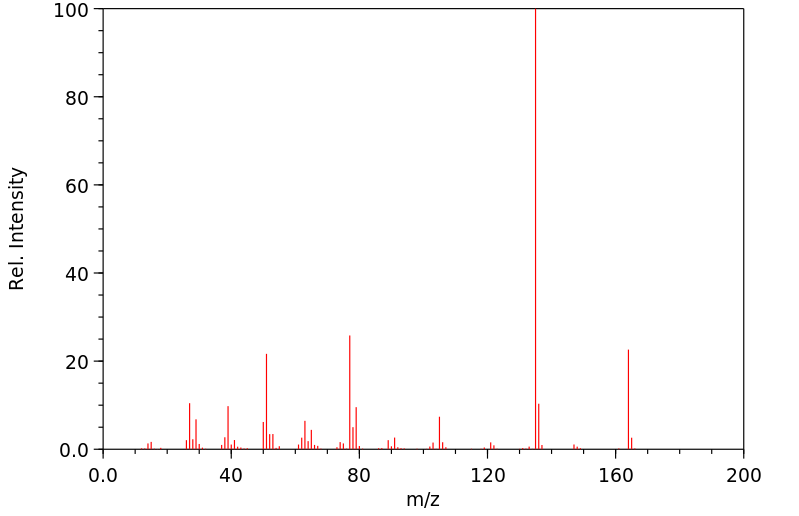
毒理性
  • 致癌性证据
没有关于人类的数据。有充分的证据表明对动物具有致癌性。总体评估:2B组:该物质可能对人类具有致癌性。
No data are available in humans. Sufficient evidence of carcinogenicity in animals. OVERALL EVALUATION: Group 2B: The agent is possibly carcinogenic to humans.
来源:Hazardous Substances Data Bank (HSDB)
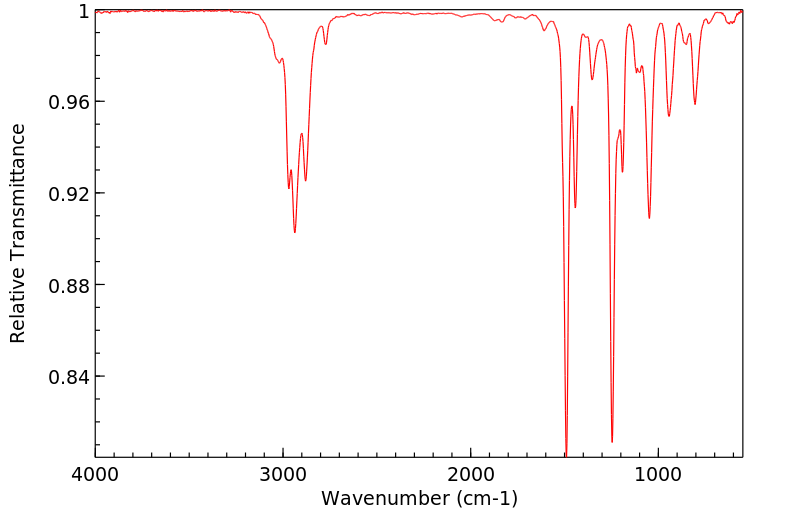
毒理性
  • 致癌物分类
国际癌症研究机构致癌物:二氢黄樟素
IARC Carcinogenic Agent:Dihydrosafrole
来源:International Agency for Research on Cancer (IARC)
毒理性
  • 致癌物分类
国际癌症研究机构(IARC)致癌物分类:2B组:可能对人类致癌
IARC Carcinogenic Classes:Group 2B: Possibly carcinogenic to humans
来源:International Agency for Research on Cancer (IARC)
毒理性
  • 致癌物分类
国际癌症研究机构专著:第10卷:(1976年)一些天然存在的物质
IARC Monographs:Volume 10: (1976) Some Naturally Occurring Substances
来源:International Agency for Research on Cancer (IARC)
吸收、分配和排泄
在给予口服(14)C-标记的黄樟素二氢黄樟素的小鼠中,分别回收了96%和101%的放射性;其中64%和61%在二氧化碳中,18%和23%在尿液中,6%和5%在粪便和肠道中,2%和2.5%在肝脏中,6%和9%在尸体中找到...
In mice given ... (14)C-labeled safrole or dihydrosafrole orally, 96% and 101% of radioactivity ... recovered; 64 and 61% were found in CO2, 18 & 23% in urine, 6 and 5% in feces and intestine, 2 & 2.5% in liver & 6 and 9% in carcasses ...
来源:Hazardous Substances Data Bank (HSDB)

上下游信息

  • 上游原料
    中文名称 英文名称 CAS号 化学式 分子量
    • 1
    • 2
  • 下游产品
    中文名称 英文名称 CAS号 化学式 分子量
    • 1
    • 2
    • 3

反应信息

