


5-溴吡啶-2-羧酸甲酯 | 29682-15-3
中文名称
5-溴吡啶-2-羧酸甲酯
中文别名
甲基5-溴甲基吡啶酸酯;5-溴皮考林酸甲酯;5-溴-2-吡啶甲酸甲酯;2-甲酸甲酯-5-溴吡啶;5-溴吡啶-2-甲酸甲酯;5-溴吡啶甲酸甲酯
英文名称
methyl 5-bromopicolinate
英文别名
methyl 5-bromopyridine-2-carboxylate;5-bromopyridine-2-carboxylic acid methyl ester;methyl 5-bromo-2-picolinate;methyl 5-bromo-2-pyridinecarboxylate

CAS
29682-15-3
化学式
C7H6BrNO2
mdl
MFCD04112493
分子量
216.034
InChiKey
JEURNBCYNWNADN-UHFFFAOYSA-N
BEILSTEIN
——
EINECS
——
-
物化性质
-
计算性质
-
ADMET
-
安全信息
-
SDS
-
制备方法与用途
-
上下游信息
-
文献信息
-
表征谱图
-
同类化合物
-
相关功能分类
-
相关结构分类
物化性质
-
熔点:101-103°C
-
沸点:290.9±20.0 °C(Predicted)
-
密度:1.579±0.06 g/cm3(Predicted)
-
稳定性/保质期:
如果遵照规格使用和储存,则不会分解,没有已知危险反应。请避免与氧化物接触。
计算性质
-
辛醇/水分配系数(LogP):1.1
-
重原子数:11
-
可旋转键数:2
-
环数:1.0
-
sp3杂化的碳原子比例:0.142
-
拓扑面积:39.2
-
氢给体数:0
-
氢受体数:3
安全信息
-
危险品标志:Xi
-
安全说明:S26,S37
-
危险类别码:R36/37/38
-
海关编码:2933399090
-
WGK Germany:3
-
危险性防范说明:P261,P305+P351+P338
-
危险性描述:H315,H319,H335
-
储存条件:请将贮藏器密封保存,并存放在阴凉、干燥处。同时,确保工作环境具有良好的通风或排气设施。
SDS

| Name: | Methyl 5-bromo-2-pyridinecarboxylate Material Safety Data Sheet |
| Synonym: | Methyl 5-bromopicolinat |
| CAS: | 29682-15-3 |
Synonym:Methyl 5-bromopicolinat
Section 2 - COMPOSITION, INFORMATION ON INGREDIENTS
| CAS# | Chemical Name | content | EINECS# |
| 29682-15-3 | Methyl 5-bromo-2-pyridinecarboxylate | ca. 100 | unlisted |
Risk Phrases: 36/37/38
Section 3 - HAZARDS IDENTIFICATION
EMERGENCY OVERVIEW
Irritating to eyes, respiratory system and skin.
Potential Health Effects
Eye:
Causes eye irritation. May cause chemical conjunctivitis.
Skin:
Causes skin irritation. May be harmful if absorbed through the skin.
Ingestion:
May cause irritation of the digestive tract. May be harmful if swallowed.
Inhalation:
Causes respiratory tract irritation. May be harmful if inhaled. Can produce delayed pulmonary edema.
Chronic:
No information found.
Section 4 - FIRST AID MEASURES
Eyes: Immediately flush eyes with plenty of water for at least 15 minutes, occasionally lifting the upper and lower eyelids. Get medical aid.
Skin:
Get medical aid. Flush skin with plenty of water for at least 15 minutes while removing contaminated clothing and shoes. Wash clothing before reuse.
Ingestion:
Never give anything by mouth to an unconscious person. Get medical aid. Do NOT induce vomiting. If conscious and alert, rinse mouth and drink 2-4 cupfuls of milk or water. Wash mouth out with water.
Inhalation:
Remove from exposure and move to fresh air immediately. If not breathing, give artificial respiration. If breathing is difficult, give oxygen. Get medical aid. Do NOT use mouth-to-mouth resuscitation.
Notes to Physician:
Treat symptomatically and supportively.
Section 5 - FIRE FIGHTING MEASURES
General Information:
As in any fire, wear a self-contained breathing apparatus in pressure-demand, MSHA/NIOSH (approved or equivalent), and full protective gear. During a fire, irritating and highly toxic gases may be generated by thermal decomposition or combustion.
Extinguishing Media:
Use water spray, dry chemical, carbon dioxide, or chemical foam.
Section 6 - ACCIDENTAL RELEASE MEASURES
General Information: Use proper personal protective equipment as indicated in Section 8.
Spills/Leaks:
Clean up spills immediately, observing precautions in the Protective Equipment section. Sweep up or absorb material, then place into a suitable clean, dry, closed container for disposal. Avoid generating dusty conditions. Provide ventilation.
Section 7 - HANDLING and STORAGE
Handling:
Minimize dust generation and accumulation. Avoid breathing dust, vapor, mist, or gas. Avoid contact with eyes, skin, and clothing.
Keep container tightly closed. Avoid ingestion and inhalation. Use with adequate ventilation. Wash clothing before reuse.
Storage:
Store in a cool, dry place. Store in a tightly closed container.
Section 8 - EXPOSURE CONTROLS, PERSONAL PROTECTION
Engineering Controls:
Facilities storing or utilizing this material should be equipped with an eyewash facility and a safety shower. Use adequate ventilation to keep airborne concentrations low.
Exposure Limits CAS# 29682-15-3: Personal Protective Equipment Eyes: Wear appropriate protective eyeglasses or chemical safety goggles as described by OSHA's eye and face protection regulations in 29 CFR 1910.133 or European Standard EN166.
Skin:
Wear appropriate protective gloves to prevent skin exposure.
Clothing:
Wear appropriate protective clothing to prevent skin exposure.
Respirators:
Follow the OSHA respirator regulations found in 29 CFR 1910.134 or European Standard EN 149. Use a NIOSH/MSHA or European Standard EN 149 approved respirator if exposure limits are exceeded or if irritation or other symptoms are experienced.
Section 9 - PHYSICAL AND CHEMICAL PROPERTIES
Physical State: Solid
Color: Not available.
Odor: Not available.
pH: Not available.
Vapor Pressure: Not available.
Viscosity: Not available.
Boiling Point: Not available.
Freezing/Melting Point: 100-102 deg C
Autoignition Temperature: Not available.
Flash Point: Not available.
Explosion Limits, lower: Not available.
Explosion Limits, upper: Not available.
Decomposition Temperature:
Solubility in water:
Specific Gravity/Density:
Molecular Formula: C7H6BrNO2
Molecular Weight: 216.03
Section 10 - STABILITY AND REACTIVITY
Chemical Stability:
Not currently available.
Conditions to Avoid:
Dust generation.
Incompatibilities with Other Materials:
Strong oxidizing agents.
Hazardous Decomposition Products:
Nitrogen oxides, carbon monoxide, carbon dioxide, hydrogen bromide.
Hazardous Polymerization: Has not been reported
Section 11 - TOXICOLOGICAL INFORMATION
RTECS#:
CAS# 29682-15-3 unlisted.
LD50/LC50:
Not available.
Carcinogenicity:
Methyl 5-bromo-2-pyridinecarboxylate - Not listed by ACGIH, IARC, or NTP.
Section 12 - ECOLOGICAL INFORMATION
Section 13 - DISPOSAL CONSIDERATIONS
Dispose of in a manner consistent with federal, state, and local regulations.
Section 14 - TRANSPORT INFORMATION
IATA
Shipping Name: Not regulated.
Hazard Class:
UN Number:
Packing Group:
IMO
Shipping Name: Not regulated.
Hazard Class:
UN Number:
Packing Group:
RID/ADR
Not regulated as a hazardous material.
Section 15 - REGULATORY INFORMATION
European/International Regulations
European Labeling in Accordance with EC Directives
Hazard Symbols: XI
Risk Phrases:
R 36/37/38 Irritating to eyes, respiratory system
and skin.
Safety Phrases:
S 26 In case of contact with eyes, rinse immediately
with plenty of water and seek medical advice.
S 37/39 Wear suitable gloves and eye/face
protection.
WGK (Water Danger/Protection)
CAS# 29682-15-3: No information available.
Canada
None of the chemicals in this product are listed on the DSL/NDSL list.
CAS# 29682-15-3 is not listed on Canada's Ingredient Disclosure List.
US FEDERAL
TSCA
CAS# 29682-15-3 is not listed on the TSCA inventory.
It is for research and development use only.
SECTION 16 - ADDITIONAL INFORMATION
N/A
制备方法与用途
用途
吡啶及其衍生物是合成杂环化合物类农药和医药的重要中间体。由于吡啶替代苯环后可得到的新化合物通常具有更高的生物活性或更低的毒性,因此5-溴吡啶-2-羧酸甲酯这类化合物被广泛用作医药合成中的重要中间体。
制备方法在装有机械搅拌器、恒压滴液漏斗和温度计的100 mL四口瓶中,加入60 mL质量分数为65%的硫酸和40 mmol的吡啶-2-羧酸甲酯。搅拌下缓慢加入NaBrO3(6.0 g,40 mmol),并控制反应温度在25~35 ℃,反应4小时后冷却至室温。将反应混合物置于冰浴中,用稀碱溶液中和至呈碱性。然后用二氯甲烷萃取三次(每次15 mL),无水MgSO4干燥,过滤除去固体物质,并蒸除溶剂。最后通过减压蒸馏收集馏分,即可得到5-溴吡啶-2-羧酸甲酯。
上下游信息
-
上游原料
中文名称 英文名称 CAS号 化学式 分子量 5-溴-2-吡啶羧酸 5-bromoisonicotinic acid 30766-11-1 C6H4BrNO2 202.007 5-溴-2-吡啶甲醛 5-bromo-pyridine-2-carbaldehyde 31181-90-5 C6H4BrNO 186.008 -
下游产品
中文名称 英文名称 CAS号 化学式 分子量 5-溴-2-嘧啶甲酸乙酯 ethyl 5-bromopicolinate 77199-09-8 C8H8BrNO2 230.061 5-溴-2-吡啶羧酸 5-bromoisonicotinic acid 30766-11-1 C6H4BrNO2 202.007 5-溴吡啶甲酸叔丁酯 tert-butyl 5-bromopicolinate 845306-08-3 C10H12BrNO2 258.115 5-溴-1,6-二氢-6-氧代吡啶-2-羧酸甲酯 methyl 5-bromo-6-hydroxypyridine-2-carboxylate 178876-86-3 C7H6BrNO3 232.034 —— methyl 5-bromo-6-fluoropyridine-2-carboxylate 1214336-44-3 C7H5BrFNO2 234.025 5-溴-6-氯吡啶-2-羧酸甲酯 methyl 5-bromo-6-chloropicolinate 1214353-79-3 C7H5BrClNO2 250.479 5-溴-6-氰基吡啶甲酸甲酯 methyl 5-bromo-6-cyanopyridine-2-carboxylate 959741-33-4 C8H5BrN2O2 241.044 —— (5-bromopyridin-2-yl)methyl acetate 31181-74-5 C8H8BrNO2 230.061 5-甲基吡啶-2-羧酸甲酯 methyl 5-methylpyridine-2-carboxylate 29681-38-7 C8H9NO2 151.165 5-溴-2-羟甲基吡啶 (5-bromopyridin-2-yl)methanol 88139-91-7 C6H6BrNO 188.024 5-氟吡啶-2-甲酸甲酯 methyl 5-fluoropyridine-2-carboxylate 107504-07-4 C7H6FNO2 155.129 5-溴-2-吡啶甲醛 5-bromo-pyridine-2-carbaldehyde 31181-90-5 C6H4BrNO 186.008 —— methyl 5-bromo-6-(2-fluoroethoxy)pyridine-2-carboxylate 1613292-73-1 C9H9BrFNO3 278.078 —— methyl 5-bromo-6-(2-methoxyethoxy)pyridine-2-carboxylate 1415899-35-2 C10H12BrNO4 290.114 5-氰基-吡啶-2-羧酸甲酯 methyl 5-cyanopicolinate 76196-66-2 C8H6N2O2 162.148 5-乙炔-2-甲酸甲酯吡啶 methyl 5-ethynylpicolinate 17880-61-4 C9H7NO2 161.16 5-乙烯基吡啶-2-羧酸甲酯 methyl 5-vinylpyridine-2-carboxylate 1147893-82-0 C9H9NO2 163.176 —— methyl 5-bromo-6-(cyclopropylmethoxy)pyridine-2-carboxylate 1415899-20-5 C11H12BrNO3 286.125 —— methyl 2-pyridinecarboxylate-d4 1254073-78-3 C7H7NO2 141.106 —— methyl 5-(prop-1-yn-1-yl)picolinate —— C10H9NO2 175.187 - 1
- 2
反应信息
-
作为反应物:描述:5-溴吡啶-2-羧酸甲酯 在 (1,1'-bis(diphenylphosphino)ferrocene)palladium(II) dichloride 、 sodium tetrahydroborate 、 氯化亚砜 、 potassium carbonate 、 N,N-二甲基甲酰胺 、 calcium chloride 作用下, 以 四氢呋喃 、 1,4-二氧六环 、 甲醇 、 水 为溶剂, 反应 6.0h, 生成 2-(氯甲基)-5-苯基吡啶参考文献:名称:[EN] URIDINE NUCLEOSIDE DERIVATIVES, COMPOSITIONS AND METHODS OF USE
[FR] DÉRIVÉS D'URIDINE NUCLÉOSIDE, COMPOSITIONS ET PROCÉDÉS D'UTILISATION摘要:这项披露涉及尿苷核苷衍生物,包含治疗有效量的这些核苷衍生物的组合物,以及使用这些核苷衍生物或组合物治疗对P2Y6受体的化合物(如激动剂)具有反应的疾病的方法,例如神经疾病,包括神经退行性疾病(如阿尔茨海默病、帕金森病)和创伤性中枢神经系统损伤、疼痛、唐氏综合症(DS)、青光眼和炎症性疾病。公开号:WO2018058148A1 -
作为产物:参考文献:名称:Ligand creation via linking—a rapid and convenient method for construction of novel supported PyOX-ligands摘要:A novel supported amino alcohol linker was synthesized and utilized for attachment of picolinic acid derivatives onto different supports. When the resin bound molecule was further activated, the PyOX-moiety could be constructed reliably in enantiopure form. Furthermore, an efficient Pd-catalyzed modification of a picolinic acid derivative is presented. (c) 2005 Elsevier Ltd. All rights reserved.DOI:10.1016/j.tet.2005.08.073
-
作为试剂:描述:5-溴-2-吡啶羧酸 、 硫酸 、 甲醇 在 乙酸乙酯 、 碳酸氢钠 、 Brine 、 Sodium sulfate-III 、 5-溴吡啶-2-羧酸甲酯 作用下, 反应 4.0h, 以to afford the title compound methyl 5-bromopicolinate (5.1 g, crude) as an off-white solid which的产率得到5-溴吡啶-2-羧酸甲酯参考文献:名称:N-ARYLMETHYL SULFONAMIDE NEGATIVE MODULATORS OF NR2A摘要:本发明公开了选择性负调节含有NR2A亚基的NMDA受体的化合物、包含该化合物的制药组合物以及使用该化合物治疗疾病的方法。公开号:US20150141433A1
文献信息
-
[EN] IMIDAZOLE DERIVATIVES USEFUL AS INHIBITORS OF FAAH<br/>[FR] DÉRIVÉS IMIDAZOLE UTILES COMME INHIBITEURS DE LA FAAH申请人:MERCK & CO INC公开号:WO2009152025A1公开(公告)日:2009-12-17The present invention is directed to certain imidazole derivatives which are useful as inhibitors of Fatty Acid Amide Hydrolase (FAAH). The invention is also concerned with pharmaceutical formulations comprising these compounds as active ingredients and the use of the compounds and their formulations in the treatment of certain disorders, including osteoarthritis, rheumatoid arthritis, diabetic neuropathy, postherpetic neuralgia, skeletomuscular pain, and fibromyalgia, as well as acute pain, migraine, sleep disorder, Alzeimer Disease, and Parkinson's Disease.
-
[EN] OXAZOLE DERIVATIVES USEFUL AS INHIBITORS OF FAAH<br/>[FR] DÉRIVÉS D'OXAZOLE UTILES COMME INHIBITEURS DE FAAH申请人:MERCK & CO INC公开号:WO2010017079A1公开(公告)日:2010-02-11The present invention is directed to certain oxazole derivatives which are useful as inhibitors of Fatty Acid Amide Hydrolase (FAAH). The invention is also concerned with pharmaceutical formulations comprising these compounds as active ingredients and the use of the compounds and their formulations in the treatment of certain disorders, including osteoarthritis, rheumatoid arthritis, diabetic neuropathy, postherpetic neuralgia, skeletomuscular pain, and fibromyalgia, as well as acute pain, migraine, sleep disorder, Alzeimer Disease, and Parkinson's Disease.
-
三唑并哒嗪类衍生物、其制备方法、药物组合物和用途
-
[EN] COMPOUNDS USEFUL AS CSF1 MODULATORS<br/>[FR] COMPOSÉS UTILES EN TANT QUE MODULATEURS DU FACTEUR 1 DE STIMULATION DE COLONIES申请人:REDX PHARMA PLC公开号:WO2016051193A1公开(公告)日:2016-04-07This invention relates to novel compounds and to pharmaceutical compositions comprising the novel compounds. More specifically, the invention relates to compounds useful as Colony Stimulating Factor 1 Receptor (cFMS) modulators (e.g. cFMS inhibitors). This invention also relates to processes for preparing the compounds, uses of the compounds in treatment and methods of treatment employing the compounds. Specifically, the invention relates to the use of the compounds for the treatment of cancer and autoimmune diseases.
-
<i>Ex situ</i> generation of stoichiometric HCN and its application in the Pd-catalysed cyanation of aryl bromides: evidence for a transmetallation step between two oxidative addition Pd-complexes作者:Steffan K. Kristensen、Espen Z. Eikeland、Esben Taarning、Anders T. Lindhardt、Troels SkrydstrupDOI:10.1039/c7sc03912c日期:——methodology was also suitable for the synthesis of 13C-labelled benzonitriles with ex situ generated 13C-hydrogen cyanide. Stoichiometric studies with the metal complexes were undertaken to delineate the mechanism for this catalytic transformation. Treatment of Pd(P(tBu)3)2 with H13CN in THF provided two Pd-hydride complexes, (P(tBu)3)2Pd(H)(13CN), and [(P(tBu)3)Pd(H)]2Pd(13CN)4, both of which were isolated首次报道了使用接近化学计量和气态氰化氢的钯催化芳基溴化物氰化的方案。采用两室反应器在密闭环境中安全释放异位生成的HCN,事实证明该方法在Ni催化的氢氰化反应中非常有效。随后,利用该装置将一定范围的芳基和杂芳基溴化物(28个实例)直接高产率地转化为相应的苄腈,而无需使用氰化物盐。在二恶烷-水溶剂混合物中,使用Pd(0)预催化剂P(t Bu)3 -Pd-G3和弱碱乙酸钾实现氰化。该方法也适用于13的合成C-标记的苄腈与异位生成13 C-氰化氢。进行了金属配合物的化学计量研究,以描述这种催化转化的机理。在THF中用H 13 CN处理Pd(P(t Bu)3)2提供了两种Pd-氢化物配合物(P(t Bu)3)2 Pd(H)(13 CN)和[(P(t Bu) )3)Pd(H)] 2 Pd(13 CN)4,两者均已分离,并通过NMR光谱和X射线晶体结构分析进行了表征。当在KOAc存在下在THF∶水混合物中进行相同的反应时,仅形成(P(t
表征谱图
-
氢谱1HNMR
-
质谱MS
-
碳谱13CNMR
-
红外IR
-
拉曼Raman
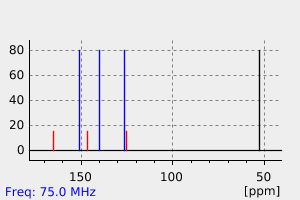
-
峰位数据
-
峰位匹配
-
表征信息
同类化合物
(S)-氨氯地平-d4
(R,S)-可替宁N-氧化物-甲基-d3
(R)-(+)-2,2'',6,6''-四甲氧基-4,4''-双(二苯基膦基)-3,3''-联吡啶(1,5-环辛二烯)铑(I)四氟硼酸盐
(R)-N'-亚硝基尼古丁
(R)-DRF053二盐酸盐
(5E)-5-[(2,5-二甲基-1-吡啶-3-基-吡咯-3-基)亚甲基]-2-亚磺酰基-1,3-噻唑烷-4-酮
(5-溴-3-吡啶基)[4-(1-吡咯烷基)-1-哌啶基]甲酮
(5-氨基-6-氰基-7-甲基[1,2]噻唑并[4,5-b]吡啶-3-甲酰胺)
(2S,2'S)-(-)-[N,N'-双(2-吡啶基甲基]-2,2'-联吡咯烷双(乙腈)铁(II)六氟锑酸盐
(2S)-2-[[[9-丙-2-基-6-[(4-吡啶-2-基苯基)甲基氨基]嘌呤-2-基]氨基]丁-1-醇
(2R,2''R)-(+)-[N,N''-双(2-吡啶基甲基)]-2,2''-联吡咯烷四盐酸盐
(1'R,2'S)-尼古丁1,1'-Di-N-氧化物
黄色素-37
麦斯明-D4
麦司明
麝香吡啶
鲁非罗尼
鲁卡他胺
高氯酸N-甲基甲基吡啶正离子
高氯酸,吡啶
高奎宁酸
马来酸溴苯那敏
马来酸氯苯那敏-D6
马来酸左氨氯地平
顺式-双(异硫氰基)(2,2'-联吡啶基-4,4'-二羧基)(4,4'-二-壬基-2'-联吡啶基)钌(II)
顺式-二氯二(4-氯吡啶)铂
顺式-二(2,2'-联吡啶)二氯铬氯化物
顺式-1-(4-甲氧基苄基)-3-羟基-5-(3-吡啶)-2-吡咯烷酮
顺-双(2,2-二吡啶)二氯化钌(II) 水合物
顺-双(2,2'-二吡啶基)二氯化钌(II)二水合物
顺-二氯二(吡啶)铂(II)
顺-二(2,2'-联吡啶)二氯化钌(II)二水合物
韦德伊斯试剂
非那吡啶
非洛地平杂质C
非洛地平
非戈替尼
非布索坦杂质66
非尼拉朵
非尼拉敏
雷索替丁
阿雷地平
阿瑞洛莫
阿扎那韦中间体
阿培利司N-6
阿伐曲波帕杂质40
间硝苯地平
间-硝苯地平
镉,二碘四(4-甲基吡啶)-
锌,二溴二[4-吡啶羧硫代酸(2-吡啶基亚甲基)酰肼]-

联系我们


关注我们

公众号

