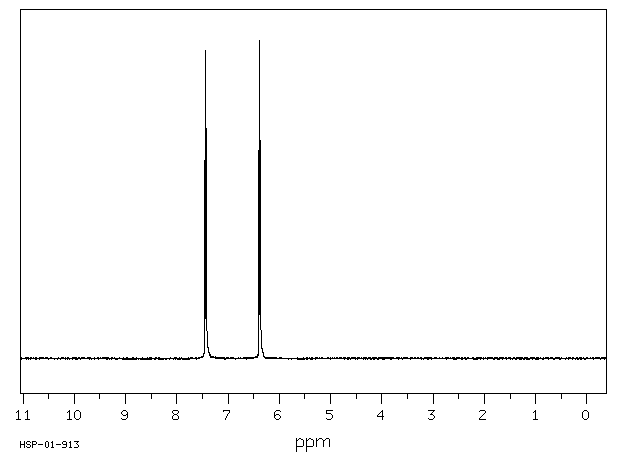
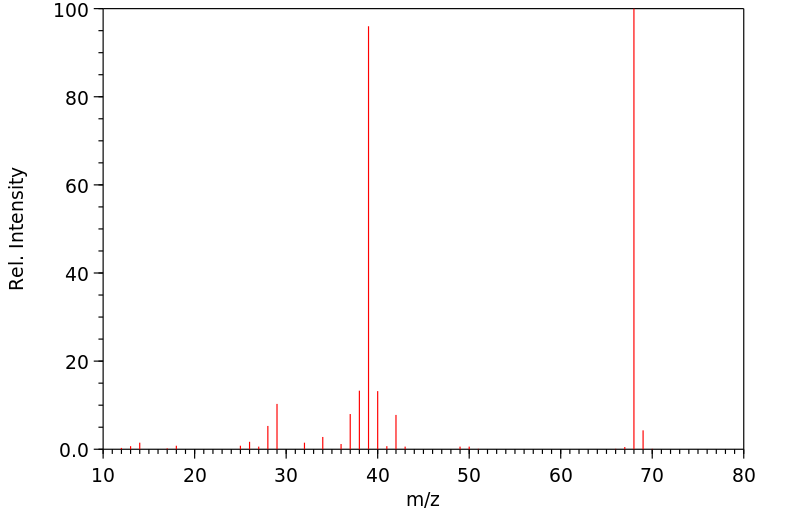
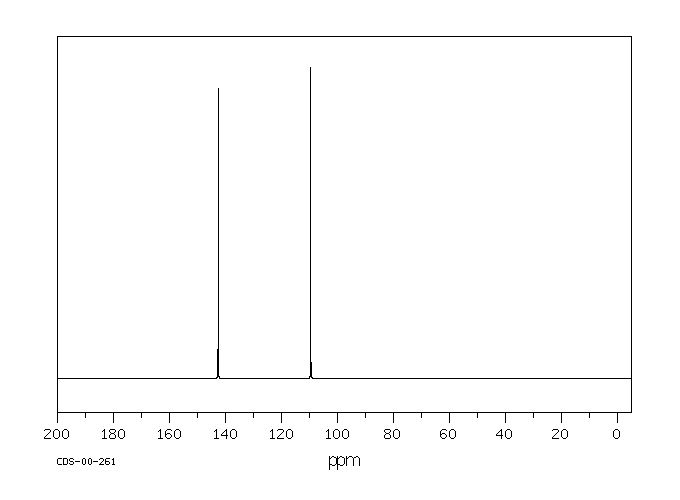
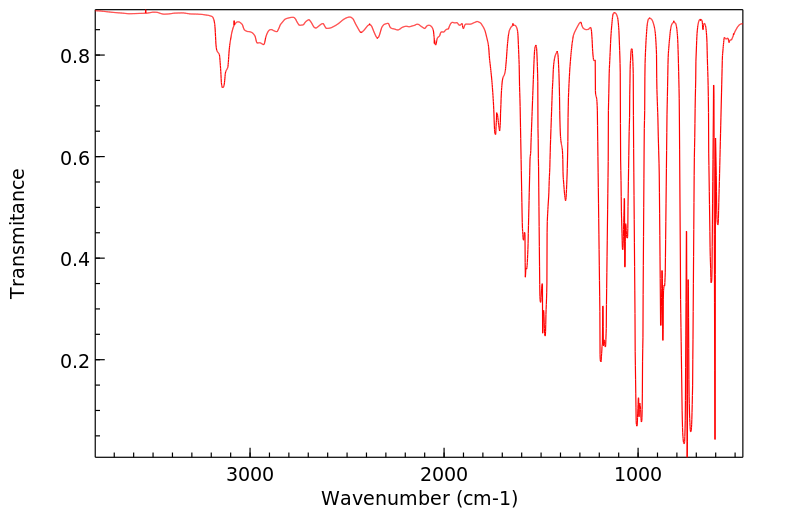
Furan appears as a clear colorless liquid with a strong odor. Flash point below 32°F. Less dense than water and insoluble in water. Vapors heavier than air.
颜色/状态:
Colorless liquid, turns brown upon standing; color change is retarded if a small amount of water is added
气味:
Ethereal
蒸汽密度:
2.3 (EPA, 1998) (Relative to Air)
蒸汽压力:
600 mm Hg at 25 °C /from experimentally derived coefficients/
大气OH速率常数:
4.05e-11 cm3/molecule*sec
自燃温度:
390 °C
分解:
Furan is a heat-stable compound although, @ 670 °C in the absence of catalyst, or @ 360 °C in the presence of nickel, it decomposes to form a mixture consisting mainly of carbon monoxide, hydrogen, and hydrocarbons.
... Previous studies indicate that furan is oxidized to a reactive alpha,beta-unsaturated dialdehyde, cis-2-butene-1,4-dial (BDA), in a reaction catalyzed by cytochrome P450. Five previously characterized metabolites are derived from the reaction of BDA with cellular nucleophiles such as glutathione and protein. They include the monoglutathione reaction product, N-[4-carboxy-4-(3-mercapto-1H-pyrrol-1-yl)-1-oxobutyl]-l-cysteinylglycine cyclic sulfide, and its downstream metabolite, S-[1-(1,3-dicarboxypropyl)-1H-pyrrol-3-yl]methylthiol, as well as (R)-2-acetylamino-6-(2,5-dihydro-2-oxo-1H-pyrrol-1-yl)-1-hexanoic acid and N-acetyl-S-[1-(5-acetylamino-5-carboxypentyl)-1H-pyrrol-3-yl]-l-cysteine and its sulfoxide. The last two compounds are downstream metabolites of a BDA-derived cysteine-lysine cross-link, S-[1-(5-amino-5-carboxypentyl)-1H-pyrrol-3-yl]-l-cysteine. In this report, ... the characterization of seven additional urinary furan metabolites, all of which are derived from this cross-link /is described/. The cysteinyl residue is subject to several biotransformation reactions, including N-acetylation and S-oxidation. Alternatively, it can undergo beta-elimination followed by S-methylation to a methylthiol intermediate that is further oxidized to a sulfoxide. The lysine portion of the cross-link either is N-acetylated or undergoes a transamination reaction to generate an alpha-ketoacid metabolite that undergoes oxidative decarboxylation. Some of these metabolites are among the most abundant furan metabolites present in urine as judged by LC-MS/MS analysis, indicating that the oxidation of furan to BDA and BDA's subsequent reaction with cellular cysteine and lysine residues may represent a significant in vivo pathway of furan biotransformation. Because they are derived from cellular BDA reaction products, these metabolites are markers of furan exposure and bioactivation and could be explored as potential biomarkers in human studies.
Furan is a potent hepatotoxin and hepatocarcinogen in rodents, causing hepatocellular adenomas and carcinomas in rats and mice, and high incidences of cholangiocarcinomas in rats at doses ≥ 2 mg/kg bw. A genotoxic mode of action cannot be excluded for furan-induced tumor formation. Furan is metabolized by cytochrome P450 (CYP) enzymes, predominantly CYP2E1, to its major metabolite cis-2-butene-1,4-dial (BDA, maleic dialdehyde), a highly reactive electrophile identified as the key mediator of furan toxicity and carcinogenicity. Furan-mediated effects on glutathione (GSH) levels and cell viability can be suppressed by the CYP inhibitor 1-phenylimidazole and increased by pretreatment of rats with acetone (a CYP2E1-inducing agent), indicating that furan cytotoxicity depends on its metabolic activation. BDA has been shown to react with cellular nucleophiles such as GSH and amino acids and to cause cross-links between thiols and amino groups, giving rise to lactam and pyrrole derivatives. Furan reduced the percentage of DNA in the comet tail in turkey liver fetal hepatocytes. Furan was also shown to induce chromosomal aberrations and sister chromatid exchanges (SCEs) in Chinese hamster ovary (CHO) cells. A statistically significant increase of micronucleated cells was recently reported in the spleen of furan-treated mice. A reduction of percentage of DNA in comet tail in liver cells was observed following treatment of turkey fetuses in ovo. Exposure to furan at doses associated with increased tumor incidences initially causes hepatocellular necrosis, accompanied by inflammation and sustained regenerative proliferation of hepatocytes, which may present key events in furan-induced hepatocellular carcinogenicity. Subcapsular and centrilobular necrosis accompanied by markedly increased liver enzymes is the primary response to furan treatment. The involvement of inflammatory processes in furan toxicity is also reflected by increased expression of cytokines and other inflammation-associated genes, such as IFN-γ, IL-1β, IL-6, IL-10, and components of the complement system, which may, however, also derive from lesions involving the biliary tract. Indeed, increased production of reactive oxygen species in response to furan is suggested by immunohistochemical detection of 8-oxo-dG within nuclei of hepatocytes of centrilobular areas following high-dose exposure and changes in the expression of genes responsive to oxidative stress in rats and/or mice. (A15446)
Evaluation: There is inadequate evidence in humans for the carcinogenicity of furan. There is sufficient evidence in experimental animals for the carcinogenicity of furan. Overall evaluation: Furan is possibly carcinogenic to humans (Group 2B).
RESP UPTAKE IN DOGS WAS 90-95%, VARYING INVERSELY WITH VENTILATORY RATE. RETENTION WAS NOT AFFECTED BY TIDAL VOL CHANGES BUT WAS DIRECTLY RELATED TO CONCN INHALED FROM CIGARETTE SMOKE. FURAN IS READILY ABSORBED BY INHALATION ROUTE.
... The kinetics of furan biotransformation of male F344 rats were studied in vivo and in vitro in order to understand target tissue dosimetry. A physiologically based pharmacokinetic (PBPK) model for furan in rats was developed from gas uptake studies using the initial furan concn of 100, 500, 1050, and 3850 ppm. Tissue partition coefficients for furan were determined in vitro using vial equilibration techniques. Furan gas uptake kinetics in vivo were described by a single saturable process with a V(max) of 27.0 umol/hr/250 g rat and a K(m) of 2.0 uM. Furan metabolism in vivo was inhibited by pyrazole. The furan PBPK model adequately simulated blood and liver furan concn following 4 hr inhalation exposures to 52, 107, and 208 ppm furan. The biotransformation of furan was studied in freshly isolated rat hepatocytes exhibited a K(m) of 0.4 uM and a V(max) of 0.018 umol/hr/1x10(6) cells. Inhibition and induction studies indicated that cytochrome p450 was the catalyst of furan oxidation. ... /This data/ suggests that freshly isolated hepatocytes are a valuable in vitro system for predicting chemical pharmacokinetics in vivo.
Combination of FBPase inhibitors and insulin sensitizers for the treatment of diabetes
申请人:Metabasis Therapeutics, Inc.
公开号:US06756360B1
公开(公告)日:2004-06-29
Pharmaceutical compositions containing an FBPase inhibitor and an insulin sensitizer are provided as well as methods for treating diabetes and diseases responding to increased glycemic control, an improvement in insulin sensitivity, a reduction in insulin levels, or an enhancement of insulin secretion.
Copper-Catalyzed Protodecarboxylation of Aromatic Carboxylic Acids
作者:Lukas J. Gooßen、Werner R. Thiel、Nuria Rodríguez、Christophe Linder、Bettina Melzer
DOI:10.1002/adsc.200700223
日期:2007.10.8
A catalyst generated from copper(I) oxide and 4,7-diphenyl-1,10-phenanthroline for the first time allows the catalytic protodecarboxylation even of deactivated aromatic carboxylic acids, giving rise to the corresponding arenes. Based on DFT calculations, a reaction pathway is proposed that accurately reflects the experimental results, such as the observed reactivity order of the substrates.
[EN] DERIVATIVES OF AMANITA TOXINS AND THEIR CONJUGATION TO A CELL BINDING MOLECULE<br/>[FR] DÉRIVÉS DE TOXINES D'AMANITES ET LEUR CONJUGAISON À UNE MOLÉCULE DE LIAISON CELLULAIRE
申请人:HANGZHOU DAC BIOTECH CO LTD
公开号:WO2017046658A1
公开(公告)日:2017-03-23
Derivatives of Amernita toxins of Formula (I), wherein, formula (a) R 1, R 2, R 3, R 4, R 5, R 6, R 7, R 8, R 9, R 10, X, L, m, n and Q are defined herein. The preparation of the derivatives. The therapeutic use of the derivatives in the targeted treatment of cancers, autoimmune disorders, and infectious diseases.
[EN] A CONJUGATE OF A TUBULYSIN ANALOG WITH BRANCHED LINKERS<br/>[FR] CONJUGUÉ D'UN ANALOGUE DE TUBULYSINE AVEC DES LIEURS RAMIFIÉS
申请人:HANGZHOU DAC BIOTECH CO LTD
公开号:WO2019127607A1
公开(公告)日:2019-07-04
The present invention relates to the conjugation of a tubulysin analog compound to a cell-binding molecule with branched/side-chain linkers for having better delivery of the conjugate compound and targeted treatment of abnormal cells. It also relates to a branched-linkage method of conjugation of a tubulysin analog molecule to a cell-binding ligand, as well as methods of using the conjugate in targeted treatment of cancer, infection and autoimmune disease.
[EN] A CONJUGATE OF A CYTOTOXIC AGENT TO A CELL BINDING MOLECULE WITH BRANCHED LINKERS<br/>[FR] CONJUGUÉ D'UN AGENT CYTOTOXIQUE À UNE MOLÉCULE DE LIAISON CELLULAIRE AVEC DES LIEURS RAMIFIÉS
申请人:HANGZHOU DAC BIOTECH CO LTD
公开号:WO2020257998A1
公开(公告)日:2020-12-30
Provided is a conjugation of cytotoxic drug to a cell-binding molecule with a side-chain linker. It provides side-chain linkage methods of making a conjugate of a cytotoxic molecule to a cell-binding ligand, as well as methods of using the conjugate in targeted treatment of cancer, infection and immunological disorders.