接口广告
摩熵化学
数据开放平台 数据库官网
小程序
打开微信扫一扫
首页 分子通 化学资讯 化学百科 反应查询 关于我们
请输入关键词

3-甲基吡啶 | 108-99-6

中文名称
3-甲基吡啶
中文别名
β-皮考林;3-皮考林;β-甲基吡啶
英文名称
3-Methylpyridine
英文别名
β-picoline;3-Picoline;3-MePy;beta-PICOLINE
3-甲基吡啶化学式
CAS
108-99-6
化学式
C6H7N
mdl
MFCD00006402
分子量
93.1283
InChiKey
ITQTTZVARXURQS-UHFFFAOYSA-N
BEILSTEIN
——
EINECS
——
  • 物化性质
  • 计算性质
  • ADMET
  • 安全信息
  • SDS
  • 制备方法与用途
  • 上下游信息
  • 反应信息
  • 文献信息
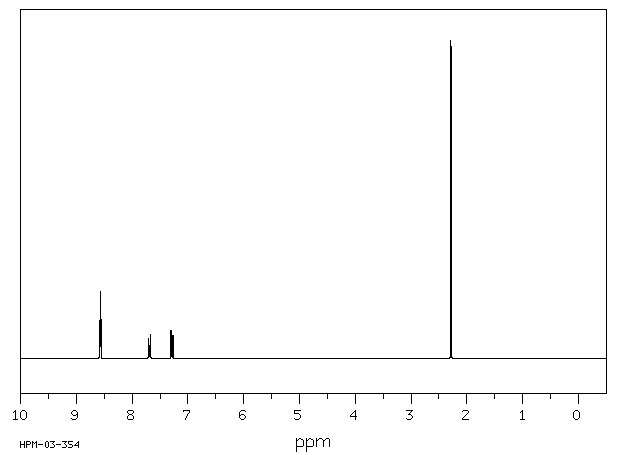
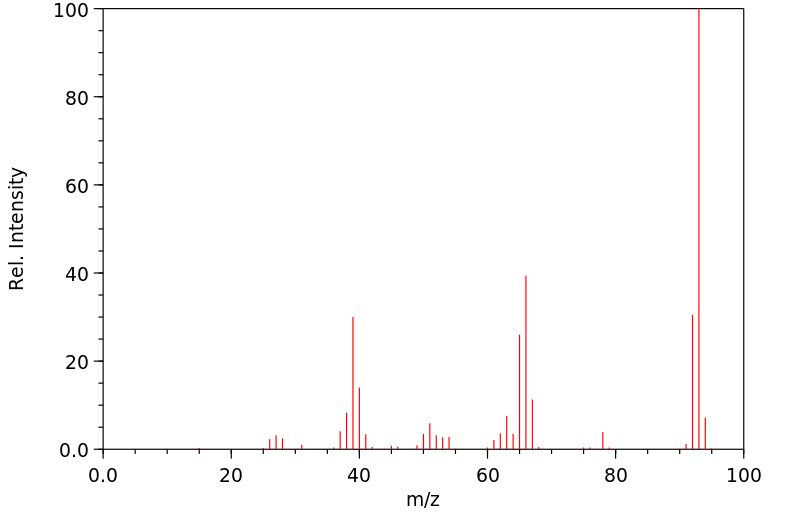
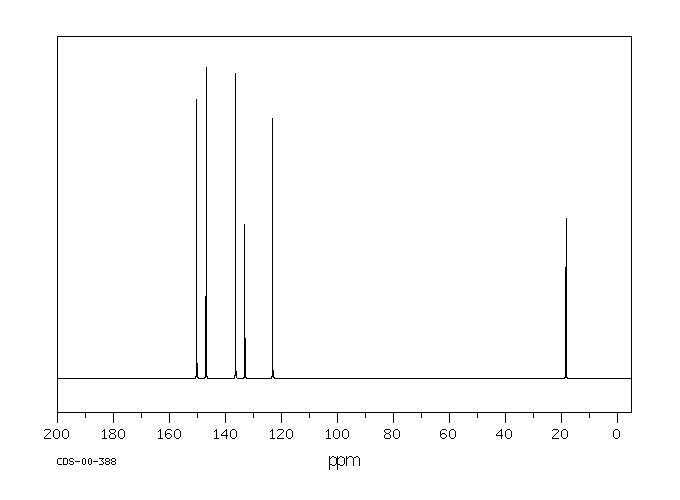
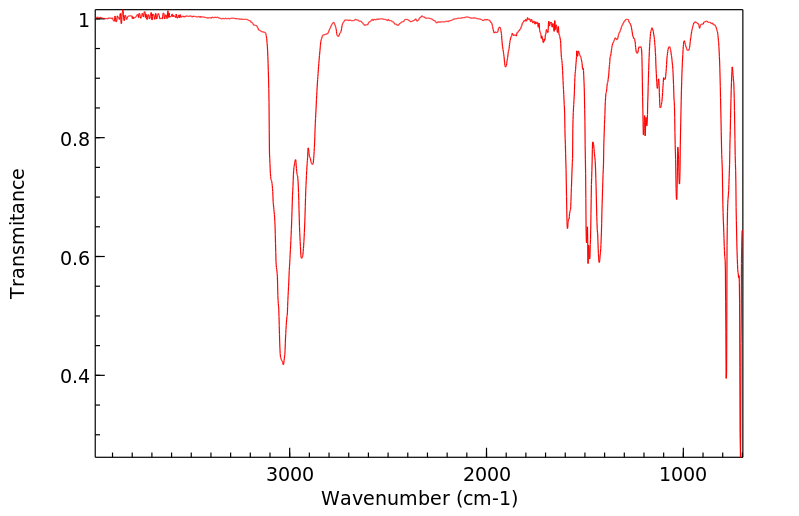
  • 表征谱图
  • 同类化合物
  • 相关功能分类
  • 相关结构分类

物化性质

  • 熔点:
    -19 °C (lit.)
  • 沸点:
    144 °C (lit.)
  • 密度:
    0.957 g/mL at 25 °C (lit.)
  • 蒸气密度:
    3.2 (vs air)
  • 闪点:
    97 °F
  • 溶解度:
    酒精:混溶(lit.)
  • 介电常数:
    11.1
  • LogP:
    1.2 at 20℃
  • 物理描述:
    Beta-picoline is a colorless liquid with a sweetish odor . (NTP, 1992)
  • 颜色/状态:
    Colorless liquid
  • 气味:
    Sweetish, not unpleasant odor
  • 蒸汽密度:
    3.21 (NTP, 1992) (Relative to Air)
  • 蒸汽压力:
    6.05 mm Hg at 25 °C
  • 亨利常数:
    7.73e-06 atm-m3/mole
  • 稳定性/保质期:
    1. 化学性质与吡啶相似,具有碱性,能与无机酸、有机酸生成盐。与无机盐类、卤代烷等形成加成化合物。在加氢条件下,根据反应条件可能生成3-甲基哌啶吡啶;氧化时则生成吡啶-3-羧酸(即烟酸C5H4N·CO2H)或吡啶

    2. 健康危害:吸入、摄入或经皮肤吸收均可引起人体不适。轻者可能出现疲乏、全身无力和嗜睡等症状,重者则会出现神经系统症状如步态不稳、短暂意识丧失等。毒理学资料及环境行为显示,该物质属于低毒性类。急性毒性测试表明,其半数致死量(LD50)在大鼠为400~800毫克/千克,在小鼠为800~1600毫克/千克。遇高热、明火或与氧化剂接触时易燃,可能引发爆炸危险。加热分解时释放有毒的氮氧化物烟气。燃烧(分解)产物包括一氧化碳二氧化碳和氮氧化物。

    3. 稳定性:稳定。

    4. 禁配物:酸类、酰基、强氧化剂、氯仿

    5. 应避免接触的条件:高温。

    6. 聚合危害:不会发生聚合。

  • 自燃温度:
    488 °C (910 °F) at 1,009 hPa (757 mmHg)
  • 分解:
    When heated to decomposition it emits toxic fumes of /nitrogen oxides/.
  • 汽化热:
    37.35 kJ/mol at 144.14 °C; 44.44 kJ/mol at 25 °C
  • 折光率:
    Index of refraction: 1.5043 at@ 24 °C/D
  • 解离常数:
    pKa 5.68 at 20 °C; Ka 2.09X10⁻⁶ at 20 °C
  • 保留指数:
    838;831;850;850;852;852;877;857;845;852;859;841;849;849;850;872;841;845;837.5;850;834;835;841;832;832;832;825.6

计算性质

  • 辛醇/水分配系数(LogP):
    1.2
  • 重原子数:
    7
  • 可旋转键数:
    0
  • 环数:
    1.0
  • sp3杂化的碳原子比例:
    0.166
  • 拓扑面积:
    12.9
  • 氢给体数:
    0
  • 氢受体数:
    1

ADMET

代谢
腹膜内给药于豚鼠、家兔、小鼠和雪貂,结果在尿液中发现N-氧化物排出(大鼠约10%,小鼠和豚鼠约40%)。
Intraperitoneal admin to guinea pigs, rabbits, mice, & ferrets resulted in urinary excretioN of the N-oxide (approx 10% in rats, 40% in mice & guinea pigs).
来源:Hazardous Substances Data Bank (HSDB)
代谢
预先用苯巴比妥处理的 mice 的尿中吡啶 N-氧化物排泄量比对照组增加。3-甲基胆蒽没有明显效果。
Urinary excretioN of pyridine n-oxide was incr iN mice pretreated with phenobarbitone, compared to controls. 3-Methylcholanthrene had no appreciable effect.
来源:Hazardous Substances Data Bank (HSDB)
代谢
氧化氮是一种次要的途径,用于3-甲基吡啶生物转化,分别以6.6%、4.2%和0.7%的生物转化率在小鼠、大鼠和豚鼠的尿液中排出,这些动物接受了化学物质的腹腔注射剂量。
N-Oxidation is a minor route for 3-methylpyridine biotransformation with 6.6, 4.2, & 0.7% biotransformation of the dose, respectively, being excreted in the urine of mice, rats & guinea pigs receiving ip doses of the chemical.
来源:Hazardous Substances Data Bank (HSDB)
毒理性
  • 毒性总结
识别和使用:3-甲基吡啶是一种无色液体。它用作溶剂;在染料树脂工业中作为中间体;用于生产杀虫剂、防剂、烟酸和烟酰胺。人类暴露和毒性:3-甲基吡啶导致一名工人眼部刺激、胃肠不适和中央神经系统(CNS)影响,可能还在另一名工人中引起了肝异常和面部皮肤疹。动物研究:3-甲基吡啶在兔子和豚鼠中是显著的皮肤刺激物,并在兔子中引起了严重的眼部刺激。它影响了大鼠的电生理参数。在实验室动物中展示了适度的急性口服、皮肤和吸入毒性,主要毒性攻击部位是CNS。重复吸入暴露导致大鼠肝脏重量增加。3-甲基吡啶在三项独立的细菌基因突变研究中进行了测试;所有研究在S. typhimurium或E. coli测试菌株中,无论有无外源代谢激活,都给出了阴性结果。在活体研究中,在雄性或雌性小鼠的外周血液中没有观察到微核红细胞频率的显著增加。在NTP致癌性研究中,基于在雄性小鼠中肺泡/支气管腺瘤和肺泡/支气管腺瘤或癌(合并)发病率的增加,3-甲基吡啶的致癌活性存在争议性证据。基于在雌性小鼠中肺泡/支气管腺瘤或癌(合并)在肺部的发病率增加以及肝细胞癌和肝母细胞瘤在肝脏的发病率增加,3-甲基吡啶的致癌活性有明确证据。在类似的大鼠研究中,没有证据表明3-甲基吡啶对雄性大鼠具有致癌活性。基于肺泡/支气管腺瘤和肺泡/支气管腺瘤或癌(合并)的发病率增加,有证据表明3-甲基吡啶对雌性大鼠具有致癌活性。
IDENTIFICATION AND USE: 3-Methylpyridine is a colorless liquid. It is used as a solvent; intermediate in dye and resins industries; in manufacture of insecticides, waterproofing agents, niacin and niacinamide. HUMAN EXPOSURE AND TOXICITY: 3-Methylpyridine caused eye irritation, gastro-intestinal disturbances and central nervous system (CNS) effects in one worker and may have produced liver abnormalities and facial skin eruptions in another. ANIMAL STUDIES: 3-Methylpyridine was a marked skin irritant in rabbits and guinea-pigs and has caused severe eye irritation in rabbits.. It has affected electrophysiological parameters in rats. Moderate acute oral, dermal and inhalation toxicity was demonstrated in laboratory animals, the principal site of toxic attack being the CNS. Repeated inhalation exposure resulted in increased liver weight in rats. 3-Methylpyridine was tested in three independent bacterial gene mutation studies; all studies gave negative results in S. typhimurium or E. coli tester strains, with and without exogenous metabolic activation. In vivo, no significant increases in the frequencies of micronucleated erythrocytes were observed in peripheral blood of male or female mice. In NTP cancerogenicity studies there was equivocal evidence of carcinogenic activity of 3-methylpyridine in male mice based on increased incidences of alveolar/ bronchiolar adenoma and alveolar/bronchiolar adenoma or carcinoma (combined). There was clear evidence of carcinogenic activity of 3-methylpyridine in female mice based on the increased incidences of alveolar/ bronchiolar adenoma or carcinoma (combined) in the lung and of hepatocellular carcinoma and hepatoblastoma in the liver. In the similar studies in rats there was no evidence of carcinogenic activity of 3-methylpyridine in male rats. There was some evidence of carcinogenic activity of 3-methylpyridine in female rats based on increased incidences of alveolar/bronchiolar adenoma and alveolar/bronchiolar adenoma or carcinoma (combined).
来源:Hazardous Substances Data Bank (HSDB)
毒理性
  • 致癌物分类
国际癌症研究机构致癌物:β-皮考林
IARC Carcinogenic Agent:β-Picoline
来源:International Agency for Research on Cancer (IARC)
毒理性
  • 致癌物分类
国际癌症研究机构(IARC)致癌物分类:第3组:无法归类其对人类致癌性
IARC Carcinogenic Classes:Group 3: Not classifiable as to its carcinogenicity to humans
来源:International Agency for Research on Cancer (IARC)
毒理性
  • 致癌物分类
国际癌症研究机构专著:第122卷(2019年):异丁基亚硝酸盐、β-吡啶和某些丙烯酸
IARC Monographs:Volume 122: (2019) Isobutyl Nitrite, β-Picoline, and Some Acrylates
来源:International Agency for Research on Cancer (IARC)
毒理性
  • 暴露途径
该物质可以通过吸入其蒸汽、通过皮肤接触以及摄入进入人体。
The substance can be absorbed into the body by inhalation of its vapour, through the skin and by ingestion.
来源:ILO-WHO International Chemical Safety Cards (ICSCs)
吸收、分配和排泄
3-甲基吡啶在大鼠体内的百分比摄取量随着剂量的增加而增加;消除过程分为两个阶段,其持续时间也与剂量有关。在吡啶上添加一个甲基团大大增加了其进入大鼠肝脏、肾脏和大脑的速度。
The % uptake of 3-methylpyridine by rats increased with dosage; elimination occurred in 2 phases, the duration of which also was dose dependent. Addition of a methyl group to pyridine greatly increased the rate of uptake into liver, kidney & brain or rats.
来源:Hazardous Substances Data Bank (HSDB)

安全信息

  • TSCA:
    Yes
  • 危险等级:
    3
  • 危险品标志:
    Xn
  • 安全说明:
    S16,S26,S36,S36/37/39,S45
  • 危险类别码:
    R22,R10,R36/37/38
  • WGK Germany:
    1
  • 海关编码:
    29333999
  • 危险品运输编号:
    UN 2313 3/PG 3
  • 危险类别:
    3
  • RTECS号:
    TJ5000000
  • 包装等级:
    III
  • 危险标志:
    GHS02,GHS05,GHS06
  • 危险性描述:
    H226,H302,H311 + H331,H314
  • 危险性防范说明:
    P261,P280,P305 + P351 + P338,P310
  • 储存条件:
    储存注意事项: - 储存于阴凉、通风的库房。 - 远离火种、热源,库温不宜超过37℃。 - 保持容器密封。 - 应与氧化剂、酸类等分开存放,切忌混储。 - 采用防爆型照明、通风设施。 - 禁止使用易产生火花的机械设备和工具。 - 储区应备有泄漏应急处理设备和合适的收容材料。

SDS

SDS:4602d7f335f54353a25244a8cd1bb6bd
查看
第一部分:化学品名称

制备方法与用途

化学性质
无色油状液体,具有不愉快的气味。能与乙醇乙醚混溶。

用途
3-甲基吡啶又名β-甲基吡啶3-皮考林,是一种有机合成中间体和溶剂,在农药领域作为杀虫剂吡虫啉啶虫脒的中间体,用于制备进一步的中间体3-甲基吡啶-N-氧化物。它也用作医药中间体、染料中间体和树脂中间体等。

用途
主要用于制造维生素B6、烟酸和烟酰胺、尼可拉明和强心剂等药物;也可作为溶剂、酒精变性剂、染料中间体、树脂中间体、橡胶促进剂杀虫剂、防剂的原料,以及胶片感光剂的添加剂。

用途
在医药工业中广泛使用,也用作染料中间体、树脂中间体、杀虫剂和防剂等。主要用于制造维生素B、烟酸、强心剂等,并作为溶剂、酒精变性剂、各种中间体及杀虫剂原料。

生产方法
3-甲基吡啶有两种生产方式:一种是从煤焦化副产物中回收;另一种是由乙醛甲醛反应合成。采用SiO₂-Al₂O₃-Bi₂O₃为催化剂,原料的摩尔配比为乙醛:37%甲醛=1.648:3.096,在432℃下进行反应,得到吡啶收率48.4%,3-甲基吡啶收率为27.0%。通过调整催化剂组成及其他反应条件,可以调节产物生成比例。选择合适的原料配比和催化剂后,使用六次甲基四胺代替,3-甲基吡啶的收率可达到59.7%。

类别
易燃液体

毒性分级
中毒

急性毒性
口服 - 大鼠 LD₅₀: 400 毫克/公斤;腹腔 - 小鼠 LD₅₀: 596 毫克/公斤

爆炸物危险特性
与空气混合可爆

可燃性危险特性
遇明火、高温或氧化剂较易燃,受热时产生有毒的氧化氮气体

储运特性
库房需通风低温干燥,并与其他氧化剂和酸类分开存放

灭火剂
干粉、干砂、二氧化碳、泡沫、1211灭火剂

上下游信息

  • 上游原料
    中文名称 英文名称 CAS号 化学式 分子量
  • 下游产品
    中文名称 英文名称 CAS号 化学式 分子量