对甲氧基苯氧乙酸 | 1877-75-4
中文名称
对甲氧基苯氧乙酸
中文别名
4-甲氧基苯氧基乙酸;4-甲氧基苯氧乙酸
英文名称
2-(4-methoxyphenoxy)acetic acid
英文别名
4-methoxyphenoxyacetic acid;p-methoxy phenoxyacetic acid

CAS
1877-75-4
化学式
C9H10O4
mdl
MFCD00014360
分子量
182.176
InChiKey
BHFSBJHPPFJCOS-UHFFFAOYSA-N
BEILSTEIN
——
EINECS
——
-
物化性质
-
计算性质
-
ADMET
-
安全信息
-
SDS
-
制备方法与用途
-
上下游信息
-
文献信息
-
表征谱图
-
同类化合物
-
相关功能分类
-
相关结构分类
物化性质
-
熔点:112-114 °C
-
沸点:275.56°C (rough estimate)
-
密度:1.2481 (rough estimate)
-
稳定性/保质期:
如果按照规格使用和储存,则不会分解,不存在已知的危险反应,应避免与氧化物接触。
计算性质
-
辛醇/水分配系数(LogP):1.2
-
重原子数:13
-
可旋转键数:4
-
环数:1.0
-
sp3杂化的碳原子比例:0.222
-
拓扑面积:55.8
-
氢给体数:1
-
氢受体数:4
安全信息
-
TSCA:Yes
-
危险等级:IRRITANT
-
危险品标志:Xi
-
安全说明:S26,S37/39
-
危险类别码:R44,R36/37/38
-
海关编码:2918990090
-
危险性防范说明:P261,P305+P351+P338
-
危险性描述:H315,H319,H335
-
储存条件:请将贮藏器密封,并存放在阴凉、干燥处。同时,确保工作环境有良好的通风或排气设施。
SDS

| Name: | 4-Methoxyphenoxyacetic Acid Material Safety Data Sheet |
| Synonym: | None known. |
| CAS: | 1877-75-4 |
Synonym: None known.
SECTION 2 - COMPOSITION, INFORMATION ON INGREDIENTS
| CAS# | Chemical Name | content | EINECS# |
| 1877-75-4 | 4-Methoxyphenoxyacetic Acid | ca 100 | 217-513-2 |
Risk Phrases: 36/37/38
SECTION 3 - HAZARDS IDENTIFICATION EMERGENCY OVERVIEW Irritating to eyes, respiratory system and skin.The toxicological properties of this material have not been fully investigated. Potential Health Effects
Eye:
Causes eye irritation. May cause chemical conjunctivitis.
Skin:
Causes skin irritation.
Ingestion:
May cause gastrointestinal irritation with nausea, vomiting and diarrhea. The toxicological properties of this substance have not been fully investigated.
Inhalation:
Causes respiratory tract irritation. The toxicological properties of this substance have not been fully investigated. Can produce delayed pulmonary edema.
Chronic:
Effects may be delayed.
SECTION 4 - FIRST AID MEASURES
Eyes:
Immediately flush eyes with plenty of water for at least 15 minutes, occasionally lifting the upper and lower eyelids. Get medical aid.
Skin:
Get medical aid. Flush skin with plenty of water for at least 15 minutes while removing contaminated clothing and shoes. Wash clothing before reuse.
Ingestion:
Never give anything by mouth to an unconscious person. Get medical aid. Do NOT induce vomiting. If conscious and alert, rinse mouth and drink 2-4 cupfuls of milk or water.
Inhalation:
Remove from exposure and move to fresh air immediately. If not breathing, give artificial respiration. If breathing is difficult, give oxygen. Get medical aid.
Notes to Physician:
Treat symptomatically and supportively.
SECTION 5 - FIRE FIGHTING MEASURES
General Information:
As in any fire, wear a self-contained breathing apparatus in pressure-demand, MSHA/NIOSH (approved or equivalent), and full protective gear. During a fire, irritating and highly toxic gases may be generated by thermal decomposition or combustion.
Extinguishing Media:
Use agent most appropriate to extinguish fire. Use water spray, dry chemical, carbon dioxide, or appropriate foam.
SECTION 6 - ACCIDENTAL RELEASE MEASURES
General Information: Use proper personal protective equipment as indicated in Section 8.
Spills/Leaks:
Vacuum or sweep up material and place into a suitable disposal container. Clean up spills immediately, observing precautions in the Protective Equipment section. Avoid generating dusty conditions. Provide ventilation.
SECTION 7 - HANDLING and STORAGE
Handling:
Wash thoroughly after handling. Use with adequate ventilation. Minimize dust generation and accumulation. Avoid contact with eyes, skin, and clothing. Keep container tightly closed. Avoid ingestion and inhalation. Wash clothing before reuse.
Storage:
Store in a tightly closed container. Store in a cool, dry, well-ventilated area away from incompatible substances.
SECTION 8 - EXPOSURE CONTROLS, PERSONAL PROTECTION
Engineering Controls:
Facilities storing or utilizing this material should be equipped with an eyewash facility and a safety shower. Use adequate ventilation to keep airborne concentrations low. Exposure Limits CAS# 1877-75-4: Personal Protective Equipment
Eyes:
Wear appropriate protective eyeglasses or chemical safety goggles as described by OSHA's eye and face protection regulations in 29 CFR 1910.133 or European Standard EN166.
Skin:
Wear appropriate protective gloves to prevent skin exposure.
Clothing:
Wear appropriate protective clothing to prevent skin exposure.
Respirators:
A respiratory protection program that meets OSHA's 29 CFR 1910.134 and ANSI Z88.2 requirements or European Standard EN 149 must be followed whenever workplace conditions warrant respirator use.
SECTION 9 - PHYSICAL AND CHEMICAL PROPERTIES
Physical State: Needles
Color: almost colorless
Odor: acetic odor
pH: Not available.
Vapor Pressure: Not available.
Viscosity: Not available.
Boiling Point: Not available.
Freezing/Melting Point: 152 deg C
Autoignition Temperature: Not applicable.
Flash Point: Not applicable.
Explosion Limits, lower: Not available.
Explosion Limits, upper: Not available.
Decomposition Temperature:
Solubility in water: Slightly soluble.
Specific Gravity/Density:
Molecular Formula: C9H10O4
Molecular Weight: 182.0676
SECTION 10 - STABILITY AND REACTIVITY
Chemical Stability:
Stable at room temperature in closed containers under normal storage and handling conditions.
Conditions to Avoid:
Incompatible materials, dust generation, excess heat.
Incompatibilities with Other Materials:
Oxidizing agents.
Hazardous Decomposition Products:
Carbon monoxide, irritating and toxic fumes and gases, carbon dioxide.
Hazardous Polymerization: Has not been reported
SECTION 11 - TOXICOLOGICAL INFORMATION RTECS#: CAS# 1877-75-4 unlisted.
LD50/LC50:
Not available.
Carcinogenicity:
4-Methoxyphenoxyacetic Acid - Not listed by ACGIH, IARC, or NTP.
SECTION 12 - ECOLOGICAL INFORMATION
SECTION 13 - DISPOSAL CONSIDERATIONS Dispose of in a manner consistent with federal, state, and local regulations.
SECTION 14 - TRANSPORT INFORMATION IATA Not regulated as a hazardous material. IMO Not regulated as a hazardous material. RID/ADR Not regulated as a hazardous material.
SECTION 15 - REGULATORY INFORMATION European/International Regulations European Labeling in Accordance with EC Directives
Hazard Symbols: XI
Risk Phrases:
R 36/37/38 Irritating to eyes, respiratory system and skin.
Safety Phrases:
S 24/25 Avoid contact with skin and eyes. S 28A After contact with skin, wash immediately with plenty of water. S 37 Wear suitable gloves. S 45 In case of accident or if you feel unwell, seek medical advice immediately (show the label where possible). WGK (Water Danger/Protection) CAS# 1877-75-4: No information available. Canada CAS# 1877-75-4 is listed on Canada's NDSL List. CAS# 1877-75-4 is not listed on Canada's Ingredient Disclosure List. US FEDERAL TSCA CAS# 1877-75-4 is listed on the TSCA inventory.
SECTION 16 - ADDITIONAL INFORMATION
MSDS Creation Date: 4/05/1997 Revision #5 Date: 3/18/2003 The information above is believed to be accurate and represents the best information currently available to us. However, we make no warranty of merchantability or any other warranty, express or implied, with respect to such information, and we assume no liability resulting from its use. Users should make their own investigations to determine the suitability of the information for their particular purposes. In no way shall the company be liable for any claims, losses, or damages of any third party or for lost profits or any special, indirect, incidental, consequential or exemplary damages, howsoever arising, even if the company has been advised of the possibility of such damages.
SECTION 16 - ADDITIONAL INFORMATION
N/A
上下游信息
-
上游原料
中文名称 英文名称 CAS号 化学式 分子量 2-(4-甲氧基苯氧基)乙酸甲酯 methyl p-anisyloxyacetate 79704-02-2 C10H12O4 196.203 (4-甲氧基苯氧基)乙酸乙酯 ethyl (4-methoxyphenoxy)acetate 18598-23-7 C11H14O4 210.23 2-(4-甲氧基苯氧基)丙酸 2-(4-methoxyphenoxy)propanoic acid 13794-15-5 C10H12O4 196.203 对氯苯氧乙酸 4-Chlorophenoxyacetic acid 122-88-3 C8H7ClO3 186.595 2,3-环氧丙基-4-甲氧基苯基醚 2,3-epoxypropyl p-methoxyphenyl ether 2211-94-1 C10H12O3 180.203 2-(4-甲氧基苯氧基)丙酸乙酯 ethyl 2-(4-methoxyphenoxy)propanoate 111479-08-4 C12H16O4 224.257 4-甲氧基苯酚 4-methoxy-phenol 150-76-5 C7H8O2 124.139 -
下游产品
中文名称 英文名称 CAS号 化学式 分子量 4-羟基苯氧乙酸 (4-hydroxyphenoxy)acetic acid 1878-84-8 C8H8O4 168.149 2-(4-甲氧基苯氧基)乙酸甲酯 methyl p-anisyloxyacetate 79704-02-2 C10H12O4 196.203 (4-甲氧基苯氧基)乙酸乙酯 ethyl (4-methoxyphenoxy)acetate 18598-23-7 C11H14O4 210.23 1-甲氧基-4-[2-(4-甲氧基苯氧基)乙氧基]苯 1,2-bis-(4-methoxy-phenoxy)-ethane 61165-99-9 C16H18O4 274.317 —— isopropyl 2-(4-methoxyphenoxy)acetate 91555-20-3 C12H16O4 224.257 —— n-propyl 2-(4-methoxyphenoxy)acetate 91555-21-4 C12H16O4 224.257 (4-甲氧基-苯氧基)-乙酰氯 p-methoxyphenoxyacetyl chloride 42082-29-1 C9H9ClO3 200.622 2-(4-甲氧基苯氧基)乙酰胺 2-(4-methoxyphenoxy)acetamide 30893-64-2 C9H11NO3 181.191 2-(4-甲氧基苯氧基)-2-甲基丙酸 2-(4-methoxyphenoxy)-2-methylpropanoic acid 17509-54-5 C11H14O4 210.23 —— 2'-(4-methoxyphenoxy)ethanol-1',1'-d2 109364-98-9 C9H12O3 170.177 (4-甲氧基苯氧基)-乙酸肼 (4-methoxyphenoxy)acetic acid hydrazide 21953-91-3 C9H12N2O3 196.206 2-(4-甲氧基苯氧基)丙酸乙酯 ethyl 2-(4-methoxyphenoxy)propanoate 111479-08-4 C12H16O4 224.257 2-(4-甲氧基苯氧基)-N,N-二甲基-乙胺 2-(4-methoxyphenoxy)-N,N-dimethylethanamine 51344-12-8 C11H17NO2 195.261 —— N,N-dimethyl-2-(4'-methoxyphenoxy)ethanamide 137325-67-8 C11H15NO3 209.245 —— N-(2-hydroxyethyl)-2-(4-methoxyphenoxy)acetamide 51816-48-9 C11H15NO4 225.244 4-甲氧基苯酚 4-methoxy-phenol 150-76-5 C7H8O2 124.139 —— benzyl (4-methoxyphenoxy)acetate 500348-96-9 C16H16O4 272.301 —— 4-(4-Methoxyphenoxy)-3-oxobutanoic acid 646034-68-6 C11H12O5 224.213 —— (3R)-3-hydroxy-4-(4-methoxyphenoxy)butanoic acid 159622-35-2 C11H14O5 226.229 —— (S)-3-hydroxy-4-(4-methoxyphenoxy)-butanoic acid 159622-34-1 C11H14O5 226.229 - 1
- 2
反应信息
-
作为反应物:描述:对甲氧基苯氧乙酸 在 potassium carbonate 作用下, 反应 0.13h, 生成 N-[5-[5-(2-chlorophenyl)furan-2-yl]-1,3,4-thiadiazol-2-yl]-2-(4-methoxyphenoxy)acetamide参考文献:名称:微波辐射下无溶剂合成 2-Furyl-5-aryloxyacetylamido-1,3,4-thiadiazoles摘要:摘要 描述了一种在微波辐射下制备 2-呋喃基-5-芳氧基乙酰氨基-1,3,4-噻二唑的实用无溶剂方法。DOI:10.1081/scc-120022179
-
作为产物:描述:2-(4-甲氧基苯氧基)丙酸 在 2,6-二甲基吡啶 、 sodium hydroxide 、 lithium perchlorate 作用下, 以 乙腈 为溶剂, 反应 16.0h, 生成 对甲氧基苯氧乙酸参考文献:名称:α-(甲氧基苯氧基)链烷酸的电化学诱导螺内酯化成醌缩酮。摘要:在分析和制备规模上研究了两个系列的α-(2)-和α-(4-甲氧基苯氧基)链烷酸的阳极氧化,以描绘电化学诱导的螺内酯化的机理,并开发出可用于合成的邻醌双-和-单缩酮。尽管α-单甲基化的羧酸和乙酸衍生物没有任何螺环化,但是α-二甲基化的羧酸以高产率提供了螺内酯。调用宝石二甲基效应来解释环化能力的这些差异。可以选择电氧化条件以提供醌螺内酯双缩酮或单缩酮。双缩酮的化学选择性单水解也可以逐步完成,以提供相应的螺内酯单缩酮,但不幸的是,邻位化合物通过Diels-Alder工艺原位二聚。在循环伏安分析的基础上,提出了ECEC途径以合理化所观察到的螺内酰胺化。DOI:10.1021/jo020023r
文献信息
-
[EN] PRMT5 INHIBITORS CONTAINING A DIHYDRO- OR TETRAHYDROISOQUINOLINE AND USES THEREOF<br/>[FR] INHIBITEURS DE LA PRMT5 CONTENANT UNE DIHYDRO- OU TÉTRAHYDRO-ISOQUINOLÉINE ET LEURS UTILISATIONS申请人:EPIZYME INC公开号:WO2014100730A1公开(公告)日:2014-06-26Described herein are compounds of Formula (A), pharmaceutically acceptable salts thereof, and pharmaceutical compositions thereof. Compounds of the present invention are useful for inhibiting PRMT5 activity. Methods of using the compounds for treating PRMT5- mediated disorders are also described.
-
PRMT5 INHIBITORS AND USES THEREOF申请人:Duncan Kenneth W.公开号:US20190083482A1公开(公告)日:2019-03-21Described herein are compounds of Formula (I), pharmaceutically acceptable salts thereof, and pharmaceutical compositions thereof. Compounds of the present invention are useful for inhibiting PRMT5 activity. Methods of using the compounds for treating PRMT5-mediated disorders are also described.
-
Synthesis and cytotoxicity of novel 20-<i>O</i>-linked homocamptothecin ester derivatives as potent topoisomerase I inhibitors作者:Di-Zao Li、Cun-Ying Wang、Rui-Hua Liu、Yan-Ming Wang、Teng-Fei Ji、Yu-Rong Li、Xian-Dao PanDOI:10.1080/10286020.2013.855203日期:2013.11.1attempt to improve the antitumor activity of homocamptothecins (hCPTs), a series of novel 20-O-linked hCPT ester derivatives were first designed and synthesized based on a synthetic route, by which hCPTs are acylated with different substituted phenoxyacetic acid ester derivatives. Most of the derivatives were assayed for in vitro cytotoxicity against six human cancer cell lines KB, KB/VCR, A549, HCT-8, Bel7402
-
Camptothecin derivatives申请人:California Pacific Medical Center公开号:US06350756B1公开(公告)日:2002-02-26(20S) esters of camptothecin analogs are provided. The compounds are (20S) esters of an oxyalkanoic acid and camptothecin, which is optionally substituted at the 7, 9, 10, 11, and 12 positions of the camptothecin ring. The compounds are useful for treating cancer.
-
Synthesis and in-vitro antimicrobial activity of new 1,2,4-triazoles作者:A R Bhat、G Varadaraj Bhat、G Gautham ShenoyDOI:10.1211/0022357011775307日期:2010.2.18described the synthesis of new 1,2,4-triazoles and have evaluated their antimicrobial profile. Antitubercular activity was determined in triplicate using the Lowenstein-Jensen medium. A loopful of Mycobacterium tuberculosis suspension was inoculated on the surface of each Lowenstein-Jensen media containing the test compounds (100, 10 or 1 microg mL(-1)). To evaluate in-vitro antibacterial activity, compounds我们已经描述了新的1,2,4-三唑的合成,并评估了它们的抗菌特性。使用Lowenstein-Jensen培养基一式三份确定抗结核活性。在含有测试化合物(100、10或1微克mL(-1))的每种Lowenstein-Jensen培养基的表面上接种一圈结核分枝杆菌悬液。为了评估体外抗菌活性,通过圆盘扩散法对枯草芽孢杆菌,大肠杆菌,铜绿假单胞菌,金黄色葡萄球菌和伤寒葡萄球菌评估了化合物(50、5或0.5微克)。为了评估抗真菌活性,使用了Sabourauds葡萄糖琼脂培养基。筛选了某些化合物(5、0.5或0.05微克mL(-1))的抗黑曲霉88和黑曲霉90的活性,而其他化合物则抗T的活性。使用杯板法将红花TR1,红花R.R6,红花R7和薄荷茶T. 我们的结果表明,与在分子4位具有吡嗪部分的三唑相比,在3位具有吡嗪部分的三唑作为抗结核剂和抗真菌剂更具活性。
表征谱图
-
氢谱1HNMR
-
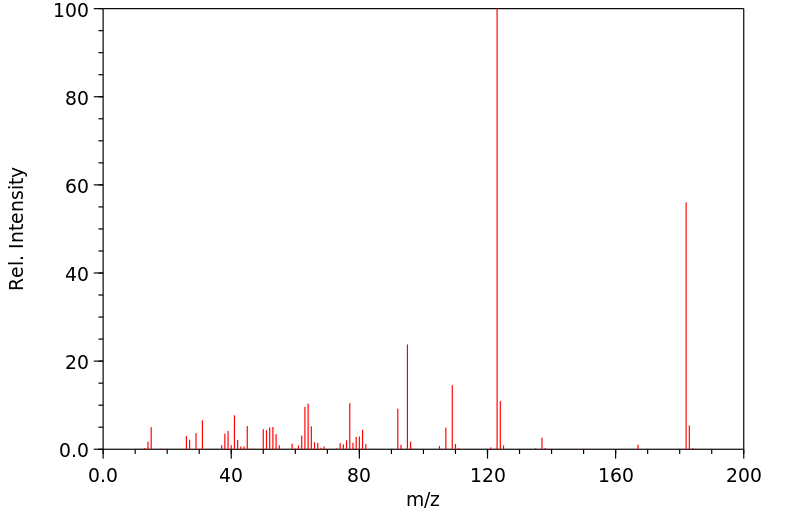
质谱MS
-
碳谱13CNMR
-
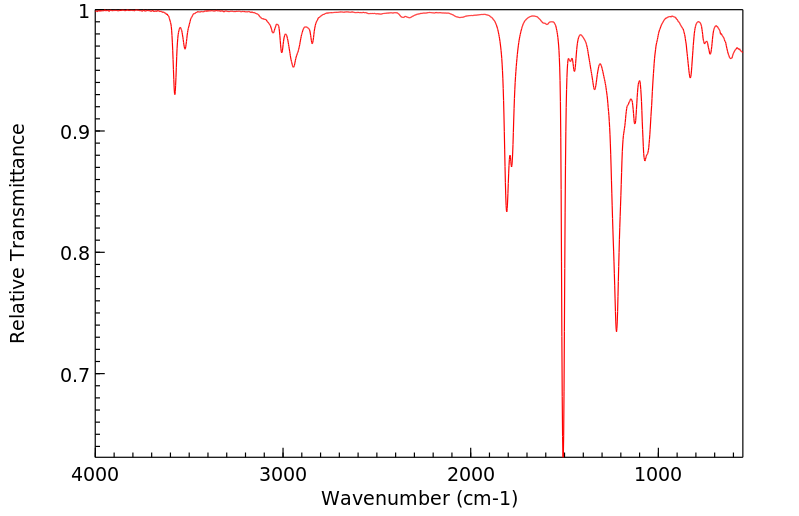
红外IR
-
拉曼Raman
-
峰位数据
-
峰位匹配
-
表征信息
同类化合物
(βS)-β-氨基-4-(4-羟基苯氧基)-3,5-二碘苯甲丙醇
(S,S)-邻甲苯基-DIPAMP
(S)-(-)-7'-〔4(S)-(苄基)恶唑-2-基]-7-二(3,5-二-叔丁基苯基)膦基-2,2',3,3'-四氢-1,1-螺二氢茚
(S)-盐酸沙丁胺醇
(S)-3-(叔丁基)-4-(2,6-二甲氧基苯基)-2,3-二氢苯并[d][1,3]氧磷杂环戊二烯
(S)-2,2'-双[双(3,5-三氟甲基苯基)膦基]-4,4',6,6'-四甲氧基联苯
(S)-1-[3,5-双(三氟甲基)苯基]-3-[1-(二甲基氨基)-3-甲基丁烷-2-基]硫脲
(R)富马酸托特罗定
(R)-(-)-盐酸尼古地平
(R)-(-)-4,12-双(二苯基膦基)[2.2]对环芳烷(1,5环辛二烯)铑(I)四氟硼酸盐
(R)-(+)-7-双(3,5-二叔丁基苯基)膦基7''-[((6-甲基吡啶-2-基甲基)氨基]-2,2'',3,3''-四氢-1,1''-螺双茚满
(R)-(+)-7-双(3,5-二叔丁基苯基)膦基7''-[(4-叔丁基吡啶-2-基甲基)氨基]-2,2'',3,3''-四氢-1,1''-螺双茚满
(R)-(+)-7-双(3,5-二叔丁基苯基)膦基7''-[(3-甲基吡啶-2-基甲基)氨基]-2,2'',3,3''-四氢-1,1''-螺双茚满
(R)-(+)-4,7-双(3,5-二-叔丁基苯基)膦基-7“-[(吡啶-2-基甲基)氨基]-2,2”,3,3'-四氢1,1'-螺二茚满
(R)-3-(叔丁基)-4-(2,6-二苯氧基苯基)-2,3-二氢苯并[d][1,3]氧杂磷杂环戊烯
(R)-2-[((二苯基膦基)甲基]吡咯烷
(R)-1-[3,5-双(三氟甲基)苯基]-3-[1-(二甲基氨基)-3-甲基丁烷-2-基]硫脲
(N-(4-甲氧基苯基)-N-甲基-3-(1-哌啶基)丙-2-烯酰胺)
(5-溴-2-羟基苯基)-4-氯苯甲酮
(5-溴-2-氯苯基)(4-羟基苯基)甲酮
(5-氧代-3-苯基-2,5-二氢-1,2,3,4-oxatriazol-3-鎓)
(4S,5R)-4-甲基-5-苯基-1,2,3-氧代噻唑烷-2,2-二氧化物-3-羧酸叔丁酯
(4S,4''S)-2,2''-亚环戊基双[4,5-二氢-4-(苯甲基)恶唑]
(4-溴苯基)-[2-氟-4-[6-[甲基(丙-2-烯基)氨基]己氧基]苯基]甲酮
(4-丁氧基苯甲基)三苯基溴化磷
(3aR,8aR)-(-)-4,4,8,8-四(3,5-二甲基苯基)四氢-2,2-二甲基-6-苯基-1,3-二氧戊环[4,5-e]二恶唑磷
(3aR,6aS)-5-氧代六氢环戊基[c]吡咯-2(1H)-羧酸酯
(2Z)-3-[[(4-氯苯基)氨基]-2-氰基丙烯酸乙酯
(2S,3S,5S)-5-(叔丁氧基甲酰氨基)-2-(N-5-噻唑基-甲氧羰基)氨基-1,6-二苯基-3-羟基己烷
(2S,2''S,3S,3''S)-3,3''-二叔丁基-4,4''-双(2,6-二甲氧基苯基)-2,2'',3,3''-四氢-2,2''-联苯并[d][1,3]氧杂磷杂戊环
(2S)-(-)-2-{[[[[3,5-双(氟代甲基)苯基]氨基]硫代甲基]氨基}-N-(二苯基甲基)-N,3,3-三甲基丁酰胺
(2S)-2-[[[[[((1S,2S)-2-氨基环己基]氨基]硫代甲基]氨基]-N-(二苯甲基)-N,3,3-三甲基丁酰胺
(2S)-2-[[[[[[((1R,2R)-2-氨基环己基]氨基]硫代甲基]氨基]-N-(二苯甲基)-N,3,3-三甲基丁酰胺
(2-硝基苯基)磷酸三酰胺
(2,6-二氯苯基)乙酰氯
(2,3-二甲氧基-5-甲基苯基)硼酸
(1S,2S,3S,5S)-5-叠氮基-3-(苯基甲氧基)-2-[(苯基甲氧基)甲基]环戊醇
(1S,2S,3R,5R)-2-(苄氧基)甲基-6-氧杂双环[3.1.0]己-3-醇
(1-(4-氟苯基)环丙基)甲胺盐酸盐
(1-(3-溴苯基)环丁基)甲胺盐酸盐
(1-(2-氯苯基)环丁基)甲胺盐酸盐
(1-(2-氟苯基)环丙基)甲胺盐酸盐
(1-(2,6-二氟苯基)环丙基)甲胺盐酸盐
(-)-去甲基西布曲明
龙蒿油
龙胆酸钠
龙胆酸叔丁酯
龙胆酸
龙胆紫-d6
龙胆紫

联系我们


关注我们

公众号