4,5-二氢芘 | 6628-98-4
中文名称
4,5-二氢芘
中文别名
——
英文名称
4,5-dihydropyrene
英文别名
——

CAS
6628-98-4
化学式
C16H12
mdl
——
分子量
204.271
InChiKey
WPCIUCNVWJNRCD-UHFFFAOYSA-N
BEILSTEIN
——
EINECS
——
-
物化性质
-
计算性质
-
ADMET
-
安全信息
-
SDS
-
制备方法与用途
-
上下游信息
-
文献信息
-
表征谱图
-
同类化合物
-
相关功能分类
-
相关结构分类
物化性质
-
熔点:132-132.5 °C(Solv: ethanol (64-17-5))
-
沸点:383.4±17.0 °C(Predicted)
-
密度:1.208±0.06 g/cm3(Predicted)
-
保留指数:2059.7;2094.4;2070
计算性质
-
辛醇/水分配系数(LogP):5.2
-
重原子数:16
-
可旋转键数:0
-
环数:4.0
-
sp3杂化的碳原子比例:0.12
-
拓扑面积:0
-
氢给体数:0
-
氢受体数:0
安全信息
-
海关编码:2902909090
SDS

上下游信息
-
上游原料
中文名称 英文名称 CAS号 化学式 分子量 4,5-双(溴甲基)菲 4,5-Di(brommethyl)phenanthren 7495-41-2 C16H12Br2 364.079 -
下游产品
中文名称 英文名称 CAS号 化学式 分子量 1-芘-4-基-乙酮 4-acetylpyrene 22245-47-2 C18H12O 244.293 1,2,3,6,7,8-六氢芘 1,2,3,6,7,8-hexahydropyrene 1732-13-4 C16H16 208.303
反应信息
-
作为反应物:描述:参考文献:名称:264.焦油烃研究。第一部分。的还原产物摘要:DOI:10.1039/jr9370001298
-
作为产物:参考文献:名称:碳纳米管支撑的双金属Pt-Rh纳米粒子的轻松声化学合成,用于芳烃的室温加氢†摘要:双金属Pt–Rh纳米粒子可以使用简单的一步声化学方法均匀地沉积在羧酸盐官能化的多壁碳纳米管(MWNT)的表面上。相对于用于纯净的多环芳烃(PAHs)催化加氢的单个Pt或Rh金属纳米颗粒,双金属纳米颗粒催化剂表现出强大的协同作用。苯和烷基苯。在室温下,使用双金属Pt–Rh / MWNTs催化剂可实现PAHs完全环饱和。这一一步合成技术提供了一种简单而快速的方法,可用于制备高活性且可回收的CNT负载的单金属和双金属纳米催化剂,用于低温加氢反应。DOI:10.1039/c1nj20028c
文献信息
-
Metallic Barium: A Versatile and Efficient Hydrogenation Catalyst作者:Philipp Stegner、Christian Färber、Ulrich Zenneck、Christian Knüpfer、Jonathan Eyselein、Michael Wiesinger、Sjoerd HarderDOI:10.1002/anie.202014326日期:2021.2.19catalysis tops that of the hitherto most active molecular group 2 metal catalysts. Depending on the substrate, two different catalytic cycles are proposed. A: a classical metal hydride cycle and B: the Ba metal cycle. The latter is proposed for substrates that are easily reduced by Ba0, that is, conjugated alkenes, alkynes, annulated rings, imines and pyridines. In addition, a mechanism in which Ba0 and BaH2
-
Highly Active Superbulky Alkaline Earth Metal Amide Catalysts for Hydrogenation of Challenging Alkenes and Aromatic Rings作者:Johannes Martin、Christian Knüpfer、Jonathan Eyselein、Christian Färber、Samuel Grams、Jens Langer、Katharina Thum、Michael Wiesinger、Sjoerd HarderDOI:10.1002/anie.202001160日期:2020.6.2series of bulky alkaline earth (Ae) metal amide complexes have been prepared: Ae[N(TRIP)2 ]2 (1-Ae) and Ae[N(TRIP)(DIPP)]2 (2-Ae) (Ae=Mg, Ca, Sr, Ba; TRIP=SiiPr3 , DIPP=2,6-diisopropylphenyl). While monomeric 1-Ca was already known, the new complexes have been structurally characterized. Monomers 1-Ae are highly linear while the monomers 2-Ae are slightly bent. The bulkier amide complexes 1-Ae are by far制备了两个系列的大体积碱土金属 (Ae) 金属酰胺配合物:Ae[N(TRIP)2 ]2 (1-Ae) 和 Ae[N(TRIP)(DIPP)]2 (2-Ae) (Ae= Mg、Ca、Sr、Ba;TRIP=SiiPr3,DIPP=2,6-二异丙基苯基)。虽然单体 1-Ca 已为人所知,但新复合物的结构已得到表征。单体1-Ae是高度线性的,而单体2-Ae是轻微弯曲的。体积较大的酰胺配合物 1-Ae 是迄今为止烯烃加氢中最活跃的催化剂,其活性从 Mg 增加到 Ba。催化剂 1-Ba 可以还原环己烯或 3-己烯等内烯烃以及 1-Me-环己烯或四苯乙烯等极具挑战性的底物。它还对芳烃氢化还原蒽和萘(即使被烷基取代)以及联苯具有活性。苯可以还原为环己烷,但未达到完全转化。催化氢化的第一步是形成(酰胺)AeH 物质,它可以形成更大的聚集体。增加酰胺配体的体积会降低聚集体尺寸,但尚不清楚真正的催化剂是什么。 DFT
-
Quenched skeletal Ni as the effective catalyst for selective partial hydrogenation of polycyclic aromatic hydrocarbons作者:Chengyun Liu、Zeming Rong、Zhuohua Sun、Yong Wang、Wenqiang Du、Yue Wang、Lianhai LuDOI:10.1039/c3ra44871a日期:——Quenched skeletal Ni is an active and selective catalyst for selective partial hydrogenation of polycyclic aromatic hydrocarbons (PAHs). The molecular structure of PAHs significantly dominate the hydrogenation process and furthermore, the distribution of hydrogenated products.淬灭的骨架Ni是一种用于多环芳烃(PAHs)选择性部分加氢的活性和选择性催化剂。PAHs的分子结构显着支配了氢化过程,此外还决定了氢化产物的分布。
-
A Highly Selective Transannular Route to<i>trans</i>-<i>trans</i>-1,2,3,3a,4,-5,9,10,10a,10b-Decahydropyrenes from [2.2]Metacyclophanes作者:Takeo Sato、Kozaburo Nishiyama、Akira Morita、Yoichi IitakaDOI:10.1246/bcsj.58.2366日期:1985.8The treatment of [2.2]metacyclophanes with aluminum chloride gave a variety of hydropyrenes as the results of dehydrogenation, cycloisomerization, and disproportionation reactions. With ethylaluminum dichloride, however, a highly selective reaction occurred to give trans-trans-1,2,3,3a,4,5,9,10,10a,10b-decahydropyrene. Revised structures were presented for cis-cis- and trans-trans-decahydropyrenes
-
The Hydrocracking of Polynuclear Aromatic Hydrocarbons over Molten Salt Catalysts作者:Yohji Nakatsuji、Toshio Kubo、Masakatsu Nomura、Sh\={o}ichi KikkawaDOI:10.1246/bcsj.51.618日期:1978.2The hydrocracking of phenanthrene, anthracene, pyrene, chrysene, and fluoranthene over molten salt catalysts at 400 °C in the batch autoclave systems was examined. The products were mainly identified by means of GC-MS, but the representative products were isolated by preparative GLC and characterized by using NMR, IR, UV, and mass spectrometry. Most of the isolated products are compounds not previously
表征谱图
-
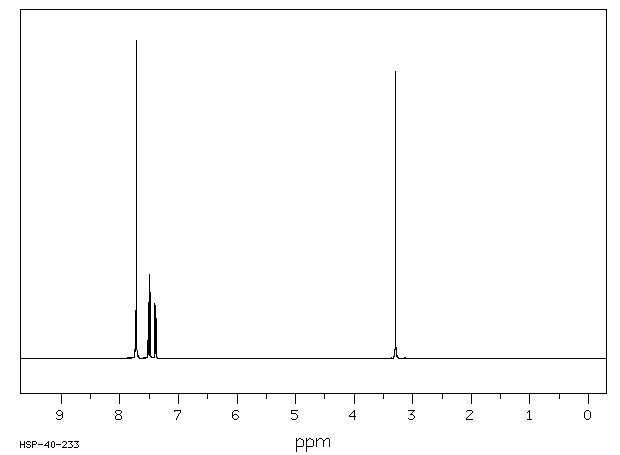
氢谱1HNMR
-
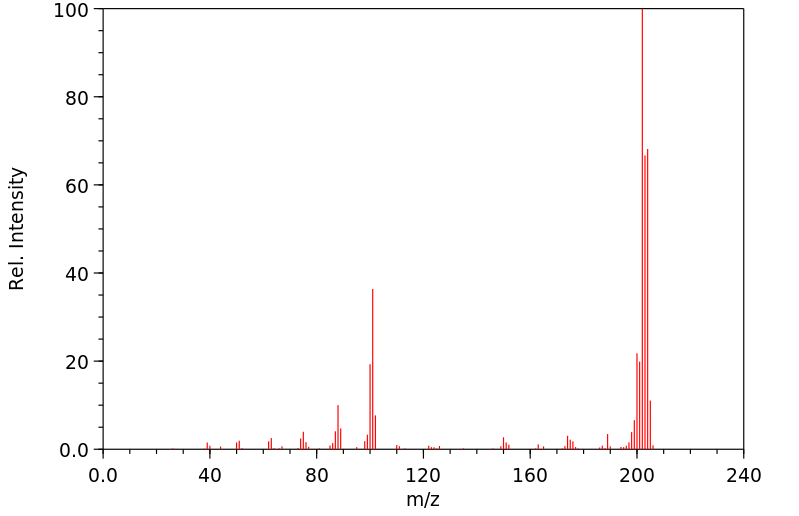
质谱MS
-
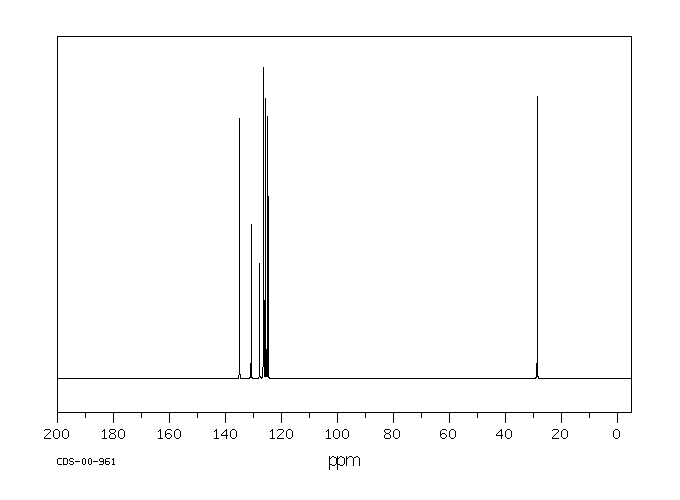
碳谱13CNMR
-
红外IR
-
拉曼Raman
-
峰位数据
-
峰位匹配
-
表征信息
同类化合物
(R)-2,2'',3,3''-四氢-6,6''-二-9-菲基-1,1''-螺双[1H-茚]-7,7''-二醇
(6,6)-苯基-C61己酸甲酯
高雌二醇
马兜铃酸钠
马兜铃酸盐
马兜铃酸C
马兜铃酸B
马兜铃酸(1:1MIXTUREOFARISTOLOCHICACIDIANDARISTOLOCHICACIDII)
马兜铃酸 Ia
马兜铃酸 IVa
马兜铃酸
颜料黑32
颜料红179
颜料红178
颜料红149
颜料红123
顺式-菲-1,2-二醇-3,4-环氧化物
顺式-苯并(a)屈-11,12-二醇-13,14-环氧化物
雷公藤酚A
镁二(1,4,5,6,7,16,17,18,19,19,20,20-十二氯六环[14.2.1.14,7.02,15.03,8.09,14]二十-5,9,11,13,17-五烯-11-磺酸酯)
钩大青酮
钩大青酮
钙(2+)12-羟基十八烷酸酯
酒石酸布托诺啡
那布扶林
还原红32
足球烯
贝那他汀B
贝母兰素
萘并[2,3-b]荧蒽
萘并[2,1-e][1]苯并二硫杂环戊烷
萘并[2,1-C:7,8-C']二菲
萘并[1,2-e][2]苯并呋喃-1,3-二酮
萘并[1,2-b]屈
萘并[1,2-a]蒽
萘并[1,2-B]菲-6-醇
萘二(六氯环戊二烯)加合物
萘,8-溴-1,2,3-三(1,1-二甲基乙基)-6-甲基-
菲醌单缩氨基硫脲
菲醌
菲并[9,10]呋喃
菲并[9,10-e]醋菲烯
菲并[4,5-bcd]噻吩
菲并[4,5-bcd]呋喃-3-醇
菲并[4,3-d]-1,3-二噁唑-5-羧酸,10-羟基-9-甲氧基-6-硝基-
菲并[3,2-b]噻吩
菲并[2,1-d]噻唑
菲并[2'',1'',10'':4,5,6;7'',8'',9'':4',5',6']二异喹啉并[2,1-a:2',1'-a']二萘嵌间二氮杂苯-8,13-二酮
菲并(3,4-b)噻吩
菲并(1,2-b)噻吩

联系我们


关注我们

公众号