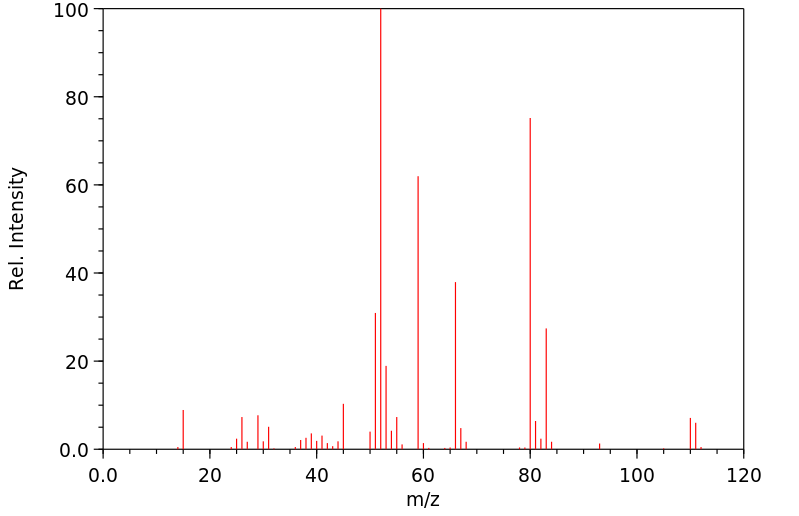
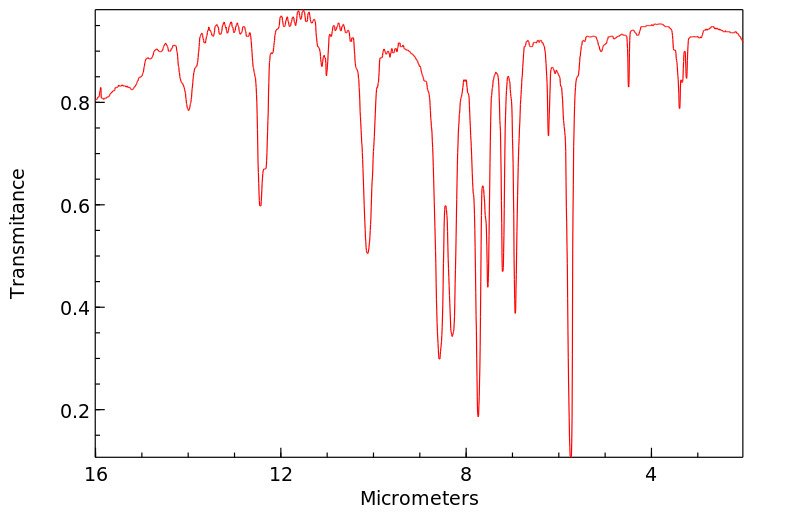
Following sc implantation of (14)C-labeled methyl 2-cyanoacrylate into dogs radioactive urea was found in the urine. Hypothesis: hydrolytic chain scission & ester hydrolysis may be involved in in vivo degradation of cyanoacrylate tissue adhesives.
Organic nitriles are converted into cyanide ions through the action of cytochrome P450 enzymes in the liver. Cyanide is rapidly absorbed and distributed throughout the body. Cyanide is mainly metabolized into thiocyanate by either rhodanese or 3-mercaptopyruvate sulfur transferase. Cyanide metabolites are excreted in the urine. (L96)
Organic nitriles decompose into cyanide ions both in vivo and in vitro. Consequently the primary mechanism of toxicity for organic nitriles is their production of toxic cyanide ions or hydrogen cyanide. Cyanide is an inhibitor of cytochrome c oxidase in the fourth complex of the electron transport chain (found in the membrane of the mitochondria of eukaryotic cells). It complexes with the ferric iron atom in this enzyme. The binding of cyanide to this cytochrome prevents transport of electrons from cytochrome c oxidase to oxygen. As a result, the electron transport chain is disrupted and the cell can no longer aerobically produce ATP for energy. Tissues that mainly depend on aerobic respiration, such as the central nervous system and the heart, are particularly affected. Cyanide is also known produce some of its toxic effects by binding to catalase, glutathione peroxidase, methemoglobin, hydroxocobalamin, phosphatase, tyrosinase, ascorbic acid oxidase, xanthine oxidase, succinic dehydrogenase, and Cu/Zn superoxide dismutase. Cyanide binds to the ferric ion of methemoglobin to form inactive cyanmethemoglobin. (L97)
来源:Toxin and Toxin Target Database (T3DB)
毒理性
致癌物分类
对人类无致癌性(未列入国际癌症研究机构IARC清单)。
No indication of carcinogenicity to humans (not listed by IARC).
Exposure to high levels of cyanide for a short time harms the brain and heart and can even cause coma, seizures, apnea, cardiac arrest and death. Chronic inhalation of cyanide causes breathing difficulties, chest pain, vomiting, blood changes, headaches, and enlargement of the thyroid gland. Skin contact with cyanide salts can irritate and produce sores. (L96, L97)
来源:Toxin and Toxin Target Database (T3DB)
毒理性
暴露途径
该物质可以通过吸入其蒸气被身体吸收。
The substance can be absorbed into the body by inhalation of its vapour.
来源:ILO-WHO International Chemical Safety Cards (ICSCs)
毒理性
暴露途径
吸入,摄入,皮肤和/或眼睛接触
inhalation, ingestion, skin and/or eye contact
来源:The National Institute for Occupational Safety and Health (NIOSH)
Following oral administration of 0.05 mL liquid beta-(14)C-methyl cyanoacrylate (MCA) (as monomer and polymer) to groups of two rats, radioactivity was detected in the urine, indicating that some absorption had occurred. For the rats receiving liquid MCA monomer into the oral cavity by syringe, approximately 2% of the radiolabel administered was recovered in urine over 48 hr. For rats receiving poly-MCA directly into the stomach, the total mean recovery from urine samples after 4 days was approximately 16%. A mean total of 18% of the radiolabel administered was recovered from feces on completion of the 4-day sampling period. However, the detection of radiolabel in the stool samples may well reflect the passage of poly-MCA particles directly through the gastrointestinal tract rather than any absorption and metabolism.
Following dermal application of 0.5 mL liquid liquid beta-(14)C-methyl cyanoacrylate (MCA) to groups of two rats, radioactivity was detected in the urine, indicating limited dermal absorption (up to 4% of the applied dose over a 6-day collection period). When the liquid was applied to skin with the epidermis removed, the amount of radiolabel recovered from urine increased approximately 3-fold.
Methyl 2-cyanoacrylate was rapidly absorbed from the skin incision site & eliminated in the urine in guinea pigs. Initial metabolites possessed the carbon skeleton of the monomer, whereas metabolites excreted from day 2 onward represented absorbed & degraded polymeric material.
The alkyl /cyanoacrylate/ esters can be absorbed through skin, with the methyl showing the highest rate of urine excretion, 12% of cmpd being excreted in five days when originally applied to rat skin.
Conjugatively Stabilized Bridgehead Olefins: Formation and Reaction of Remarkably Stable Homoadamant-3-enes Substituted with Phenyl and Methoxycarbonyl Groups
Conjugatively stabilized double bonds were formed at the bridgehead of homoadamantane by way of the 1,2-carbon shift of adamantylcarbene (-carbenoid) intermediates generated from decomposition of the diazo precursors (1-adamantyl)diazophenylmethane (7) and methyl (1-adamantyl)diazoacetate (10). Decomposition to 4-phenyl- and 4-methoxycarbonyl-substituted homoadamant-3-enes 1 and 2 was much more efficient
Synthesis of adamantane derivatives. LXVIII. Cycloaddition reactions of 2-(1-adamantyl)-1,3-butadiene and -heterodienes.
作者:TADASHI SASAKI、KAZUO SHIMIZU、MASATOMI OHNO
DOI:10.1248/cpb.32.1433
日期:——
2-(1-Adamantyl)-1, 3-butadiene (1) was prepared by p-toluenesulfonic acid-catalyzed dehydration of the corresponding allyl alcohol 5. The Diels-Alder reactions of 1 with a variety of dienophiles proceeded smoothly to give adamantane-substituted six-membered carbo-and heterocycles. Similarly, [4+2] cycloaddition reactions of adamantane-bearing heterodienes afforded some adamantyl-oxazines.
Synthesis and X-ray structural study of 1-adamantylmethyl 2-cyanoacrylate and 1,10-decanediol bis-2-cyanoacrylate
作者:V. N. Khrustalev、O. V. Shishkin、S. V. Lindeman、Yu. T. Struchkov、M. A. Galkina、Yu. G. Gololobov
DOI:10.1007/bf01430733
日期:1996.9
by the reaction of 2-cyanoacryloyl chloride with 1-adamantylmethanol . 1,10-Decanediol bis-2-cyanoacrylate (2) was synthesized by transesterification of methyl 2-cyanoacrylate with 1,10-decanediol. Esters1 and2 were studied by X-ray structural analysis.
model photosensitizer (D5) for application in dye‐sensitized solarcells has been studied by a combination of XRD, theoretical calculations, and spectroscopic/chemometric methods. The conformational stability and flexibility of D5 and molecular interactions between adjacent molecules were characterized to obtain the driving forces that govern D5 uptake and grafting and to infer the most likely arrangement