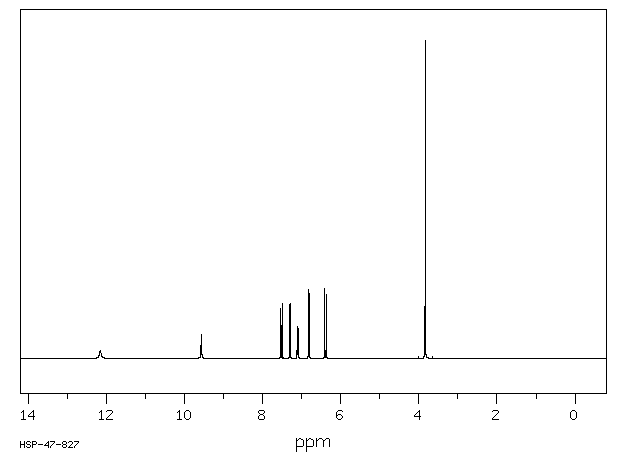
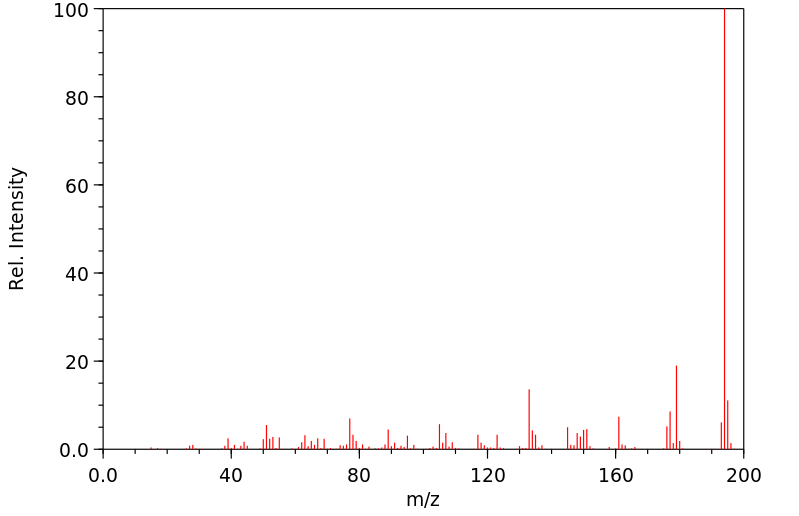
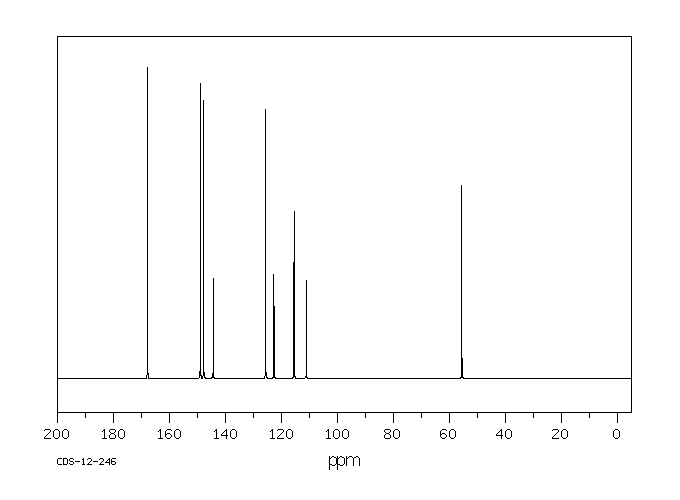
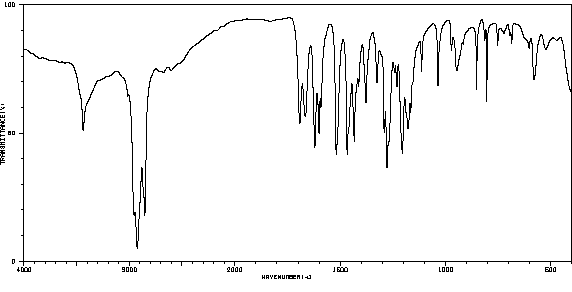
接口广告
摩熵化学
数据开放平台 数据库官网
小程序
打开微信扫一扫
首页 分子通 化学资讯 化学百科 反应查询 关于我们
请输入关键词

阿魏酸 | 537-98-4

中文名称
阿魏酸
中文别名
反式阿魏酸;反式4-羟基-3-甲氧基肉桂酸;4-羟基-3-甲氧基苯丙烯酸;反-3-甲氧基-4-羟基肉桂酸;反式-阿魏酸
英文名称
(E)-3-(4-hydroxy-3-methoxyphenyl)acrylic acid
英文别名
ferulic acid;trans-ferulic acid;(E)-ferulic acid;4-hydroxy-3-methoxycinnamic acid;t-ferulic acid;trans-4-hydroxy-3-methoxycinnamic acid;3-methoxy-4-hydroxycinnamic acid;(E)-3-(4-hydroxy-3-methoxyphenyl)prop-2-enoic acid
阿魏酸化学式
CAS
537-98-4
化学式
C10H10O4
mdl
MFCD00004400
分子量
194.187
InChiKey
KSEBMYQBYZTDHS-HWKANZROSA-N
BEILSTEIN
——
EINECS
——
  • 物化性质
  • 计算性质
  • ADMET
  • 安全信息
  • SDS
  • 制备方法与用途
  • 上下游信息
  • 反应信息
  • 文献信息
  • 表征谱图
  • 同类化合物
  • 相关功能分类
  • 相关结构分类

物化性质

  • 熔点:
    168-172 °C(lit.)
  • 沸点:
    250.62°C (rough estimate)
  • 密度:
    1.316(20.0000℃)
  • 闪点:
    150℃
  • 溶解度:
    可溶于DMSO(少许)、甲醇(少许)
  • LogP:
    1.641 (est)
  • 物理描述:
    Solid
  • 蒸汽压力:
    2.69X10⁻⁶ mm Hg at 25 °C (est)
  • 解离常数:
    pKa = 4.42 (hydroxy) (est)
  • 碰撞截面:
    139.8 Ų [M-H]- [CCS Type: DT, Method: single field calibrated with ESI Low Concentration Tuning Mix (Agilent)]
  • 保留指数:
    1897.1
  • 稳定性/保质期:
    1. 按照要求保存的话不会发生分解或反应,需要注意的是要远离氧化物。
    2. 它存在于烤烟烟叶中。

计算性质

  • 辛醇/水分配系数(LogP):
    1.5
  • 重原子数:
    14
  • 可旋转键数:
    3
  • 环数:
    1.0
  • sp3杂化的碳原子比例:
    0.1
  • 拓扑面积:
    66.8
  • 氢给体数:
    2
  • 氢受体数:
    4

ADMET

代谢
阿魏酸(FA;3-甲氧基-4-羟基肉桂酸)及其代谢物在大鼠口服短期摄入5.15 mg/kg的FA后在大鼠血浆和尿液中的生物利用度进行了研究。自由FA、葡萄糖醛酸苷和硫酸酯在血浆中迅速被检测到,浓度峰值在摄入后30分钟出现。硫酸酯是主要的衍生物(大约占50%)。在尿液中,总代谢物的累积排泄在摄入后1.5小时达到平台期,大约有40%通过这种方式排出。尿液中回收的自由FA仅占大鼠摄入的原生FA的4.9 +/-1.5%。葡萄糖醛酸苷和硫酸酯分别代表0.5 +/- 0.3%和32.7 +/- 7.3%。这些结果表明,部分FA在饮食中摄入后迅速被吸收,并在尿液排泄之前大量转化为硫酸酯代谢物。
The bioavailability of ferulic acid (FA; 3-methoxy-4-hydroxycinnamic acid) and its metabolites was investigated in rat plasma and urine after an oral short-term ingestion of 5.15 mg/kg of FA. Free FA, glucuronoconjugates, and sulfoconjugates were quickly detected in plasma with a peak of concentration found 30 min after ingestion. Sulfoconjugates were the main derivates ( approximately 50%). In urine, the cumulative excretion of total metabolites reached a plateau 1.5 h after ingestion, and approximately 40% were excreted by this way. Free FA recovered in urine represented only 4.9 +/-1.5% of the native FA consumed by rats. Glucuronoconjugates and sulfoconjugates represented 0.5 +/- 0.3 and 32.7 +/- 7.3%, respectively. These results suggested that a part of FA incorporated in the diet was quickly absorbed and largely metabolized in sulfoconjugates before excretion in urine.
来源:Hazardous Substances Data Bank (HSDB)
代谢
阿魏酸(FA)是一种常见的植物化学物质,通常存在于番茄、甜玉米和米糠等果和蔬菜中。它是由植物通过莽草酸途径代谢苯丙酸和酪氨酸而产生的。
Ferulic acid (FA) is a phytochemical commonly found in fruits and vegetables such as tomatoes, sweet corn and rice bran. It arises from metabolism of phenylalanine and tyrosine by Shikimate pathway in plants.
来源:Hazardous Substances Data Bank (HSDB)
代谢
阿魏酸已知的人类代谢物包括(2S,3S,4S,5R)-6-[4-[(E)-2-羧基乙烯基]-2-甲氧基苯氧基]-3,4,5-三羟基氧杂环己烷-2-羧酸
Ferulic Acid has known human metabolites that include (2S,3S,4S,5R)-6-[4-[(E)-2-carboxyethenyl]-2-methoxyphenoxy]-3,4,5-trihydroxyoxane-2-carboxylic acid.
来源:NORMAN Suspect List Exchange
毒理性
  • 副作用
神经毒素 - 其他中枢神经系统神经毒素
Neurotoxin - Other CNS neurotoxin
来源:Haz-Map, Information on Hazardous Chemicals and Occupational Diseases
毒理性
  • 相互作用
本研究评估了局部应用姜黄素绿原酸咖啡酸阿魏酸对12-O-十四烷佛波醇-13-醋酸酯TPA)诱导的小鼠表皮鸟氨酸脱羧酶活性、表皮DNA合成以及皮肤肿瘤促进作用的影响。结果表明,局部应用0.5、1、3或10微摩尔姜黄素分别能抑制31、46、84或98%的由5纳米摩尔TPA诱导的表皮鸟氨酸脱羧酶活性的增加。在另一项研究中,局部应用10微摩尔姜黄素绿原酸咖啡酸阿魏酸分别能抑制91、25、42或46%的由5纳米摩尔TPA诱导的鸟氨酸脱羧酶活性的增加。局部应用10微摩尔姜黄素联合2或5纳米摩尔TPA能分别抑制49或29%的TPA依赖性的[3H]-胸腺嘧啶核苷酸掺入表皮DNA的刺激,而较低剂量的姜黄素几乎没有影响。绿原酸咖啡酸阿魏酸作为TPA依赖性DNA合成刺激的抑制剂,效果不如姜黄素。在之前用7,12-二甲基苯并[a]芘启动的小鼠上,每周两次局部应用1、3或10微摩尔姜黄素联合5纳米摩尔TPA,持续20周,能分别抑制39、77或98%的每只小鼠TPA诱导的肿瘤数量。类似地,用10微摩尔绿原酸咖啡酸阿魏酸联合5纳米摩尔TPA处理小鼠,能分别抑制60、28或35%的每只小鼠TPA诱导的肿瘤数量,且较高剂量的酸能更显著地抑制肿瘤促进。为了评估姜黄素是否能抑制花生四烯酸的作用,研究了姜黄素花生四烯酸诱导的小鼠耳朵肿的影响。局部应用3或10微摩尔姜黄素,在应用1微摩尔花生四烯酸前30分钟,能分别抑制花生四烯酸诱导的肿33或80%。
The effects of topically applied curcumin, chlorogenic acid, caffeic acid, and ferulic acid on 12-O-tetradecanoylphorbol-13-acetate (TPA)-induced epidermal ornithine decarboxylase activity, epidermal DNA synthesis, and the promotion of skin tumors were evaluated in female CD-1 mice. Topical application of 0.5, 1, 3, or 10 umol of curcumin inhibited by 31, 46, 84, or 98%, respectively, the induction of epidermal ornithine decarboxylase activity by 5 nmol of TPA. In an additional study, the topical application of 10 umol of curcumin, chlorogenic acid, caffeic acid, or ferulic acid inhibited by 91, 25, 42, or 46%, respectively, the induction of ornithine decarboxylase activity by 5 nmol of TPA. The topical application of 10 umol of curcumin together with 2 or 5 nmol of TPA inhibited the TPA-dependent stimulation of the incorporation of [3H]-thymidine into epidermal DNA by 49 or 29%, respectively, whereas lower doses of curcumin had little or no effect. Chlorogenic acid, caffeic acid, and ferulic acid were less effective than curcumin as inhibitors of the TPA-dependent stimulation of DNA synthesis. Topical application of 1, 3, or 10 mumol of curcumin together with 5 nmol of TPA twice weekly for 20 weeks to mice previously initiated with 7,12-dimethylbenz[a]anthracene inhibited the number of TPA-induced tumors per mouse by 39, 77, or 98%, respectively. Similar treatment of mice with 10 mumol of chlorogenic acid, caffeic acid, or ferulic acid together with 5 nmol of TPA inhibited the number of TPA-induced tumors per mouse by 60, 28, or 35%, respectively, and higher doses of the phenolic acids caused a more pronounced inhibition of tumor promotion. The possibility that curcumin could inhibit the action of arachidonic acid was evaluated by studying the effect of curcumin on arachidonic acid-induced edema of mouse ears. The topical application of 3 or 10 umol of curcumin 30 min before the application of 1 umol of arachidonic acid inhibited arachidonic acid-induced edema by 33 or 80%, respectively.
来源:Hazardous Substances Data Bank (HSDB)
毒理性
  • 相互作用
一系列体内实验被进行,以评估咖啡酸阿魏酸在健康人类志愿者中减少UVB诱导的皮肤红斑的能力,通过反射光谱光度法进行监测。在pH 7.2的饱和溶液中溶解的咖啡酸阿魏酸证明了它们能够显著保护皮肤免受UVB诱导的红斑伤害。
... A series of in vivo experiments/were/ carried out to evaluate the ability of caffeic and ferulic acids to reduce, in healthy human volunteers, UVB-induced skin erythema, monitored by means of reflectance spectrophotometry. Caffeic and ferulic acids, dissolved in saturated aqueous solution pH 7.2, proved to afford a significant protection to the skin against UVB-induced erythema...
来源:Hazardous Substances Data Bank (HSDB)
毒理性
  • 相互作用
多种合成和饮食多可以保护哺乳动物和细菌细胞免受过氧化氢(尤其是过氧化氢H2O2)诱导的细胞毒性。使用菌落形成试验评估了 对中国地鼠V79细胞的细胞毒性。使用Ames试验评估了 对鼠伤寒沙门氏菌TA104的细胞毒性和诱变性。在SOS染色试验中,使用大肠杆菌PQ37调查了 诱导的SOS反应。带有邻-二羟基(儿茶酚)结构的 polyphenol,即 nordihydroguaiaretic 酸、咖啡酸酯、没食子酸酯、槲皮素儿茶素,在这些分析系统中有效抑制了 诱导的细胞毒性。相比之下,带有邻-甲氧基结构的阿魏酸酯和不带有邻-二羟基或其等效结构黄酮的alpha-生育酚均无效,表明邻-二羟基或其等效结构对于保护至关重要。有许多报告描述了多属离子存在时作为促氧化剂的作用。然而,这些结果建议,当培养基中没有添加属离子时,它们在细胞中作为抗氧化剂发挥作用。
A variety of synthetic and dietary polyphenols protect mammalian and bacterial cells from cytotoxicity induced by hydroperoxides, especially hydrogen peroxide (H2O2). Cytotoxicity of H2O2 on Chinese hamster V79 cells was assessed with a colony formation assay. Cytotoxicity and mutagenicity of H2O2 on Salmonella TA104 were assessed with the Ames test. SOS response induced by H2O2 was investigated in the SOS chromotest with Escherichia coli PQ37. The polyphenol-bearing o-dihydroxy (catechol) structure, i.e., nordihydroguaiaretic acid, caffeic acid ester, gallic acid ester, quercetin, and catechin, were effective for suppression of H2O2-induced cytotoxicity in these assay systems. In contrast, neither ferulic acid ester-bearing o-methoxyphenol structure nor alpha-tocopherol were effective, indicating that o-dihydroxy or its equivalent structure in flavonoids is essential for the protection. There are many reports describing that polyphenols act as prooxidants in the presence of metal ions. /These/ results suggest, however, that they act as antioxidants in the cells, when no metal ions are added to the medium.
来源:Hazardous Substances Data Bank (HSDB)
毒理性
  • 相互作用
这篇综述描述了在不同条件下软X射线照射引起的小鼠辐射损伤的模式以及几种物质对这些损伤的保护作用。本研究中的辐射损伤模型包括致死照射后的骨髓死亡、长波长软X射线照射引起的皮肤损伤以及亚致死照射后外周血中的白细胞减少。建立了两种生物活性测试方法,用于评估对致死照射生存效果和对软X射线照射引起的皮肤损伤的保护效力。测定了各种化合物、阿魏酸相关化合物、核酸组成化合物、生药和中药的保护效力,并识别出许多有效药物。在识别出的具有辐射保护作用的洋艾叶和芦荟甲醇提取物中,有效成分被进一步分离。研究结果表明,洋艾叶中的活性成分被确认为阿魏酸腺苷。通过体外软X射线照射评估了活性氧的清除作用、对脱氧核糖核酸损伤的保护作用以及超氧化物歧化酶的辐射保护机制。
This review describes the modes of mice radiation injuries induced by soft X-irradiation under various conditions and the protective effects of several kinds of substances on these injuries. The models of radiation injuries in this study were bone marrow death after lethal irradiation, skin damage induced by irradiation with long length soft X-ray and leukocytopenia in the peripheral blood after sublethal irradiation. Two bioassay methods were established for the survival effect on the lethal irradiation and protective potency on the skin damage induced by soft X-irradiation. The protective potencies of various sulfur compounds, related compounds of ferulic acid, nucleic acid constitutional compounds, crude drugs and Chinese traditional medicines were determined and then many effective drugs were recognized. Effective components in the methanol extracts of Cnidii Rhizoma and Aloe arborescens recognized as radioprotectable were fractionated. As a result of these studies, it was observed that the active principles in Cnidii Rhizoma were identified as ferulic acid and adenosine. The scavenger action of active oxygens, a protective effect on the damages of deoxyribonucleic acid and superoxide dismutase by in vitro soft X-irradiation were evaluated as radiation protective mechanisms.
来源:Hazardous Substances Data Bank (HSDB)
吸收、分配和排泄
这项研究调查了人类通过食用番茄摄入阿魏酸生物利用率,通过监测与摄入相关的排泄药物动力学。结果显示,最大尿排泄的峰值时间大约为7小时,根据总自由阿魏酸和排泄的阿魏酸葡萄糖苷酸计算,尿液中阿魏酸的回收率为11-25%。
The study described here has investigated the bioavailability of ferulic acid in humans, from tomato consumption, through the monitoring of the pharmacokinetics of excretion in relation to intake. The results show that the peak time for maximal urinary excretion is approximately 7 hr and the recovery of ferulic acid in the urine, on the basis of total free ferulic acid and feruloyl glucuronide excreted, is 11-25% of that ingested.
来源:Hazardous Substances Data Bank (HSDB)
吸收、分配和排泄
该研究调查了在法国海松(Pinus maritima)树皮提取物(PBE)中以可定量检测量存在的自由型和结合型阿魏酸在人类受试者口服PBE后的尿液排泄情况。11名健康的成年受试者(4名女性和7名男性)在48小时内分别服用单剂量的PBE(200毫克)或两剂量的PBE(分别是100毫克和200毫克)。在口服PBE前两天以及收集尿液样本期间,志愿者遵守低多饮食。收集了所有尿液样本持续24小时。通过高效液相色谱(HPLC)使用二极管阵列检测法在尿液中评估自由型和结合型阿魏酸。检测到PBE的饮食摄入与阿魏酸的尿液排泄之间存在密切关联。此外,结果表明,在服用PBE后,阿魏酸的相当一部分以葡萄糖苷酸或硫酸盐的形式排出,个体间变化范围在2%到20%之间。服用100毫克PBE后排泄的动力学与服用200毫克PBE后得到的动力学非常相似。许多受试者表现出双相趋势。所有研究的受试者在补充PBE后都显示出显著但可变的阿魏酸排泄平。因此,数据提供了证据,至少PBE的部分酚类成分被人类吸收、代谢并排出体外。
The ... study investigated the urinary excretion of free and conjugated ferulic acid, present in quantitatively detectable amounts in French maritime pine (Pinus maritima) bark extract (PBE), after oral PBE administration to human subjects. Eleven healthy adult subjects (4 women and 7men) consumed either a single dose (200 mg PBE) or two doses of PBE (100 and 200 mg, respectively) within a 48-hr interval. Two days before the oral administration of PBE and during the urine sample collection period volunteers adhered to a diet low in polyphenols. Aliquots of all urine production were collected over 24 hr. Free and conjugated ferulic acid was assessed in urine by HPLC using diode array detection. A close association between the dietary intake of PBE and the urinary excretion of ferulic acid was detected. Moreover, the results indicate that a considerable proportion of ferulic acid is excreted as glucuronide or sulfate after PBE consumption, varying over the range 2 to 20% between individuals. The kinetics of excretion associated with the administration of 100 mg PBE was quite similar to that obtained after 200 mg PBE. A biphasic trend was evident in a number of subjects. All subjects studied here displayed a significant, although variable level of excretion of ferulic acid after supplementation with PBE, Thus, the data provide evidence that at least a part of the phenolic components of PBE are absorbed, metabolized, and eliminated by humans.
来源:Hazardous Substances Data Bank (HSDB)
吸收、分配和排泄
羟基肉桂酸(hydroxycinnamates),作为丙酸合成途径中的中间产物,在增强低密度脂蛋白(LDL)对氧化的抵抗能力方面,其效果顺序为咖啡酸(caffeic acid)大于阿魏酸(ferulic acid)大于对香豆酸(p-coumaric acid)。目前尚不清楚阿魏酸作为一种抗氧化剂的作用机制是基于其在相还是脂相中的活性。在最大溶性条件下,研究了14C标记的阿魏酸向血浆及其组分——LDL和富含白蛋白的组分中的分配情况。大部分阿魏酸与血浆中的富含白蛋白部分相关联,尽管也有一定比例的阿魏酸在LDL和相之间分配;然而,阿魏酸并不与LDL颗粒的脂质部分结合,这表明它从相发挥其抗氧化特性。这一发现特别有趣,因为结果表明阿魏酸在抵抗LDL氧化方面比亲抗氧化剂抗坏血酸(ascorbic acid)更有效。
The hydroxycinnamates, intermediates in the phenylpropanoid synthetic pathway, are effective in enhancing the resistance of low-density lipoprotein (LDL) to oxidation in the order caffeic acid greater than ferulic acid greater than p-coumaric acid. It is unclear whether the mode of action of ferulic acid as an antioxidant is based on its activities in the aqueous or the lipophilic phase. Partitioning of 14C-labelled ferulic acid into plasma and its components, LDL and the albumin-rich fractions, has been studied under conditions of maximum aqueous solubility. The majority of ferulic acid associates with the albumin-rich fraction of the plasma, although a proportion is also found to partition between the LDL and aqueous phases; however, ferulic acid does not associate with the lipid portion of the LDL particle, suggesting that it exerts its antioxidant properties from the aqueous phase. This is of particular interest since the results demonstrate that ferulic acid is a more effective antioxidant against LDL oxidation than the hydrophilic antioxidant ascorbic acid.
来源:Hazardous Substances Data Bank (HSDB)
吸收、分配和排泄
洋蓟提取物的主要成分是羟基肉桂酸,如原酸、二咖啡酰奎宁酸、咖啡酸阿魏酸,以及黄酮类化合物,如木犀草素芹菜素葡萄糖苷。...几项研究已经展示了洋蓟提取物对动物模型的影响...。结果显示,原酸在1小时后的血浆最大浓度为6.4(标准差1.8)ng/mL,并在2小时内消失(P<0.05)。总咖啡酸的血浆峰浓度在1小时内达到19.5(标准差6.9)ng/mL,而阿魏酸的血浆浓度显示出双相型,分别在1小时和8小时后为6.4(标准差1.5)ng/mL和8.4(标准差4.6)ng/mL。...8小时后二氢咖啡酸和二氢阿魏酸的总水平显著增加(P<0.05)。木犀草素和芹菜素的循环血浆平未检测到。
The major constituents of artichoke extracts are hydroxycinnamic acids such as chlorogenic acid, dicaffeoylquinic acids caffeic acid and ferulic acid, and flavonoids such as luteolin and apigenin glycosides. ...Several studies have shown the effect on animal models of artichoke extracts ... . . Results showed a plasma maximum concentration of 6.4 (SD 1.8) ng/mL for chlorogenic acid after 1 hr and its disappearance within 2 hr (P< 0.05). Peak plasma concentrations of 19.5 (SD 6.9) ng/ml for total caffeic acid were reached within 1 h, while ferulic acid plasma concentrations showed a biphasic profile with 6.4 (SD1.5) ng/mL and 8.4 (SD4.6) ng/mL within 1 hr and after 8 hr respectively. ...A significant increase of dihydrocaffeic acid and dihydroferulic acid total levels after 8 hr (P<0.05) /was observed/. No circulating plasma levels of luteolin and apigenin were present.
来源:Hazardous Substances Data Bank (HSDB)

安全信息

  • TSCA:
    Yes
  • 危险品标志:
    Xi
  • 安全说明:
    S26,S36
  • 危险类别码:
    R36/37/38
  • WGK Germany:
    3
  • 海关编码:
    29189900
  • 危险品运输编号:
    NONH for all modes of transport
  • 危险性防范说明:
    P261,P305+P351+P338
  • 危险性描述:
    H315,H319,H335
  • 储存条件:
    密封保存,并放置在通风、干燥的地方。

SDS

SDS:8de8efe1193648471e618d96468866af
查看
1.1 产品标识符
: 阿魏酸
产品名称
1.2 鉴别的其他方法
无数据资料
1.3 有关的确定了的物质或混合物的用途和建议不适合的用途
仅供科研用途,不作为药物、家庭备用药或其它用途。

模块 2. 危险性概述
2.1 GHS分类
皮肤刺激 (类别2)
眼刺激 (类别2A)
特异性靶器官系统毒性(一次接触) (类别3)
2.2 GHS 标记要素,包括预防性的陈述
象形图
警示词 警告
危险申明
H315 造成皮肤刺激。
H319 造成严重眼刺激。
H335 可能引起呼吸道刺激。
警告申明
预防
P261 避免吸入粉尘/烟/气体/烟雾/蒸气/喷雾.
P264 操作后彻底清洁皮肤。
P271 只能在室外或通风良好之处使用。
P280 穿戴防护手套/ 眼保护罩/ 面部保护罩。
措施
P302 + P352 如与皮肤接触,用大量肥皂和冲洗受感染部位.
P304 + P340 如吸入,将患者移至新鲜空气处并保持呼吸顺畅的姿势休息.
P305 + P351 + P338 如与眼睛接触,用缓慢温和地冲洗几分钟。如戴隐形眼镜并可方便地取
出,取出隐形眼镜,然后继续冲洗.
P312 如感觉不适,呼救中毒控制中心或医生.
P321 具体治疗(见本标签上提供的急救指导)。
P332 + P313 如发生皮肤刺激:求医/ 就诊。
P337 + P313 如仍觉眼睛刺激:求医/就诊。 如仍觉眼睛刺激:求医/就诊.
P362 脱掉沾染的衣服,清洗后方可重新使用。
储存
P403 + P233 存放于通风良的地方。 保持容器密闭。
P405 存放处须加锁。
处理
P501 将内容物/ 容器处理到得到批准的废物处理厂。
2.3 其它危害物 - 无

模块 3. 成分/组成信息
3.1 物 质
: C10H10O4
分子式
: 194.18 g/mol
分子量
组分 浓度或浓度范围
(E)-4'-Hydroxy-3'-methoxycinnamic acid
-
CAS 号 537-98-4
EC-编号 208-679-7

模块 4. 急救措施
4.1 必要的急救措施描述
一般的建议
请教医生。 出示此安全技术说明书给到现场的医生看。
吸入
如果吸入,请将患者移到新鲜空气处。 如果停止了呼吸,给于人工呼吸。 请教医生。
皮肤接触
用肥皂和大量的冲洗。 请教医生。
眼睛接触
用大量彻底冲洗至少15分钟并请教医生。
食入
切勿给失去知觉者从嘴里喂食任何东西。 用漱口。 请教医生。
4.2 主要症状和影响,急性和迟发效应
4.3 及时的医疗处理和所需的特殊处理的说明和指示
无数据资料

模块 5. 消防措施
5.1 灭火介质
灭火方法及灭火剂
雾,耐醇泡沫,干粉或二氧化碳灭火。
5.2 源于此物质或混合物的特别的危害
碳氧化物
5.3 给消防员的建议
如必要的话,戴自给式呼吸器去救火。
5.4 进一步信息
无数据资料

模块 6. 泄露应急处理
6.1 人员的预防,防护设备和紧急处理程序
使用个人防护设备。 防止粉尘的生成。 防止吸入蒸汽、气雾或气体。 保证充分的通风。
将人员撤离到安全区域。 避免吸入粉尘。
6.2 环境保护措施
不要让产物进入下道。
6.3 抑制和清除溢出物的方法和材料
收集、处理泄漏物,不要产生灰尘。 扫掉和铲掉。 存放进适当的闭口容器中待处理。
6.4 参考其他部分
丢弃处理请参阅第13节。

模块 7. 操作处置与储存
7.1 安全操作的注意事项
避免接触皮肤和眼睛。 防止粉尘和气溶胶生成。
在有粉尘生成的地方,提